Women’s Health

Woman sleeping peacefully with a moon and menstrual cycle illustration, showing the connection between sleep, hormones, ovulation, and menstrual health. Vitality Flame women’s health article thumbnail.

Cycle Influencing Factors Series (Part 2.3):How Poor Sleep Can Affect Your Menstrual Cycle

Sleep and Your Menstrual Cycle: effect of Poor Sleeping Habits on the Menstrual Cycle By now, you’ve learned that sleep is far more than a time for rest. Every night, your brain carefully coordinates hormones that regulate stress, metabolism, immune function, and reproduction. When sleep is consistently poor, these systems gradually become less synchronized. But
Help others discover the Aviva Method.

Cycle Influencing Factors Series (Part 2.3):How Poor Sleep Can Affect Your Menstrual Cycle Read More »

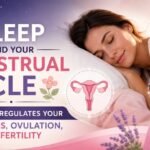
Infographic explaining how sleep affects the menstrual cycle, hormone balance, ovulation, PMS, and fertility. The design features a sleeping woman, moon phases, brain and hormone illustrations, sleep stages, healthy sleep tips, and the message that better sleep supports healthier hormones and reproductive health. VitalityFlame.com.

Cycle Influencing Factors Series (Part 2.2): How Sleep influence Your Hormones

Sleep and Your Menstrual Cycle: How Sleep Regulates Your Hormones   In Part 1, we explored how your brain controls sleep and why sleep is an active biological process rather than simply “switching off” for the night. Now let’s look at what many women don’t realize: Sleep is one of the body’s most important hormone

Help others discover the Aviva Method.

Cycle Influencing Factors Series (Part 2.2): How Sleep influence Your Hormones Read More »

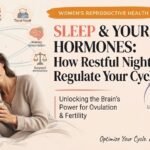
An infographic banner with a watercolor illustration of a woman sleeping peacefully and holding a mug on the left. To the right, a series of icons connected by lines shows the benefits of sleep, labeled: 'Immune System', 'Rested.ly', 'Tissue Repair', 'Memory consolidation', and 'Balanced metabolisiss' (retaining the original typo for accuracy). A large title reads: "SLEEP & YOUR HORMONES: How Restful Nights Regulate Your Cycle". Below this, smaller text says: "Unlocking the Brain's Power for Ovulation & Fertility". On the far right, diagrams of a brain and the female reproductive system (uterus and ovaries) are connected by a circular cycle of arrows labeled 'Light', 'Wake', and 'Deep'. The background is a soft, light beige. The footer text reads: "Optimize Your Cycle. Prioritize Your Sleep.

Cycle Influencing Factors (Part 2.1): Sleep and Your Menstrual Cycle: The Hidden Hormonal Connection

Sleep and Your Menstrual Cycle: How Sleep Regulates Your Hormones, Ovulation, and Fertility SEO Keywords: sleep and menstrual cycle, poor sleep and periods, sleep hormones, hormonal balance and sleep, sleep and fertility, insomnia and hormones Have You Ever Wondered Why Your Period Changes After a Few Bad Nights of Sleep? Maybe your period arrived late

Help others discover the Aviva Method.

Cycle Influencing Factors (Part 2.1): Sleep and Your Menstrual Cycle: The Hidden Hormonal Connection Read More »

A thumbnail of an article. A medical illustration showing the female reproductive system with a highlighted fallopian tube, representing the concept of tubal blockage and ectopic pregnancy risks.

Can the Aviva Method Really Help Improve the Function of the Fallopian Tubes?

Many women discover they have a blocked fallopian tube only after months—or years—of trying to conceive. Others receive the diagnosis after experiencing an ectopic pregnancy, sometimes losing one of their fallopian tubes during emergency surgery. One of the most common questions we receive is: “Can the Aviva Method unblock my fallopian tubes?” The honest answer

Help others discover the Aviva Method.

Can the Aviva Method Really Help Improve the Function of the Fallopian Tubes? Read More »

Thumbnail for the article educating about Printable cycle tracking guide with categories for period flow, cervical mucus, sleep, mood, energy, and lifestyle habits.

Understanding Your Cycle Series – Part 22: Why Cycle Tracking Matters

 Your Menstrual Cycle Is More Than Just a Period  Have you ever wished your body could simply tell you what it needs? What if it already does? Every month, your body sends countless signals.  Changes in  – energy,  – mood,  – sleep,  – appetite,  – cervical mucus,  – libido,  – breast tenderness,  – bloating,  – headaches, 

Help others discover the Aviva Method.

Understanding Your Cycle Series – Part 22: Why Cycle Tracking Matters Read More »

Natural PMS relief guide featuring cycle tracking, healthy lifestyle habits, stress management, sleep support, nutrition, exercise, and hormonal balance strategies to help reduce common premenstrual syndrome symptoms.

Understanding Your Menstrual Cycle Part 21: Managing PMS Naturally

How to manage Pre Menstrual Simptomes Naturally: Stress, Sleep, Nutrition, Exercise, and the Aviva Method In the previous articles, we explored what Premenstrual Syndrome (PMS) is, why it develops, and the biological mechanisms behind common symptoms such as bloating, breast tenderness, headaches, fatigue, food cravings, digestive disturbances, mood swings, and anxiety. Understanding the mechanisms is

Help others discover the Aviva Method.

Understanding Your Menstrual Cycle Part 21: Managing PMS Naturally Read More »

Women's hormonal health infographic explaining PMS mechanisms. Educational illustration showing estrogen, progesterone, serotonin, stress hormones, bloating, mood swings, fatigue, cravings, headaches, and other premenstrual syndrome symptoms.

Understanding Your Menstrual Cycle Part 20: PMS Symptoms Explained

Pre Menstrual  Symptoms: What Causes Them and Why They Happen In the previous article, we explored how Premenstrual Syndrome (PMS) develops and why some women are more sensitive to hormonal fluctuations than others. We learned that PMS is not simply caused by “too many hormones” or “too few hormones.” Instead, it appears to result from

Help others discover the Aviva Method.

Understanding Your Menstrual Cycle Part 20: PMS Symptoms Explained Read More »

Educational women's health thumbnail about PMS symptoms and hormonal changes. Woman experiencing common premenstrual symptoms including mood swings, fatigue, bloating, cravings, headaches, and breast tenderness during the luteal phase of the menstrual cycle.

Understanding your menstrual cycle Part 19: PMS explained

Understanding Pre Menstrual Syndrome: What Is Happening in Your Body Before Your Period?   Have you ever wondered why some weeks you feel motivated, confident, and energetic, while during other weeks even simple tasks feel overwhelming? Why your sleep suddenly worsens before your period? Why certain cravings appear every month like clockwork? These changes are

Help others discover the Aviva Method.

Understanding your menstrual cycle Part 19: PMS explained Read More »

Educational women's health thumbnail showing the title "Vaginal Discharge Explained" with examples of different discharge colors and textures, including clear, white, yellow, green, gray, and brown discharge. Menstrual cycle awareness and vaginal health infographic.

Understanding Your Menstrual Cycle Part 18: Vaginal Discharge Explained

Vaginal Discharge Guide: What the Color, Smell, and Texture of Cervical Mucus Can Tell You About Your Health Have you ever noticed yellow discharge and wondered if it was normal? Have you found brown spotting in your underwear and questioned whether it was simply part of your cycle or something more serious? Have you experienced

Help others discover the Aviva Method.

Understanding Your Menstrual Cycle Part 18: Vaginal Discharge Explained Read More »

Educational infographic about secondary dysmenorrhea featuring a woman experiencing menstrual pain. The graphic explains how endometriosis, adenomyosis, uterine fibroids, ovarian cysts, and pelvic inflammatory disease can contribute to painful periods and menstrual cramps.

Understandig Your Menstrual Cycle Part 15: Secondary Dysmenorrhea Explained

 When Period Pain May Signal an Underlying Condition  In the previous article, we explored primary dysmenorrhea—the most common type of menstrual pain. We learned that primary dysmenorrhea occurs when a structurally healthy uterus produces strong contractions during menstruation. Elevated prostaglandins, reduced blood flow, temporary oxygen deprivation, and nervous system responses all contribute to the characteristic

Help others discover the Aviva Method.

Understandig Your Menstrual Cycle Part 15: Secondary Dysmenorrhea Explained Read More »

Shopping Cart