Understanding Pre Menstrual Syndrome: What Is Happening in Your Body Before Your Period?
Have you ever wondered why some weeks you feel motivated, confident, and energetic, while during other weeks even simple tasks feel overwhelming?
Why your sleep suddenly worsens before your period?
Why certain cravings appear every month like clockwork?
These changes are often not random.
They may be connected to the natural hormonal shifts occurring throughout your menstrual cycle.
Premenstrual Syndrome (PMS) is one of the most common yet often misunderstood aspects of the menstrual cycle. Many women notice that in the days before their period they feel different—more emotional, more sensitive, more tired, more bloated, or simply “not themselves.” Some experience only mild changes, while others struggle with symptoms severe enough to affect work, relationships, sleep, and quality of life.
Although PMS is often dismissed as simply “hormones,” the reality is much more complex. PMS is not caused by one hormone being too high or too low. Rather, it appears to be the result of how a woman’s brain and body respond to the normal hormonal fluctuations that occur during the menstrual cycle.
Understanding what is happening physiologically can help explain why PMS develops and why symptoms vary so much from woman to woman.
What Is PMS?
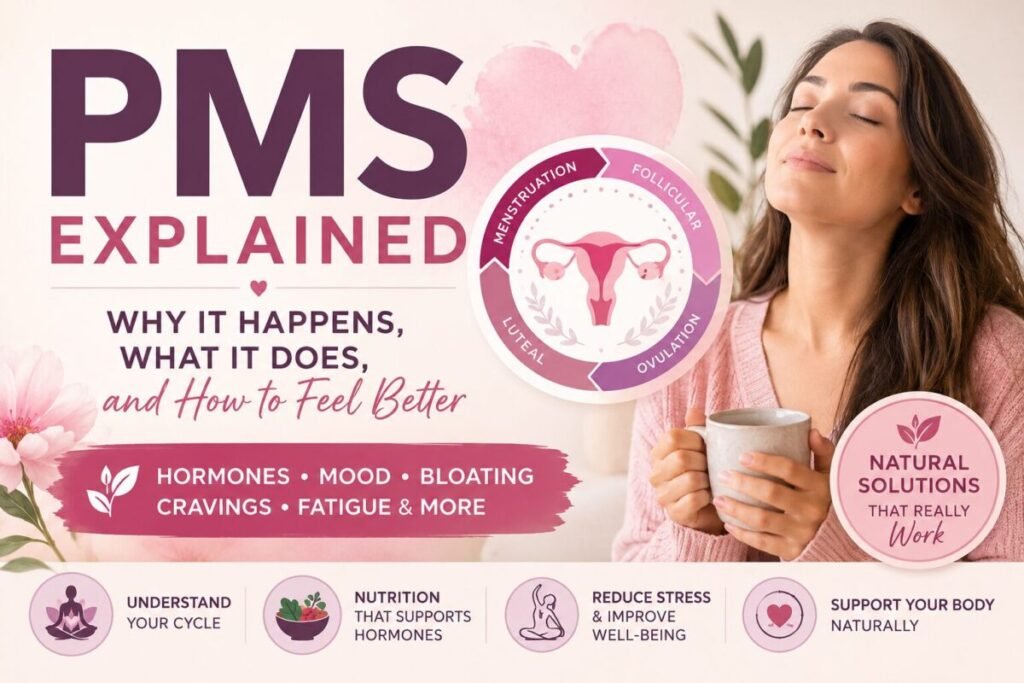
Premenstrual Syndrome (PMS) is a collection of physical, emotional, cognitive, and behavioral symptoms that occur during the luteal phase of the menstrual cycle—the time between ovulation and menstruation.
Symptoms typically:
- Appear after ovulation
- Become stronger during the week before menstruation
- Improve when menstruation begins
- Usually disappear completely during or shortly after the menstrual period
PMS affects up to 75% of menstruating women to some degree. For some women the symptoms are mild and manageable. For others they can be severe enough to interfere with daily life.
Importantly, PMS only occurs in ovulatory cycles. If ovulation does not occur, the characteristic hormonal fluctuations that trigger PMS are absent.
The Menstrual Cycle: A Brief Overview
To understand PMS, we first need to understand what normally happens during the menstrual cycle.
The Follicular Phase
The follicular phase begins on the first day of menstruation.
During this phase:
- Estrogen gradually rises.
- Follicles develop in the ovaries.
- Energy often increases.
- Mood tends to be more stable.
- Motivation and sociability often improve.
Estrogen has numerous effects throughout the body and brain. It supports serotonin production, influences dopamine signaling, promotes blood flow, and generally contributes to feelings of well-being and vitality.
Many women report feeling energetic, productive, confident, and mentally sharp during this phase.
Ovulation
Around the middle of the cycle, ovulation occurs.
Estrogen reaches its peak just before ovulation.
Many women notice:
- Increased libido
- Greater confidence
- Improved mood
- Enhanced social engagement
- Increased physical energy
This phase represents the peak reproductive window of the cycle.
The Luteal Phase
After ovulation, the ruptured follicle transforms into a temporary endocrine gland called the corpus luteum.
The corpus luteum produces large amounts of progesterone.
Progesterone becomes the dominant hormone of the second half of the cycle.
Its role is to prepare the body for a potential pregnancy by:
- Supporting the uterine lining
- Increasing body temperature
- Modifying immune activity
- Influencing brain chemistry
- Affecting fluid balance
This is also the phase in which PMS develops.
PMS Is Not Caused by “Bad Hormones”
One of the biggest misconceptions about PMS is that progesterone or estrogen themselves are harmful.
In reality, most women with PMS have hormone levels that fall within normal ranges.
The difference appears to be sensitivity.
Research suggests that some women are particularly sensitive to normal hormonal fluctuations. Their nervous system responds more strongly to changes in estrogen and progesterone levels.
In other words, the problem is often not how much hormone is present but how the brain reacts to changing hormone levels.
How Hormones Affect the Brain
Sex hormones do much more than regulate reproduction.
Estrogen and progesterone interact directly with brain regions involved in:
- Mood regulation
- Anxiety
- Stress response
- Sleep
- Motivation
- Appetite
- Pain perception
- Emotional processing
Hormonal fluctuations influence several important neurotransmitters.
Serotonin
Serotonin is often called the “feel-good neurotransmitter.”
It influences:
- Mood
- Emotional stability
- Sleep
- Appetite
- Motivation
- Pain sensitivity
Estrogen stimulates serotonin production and enhances serotonin receptor activity.
As estrogen rises during the follicular phase, many women experience:
- Improved mood
- Better stress tolerance
- Increased motivation
- Greater emotional resilience
Before menstruation, estrogen levels fall rapidly.
This decline may reduce serotonin activity in susceptible women, contributing to:
- Irritability
- Anxiety
- Sadness
- Mood swings
- Food cravings
- Increased pain sensitivity
GABA
Progesterone is converted into a neuroactive substance called allopregnanolone.
Allopregnanolone interacts with GABA receptors in the brain.
GABA is the primary calming neurotransmitter of the nervous system.
In many women, this interaction promotes:
- Relaxation
- Better sleep
- Reduced anxiety
However, some women appear unusually sensitive to fluctuations in allopregnanolone.
Instead of producing a calming effect, these changes may contribute to:
- Anxiety
- Emotional instability
- Irritability
- Feeling overwhelmed
This altered sensitivity may help explain why some women experience severe emotional symptoms before menstruation while others do not.
The Role of Stress
Stress is one of the strongest factors influencing PMS severity.
When we experience stress, the body activates the hypothalamic-pituitary-adrenal (HPA) axis.
This increases cortisol production.
Chronically elevated cortisol can interfere with reproductive hormone regulation by disrupting communication between:
- The hypothalamus
- The pituitary gland
- The ovaries
Over time, chronic stress may contribute to:
- Ovulatory disturbances
- Luteal phase dysfunction
- Greater hormonal instability
- Increased PMS symptoms
Many women notice that their PMS becomes significantly worse during periods of emotional stress, work pressure, illness, sleep deprivation, or major life changes.
This observation is supported by physiological research.
Why Symptoms Often Improve When Menstruation Starts
One of the defining features of PMS is that symptoms improve when menstruation begins.
Why?
At the end of the cycle:
- Progesterone falls
- Estrogen falls
- The uterine lining begins to shed
Although hormone levels are low during menstruation, the rapid hormonal fluctuations that characterize the late luteal phase have ended.
For many women, this brings relief.
Many women report:
- Improved mood
- Less anxiety
- Reduced breast tenderness
- Reduced bloating
- Greater emotional stability
within the first few days of menstruation.
When PMS Becomes PMDD
A small percentage of women experience a much more severe condition known as Premenstrual Dysphoric Disorder (PMDD).
PMDD is not simply “bad PMS.”
Current research suggests that women with PMDD may have an increased sensitivity of the brain to the normal hormonal changes that occur after ovulation. In many cases, hormone levels themselves are perfectly normal. Instead, the nervous system reacts differently to the rise and fall of progesterone and its metabolites during the luteal phase.
One of the key substances involved is allopregnanolone, a neuroactive compound produced from progesterone. In most women, allopregnanolone has a calming effect through its interaction with GABA receptors in the brain. In women with PMDD, however, the brain may respond abnormally to these fluctuations, leading to severe emotional and psychological symptoms.
While PMS can certainly be unpleasant, PMDD can significantly disrupt daily life, relationships, work performance, and emotional well-being.
It is a serious medical condition characterized by severe mood symptoms that can include:
- Intense irritability
- Severe anxiety
- Depression
- Feelings of hopelessness
- Marked emotional instability
- Social withdrawal
PMDD affects approximately 2–6% of women and should be evaluated by a healthcare professional.
When Should You Speak With a Healthcare Professional?
You should consider seeking medical advice if your symptoms:
- Consistently interfere with work, school, or family life
- Cause significant relationship difficulties
- Prevent you from participating in normal daily activities
- Lead to severe anxiety or depression
- Cause feelings of hopelessness
- Become progressively worse over time
- Do not improve with lifestyle changes
You should seek prompt professional support if you experience thoughts of self-harm or suicidal thoughts at any point during your cycle.
A Gentle Reminder
Experiencing severe emotional symptoms before your period is not a sign of weakness, lack of self-control, or personal failure. Hormonal fluctuations can profoundly influence brain chemistry, mood regulation, stress resilience, and emotional processing.
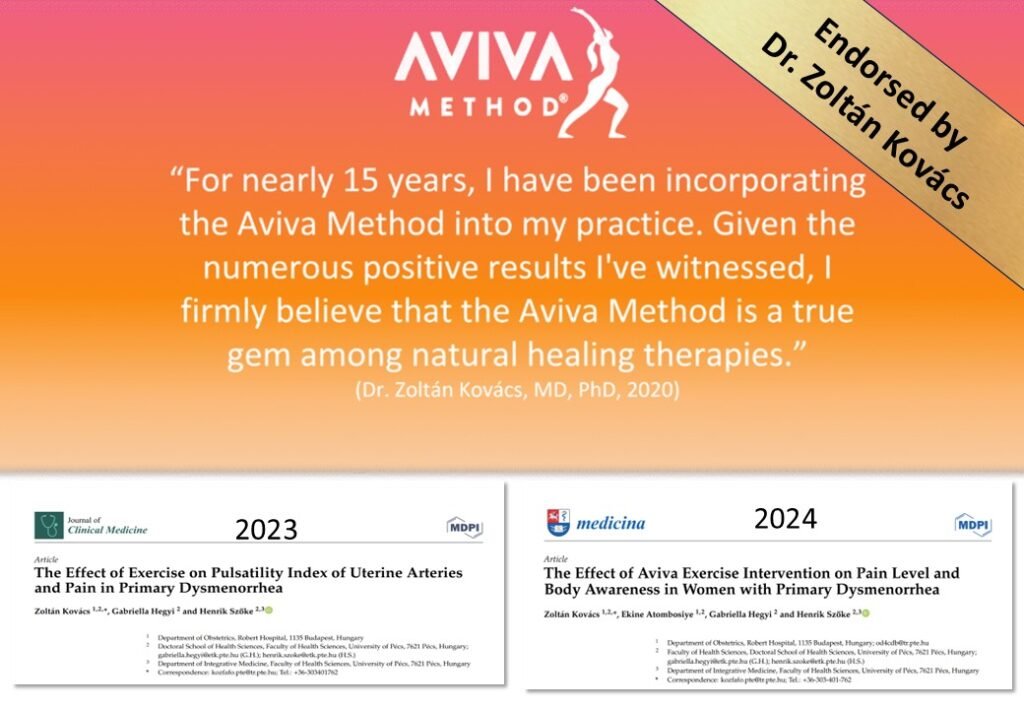
While lifestyle strategies such as stress reduction, quality sleep, regular exercise, balanced nutrition, cycle awareness, and practices such as the Aviva Method may support overall hormonal well-being and help many women with PMS, PMDD is a medical condition that deserves proper evaluation and individualized care.
If your symptoms feel overwhelming, please do not suffer in silence. A healthcare professional can help determine whether you are experiencing PMS, PMDD, or another underlying condition and guide you toward the most appropriate support.
Key Takeaways
PMS is a complex interaction between reproductive hormones, neurotransmitters, stress physiology, and individual sensitivity to hormonal fluctuations.
The symptoms are not imaginary, nor are they simply a matter of willpower. Real biological changes occur in the brain and body during the luteal phase of the menstrual cycle.
Hormonal shifts influence serotonin, GABA, stress hormones, sleep, appetite, pain perception, and emotional regulation. For women who are particularly sensitive to these fluctuations, the result can be a wide range of physical and emotional symptoms that appear before menstruation and improve once bleeding begins.
In the next article, we will explore the individual symptoms of PMS in detail, including bloating, breast tenderness, headaches, fatigue, mood swings, food cravings, anxiety, sleep disturbances, digestive changes, and why each symptom occurs from a physiological perspective.