Many women discover they have a blocked fallopian tube only after months—or years—of trying to conceive.
Others receive the diagnosis after experiencing an ectopic pregnancy, sometimes losing one of their fallopian tubes during emergency surgery.
One of the most common questions we receive is:
“Can the Aviva Method unblock my fallopian tubes?”
The honest answer is:
Sometimes the body can recover function, but not every blockage can be reversed.
Whether improvement is possible depends on why the tube became damaged, how severe the damage is, and whether healthy tissue is still present.
While no exercise can guarantee that a blocked tube will reopen, supporting the body’s circulation, tissue mobility, hormonal balance, and overall health may help create better conditions for healing in some women.
Let’s first understand what the fallopian tubes actually do.
What Are the Fallopian Tubes?
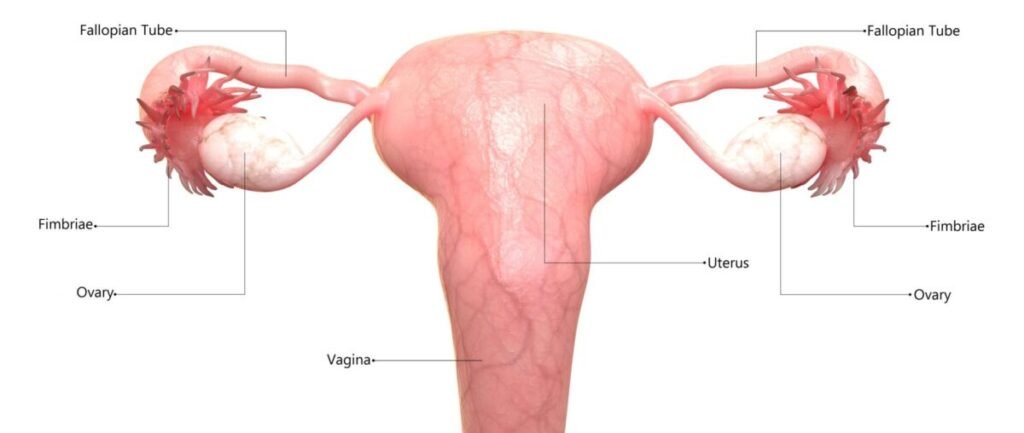
The fallopian tubes are two narrow, delicate tubes connecting the ovaries to the uterus.
Although they are only about 10–12 cm (4–5 inches) long, they perform several remarkable tasks.
Their job is to:
- collect the egg after ovulation
- provide the place where sperm and egg usually meet
- nourish the fertilized egg during its first few days
- transport the early embryo safely into the uterus
Many people imagine the egg simply “falling” through the tube.
In reality, the journey is surprisingly complex.
The Journey of the Egg
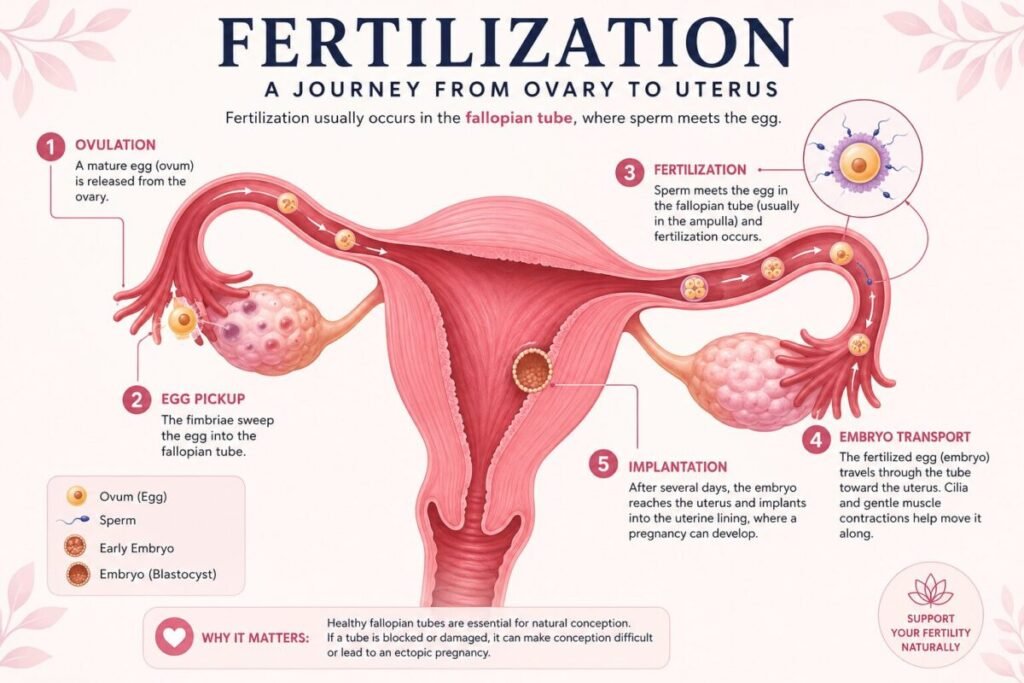
Each month, an ovary releases a mature egg.
Tiny finger-like structures at the end of the tube—called fimbriae—gently sweep over the ovary and help guide the egg into the tube.
Inside the tube, millions of microscopic hair-like structures called cilia continuously beat toward the uterus.
The muscular wall of the tube also creates gentle wave-like contractions known as peristalsis.
Together, these movements slowly transport the egg.
Meanwhile, sperm travel upward from the uterus into the tube.
If sperm meets the egg, fertilization usually occurs in the widest portion of the tube, called the ampulla.
The newly formed embryo then spends several days traveling toward the uterus before implantation.
For this entire process to happen successfully, the tube must have:
- an open passage
- healthy cilia
- coordinated muscular contractions
- healthy surrounding tissues
- adequate blood supply
- a balanced inflammatory environment
Any disturbance to these functions may reduce fertility.
What Is a Fallopian Tube Blockage?
A blockage means that the egg, sperm, or embryo cannot travel normally through the tube.
However, not every blockage is the same.
Some tubes are completely sealed.
Others are only partially narrowed.
Some are physically open but function poorly because the cilia no longer work effectively or the muscular contractions are impaired.
Sometimes the tube becomes filled with inflammatory fluid, a condition known as hydrosalpinx.
In these cases, the tube may remain open in places but function very poorly.
This is why fertility specialists often speak about tubal function, not simply whether the tube is open or closed.
Why Do Fallopian Tubes Become Damaged?
The fallopian tubes are extremely delicate.
Anything that causes inflammation inside the pelvis can potentially affect them.
1. Pelvic inflammatory disease (PID)
One of the most common causes worldwide is pelvic inflammatory disease.
Bacterial infections can travel upward from the cervix into the uterus and tubes.
The body’s immune system fights the infection, but healing sometimes leaves scar tissue behind.
Scar tissue may narrow the tube or cause its walls to stick together.
2. Endometriosis
In endometriosis, tissue similar to the uterine lining grows outside the uterus.
Repeated bleeding and inflammation can lead to adhesions that distort the normal anatomy of the pelvis.
The tubes may become pulled out of their normal position or restricted by surrounding scar tissue.
3. Previous abdominal or pelvic surgery
Any surgery inside the abdomen may lead to adhesions during healing.
Although many people heal without problems, some develop scar tissue that limits the normal movement of pelvic organs.
4. Previous ectopic pregnancy
An ectopic pregnancy can permanently damage part of the tube, especially if rupture occurs or surgery is necessary.
5. Chronic inflammation
Persistent low-grade inflammation—from untreated infections, inflammatory diseases, smoking, or other factors—may contribute to gradual tissue damage over time.
Could Lifestyle Influence Tubal Health?
Lifestyle is usually not the primary cause of a blocked tube.
However, it may influence the environment in which tissues heal and function.
Research shows that overall health affects inflammation, circulation, vascular health, hormone regulation, and connective tissue quality.
Healthy habits may therefore support reproductive health by:
- reducing chronic inflammation
- improving blood vessel function
- supporting immune regulation
- promoting healthy connective tissue remodeling
- improving bowel function and reducing excessive pelvic pressure
- reducing chronic stress
Although lifestyle changes cannot remove established scar tissue by themselves, they may help optimize the body’s natural repair processes.
Why Is a Blocked Tube Such a Problem?
Natural conception requires perfect timing.
The egg survives for only about 12–24 hours after ovulation.
If sperm cannot reach it—or if the embryo cannot reach the uterus—the opportunity for pregnancy is lost that month.
Even a partially functioning tube may reduce the chances of successful fertilization or embryo transport.
What Is an Ectopic Pregnancy?
An ectopic pregnancy occurs when the fertilized egg implants outside the uterus.
Around 95% occur inside a fallopian tube.
Instead of continuing its journey to the uterus, the embryo becomes trapped and begins growing inside the tube.
Unfortunately, the tube cannot safely expand to support a growing pregnancy.
Without treatment, the tube may rupture, causing severe internal bleeding.
An ectopic pregnancy is therefore a medical emergency.
Why Does an Ectopic Pregnancy Happen?
An ectopic pregnancy is usually not caused by the embryo itself.
More often, it reflects a problem with transport through the tube.
Possible contributing factors include:
- previous tubal inflammation
- scar tissue
- damaged cilia
- impaired muscular contractions
- endometriosis
- previous pelvic surgery
- smoking
- previous ectopic pregnancy
Sometimes no clear cause is ever found.
Does One Ectopic Pregnancy Mean It Will Happen Again?
Not necessarily.
Many women go on to have completely healthy pregnancies.
However, a previous ectopic pregnancy does increase the risk of another one.
This is why early medical monitoring is important in future pregnancies.
How Might the Aviva Method Support Pelvic Health?
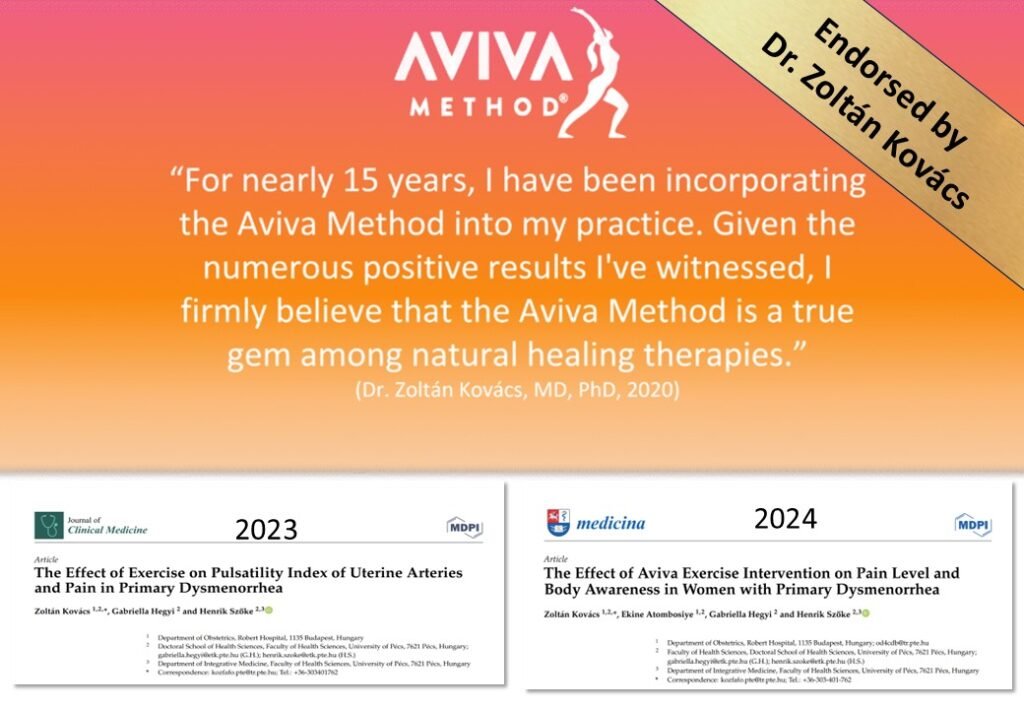
The Aviva Method is not a treatment for blocked fallopian tubes.
However, its dynamic pelvic movements are intended to encourage healthy movement and circulation throughout the pelvis.
Potential ways it may support overall reproductive health include:
Supporting healthy blood circulation
Movement increases blood flow, bringing oxygen and nutrients that tissues need for normal maintenance and repair.
Encouraging lymphatic circulation
The lymphatic system helps remove excess fluid and supports immune function.
Gentle movement may assist normal lymphatic drainage.
Improving pelvic mobility
Restricted connective tissue and muscular tension may influence how freely pelvic organs move.
Dynamic movement may help maintain normal tissue mobility and flexibility.
Supporting muscular coordination
The uterus, pelvic floor, hips, abdomen, and surrounding muscles work together during normal pelvic function.
Regular movement may help maintain healthy muscular coordination.
Helping reduce stress
Chronic stress influences hormones, inflammation, immune function, and reproductive health.
Like many forms of regular physical activity, the Aviva Method may contribute to improved stress regulation and overall well-being.
Can Scar Tissue Heal?
Scar tissue is not always permanent.
The body continuously remodels connective tissue throughout life.
The extent of improvement depends on many factors, including:
- the severity of the original injury
- the amount of fibrosis
- age
- blood supply
- inflammation
- genetics
- overall health
Some women experience improved fertility after addressing inflammation, improving lifestyle, and engaging in regular movement, while others may require medical or surgical treatment.
Currently, there is no high-quality clinical evidence showing that the Aviva Method alone can reopen blocked fallopian tubes.
Hope With Realistic Expectations
Every fertility journey is different.
Some women have functional restrictions that may improve over time.
Others have extensive structural damage that requires medical treatment or assisted reproduction.
Neither outcome reflects personal failure.
If you have been diagnosed with a blocked fallopian tube or have experienced an ectopic pregnancy, working closely with your gynecologist or fertility specialist is essential.
Lifestyle measures—including regular exercise, a nutrient-rich diet, stress management, avoiding smoking, and maintaining overall pelvic health—may support your reproductive system alongside appropriate medical care.
The Aviva Method may be one part of that broader approach by encouraging healthy movement, circulation, body awareness, and pelvic mobility.
While no exercise can promise to reopen a blocked tube, caring for your whole body may help create the best possible environment for reproductive health.
Medical Disclaimer
This article is for educational purposes only and does not constitute medical advice. The Aviva Method is not intended to diagnose, treat, cure, or prevent any disease. If you have been diagnosed with a blocked fallopian tube, hydrosalpinx, or have experienced an ectopic pregnancy, consult your gynecologist or fertility specialist for diagnosis, monitoring, and treatment. Never delay or replace medical care with exercise alone.