10 Natural Ways to Support Hormonal Balance for Women
Have you ever felt like your hormones were working against you?
Perhaps
- Your energy feels unpredictable.
- Your mood seems to shift without warning.
- Your sleep isn’t as restorative as it once was.
- Your menstrual cycle has become irregular.
- Or maybe you’re experiencing symptoms that don’t seem connected at first glance—fatigue, cravings, brain fog, weight changes, PMS, or fertility challenges.
After reading the previous articles in this series, you now know that hormonal imbalance rarely develops because of a single cause.
Instead, it often reflects the combined influence of stress, sleep, nutrition, movement, environmental exposures, and many other factors that interact over time.
The encouraging news is that hormones are constantly responding to the signals they receive from your daily habits and environment.
While some hormonal conditions require medical evaluation and treatment, there is often a great deal you can do to support your body’s natural regulatory systems.
Hormonal balance is rarely about finding a quick fix.
More often, it is about creating conditions that allow your body to function as it was designed to.
Let’s explore the first five foundations.
 Prioritize Sleep: Your Nightly Hormone Reset
 Prioritize Sleep: Your Nightly Hormone Reset
Many people think of sleep simply as rest.
In reality, sleep is one of the most important hormonal events of the day.
From a circadian biology perspective, the timing of sleep is just as important as its duration. The human body follows a strong internal rhythm that coordinates hormone production, repair processes, and reproductive function. One of the most hormonally sensitive windows of this rhythm occurs in the evening, particularly between 9:00 PM and 11:00 PM.
During this time, the body begins its natural transition into a restorative state. Melatonin production starts to rise in response to darkness, signaling that repair and recovery processes should begin. When sleep is aligned with this window—ideally by going to bed before approximately 10:00 PM—the body is more likely to enter deep sleep during the early night cycle, when hormonal recovery is most active.
If sleep onset is delayed significantly beyond this natural window, there may be a misalignment between internal circadian signals and external environmental cues. Over time, this can contribute to elevated evening cortisol levels, reduced melatonin production, and disruption of the hypothalamus–pituitary–ovarian axis, potentially affecting ovulation quality and progesterone production.
During sleep, your body carries out countless repair and regulatory processes that are difficult—or impossible—to perform efficiently while awake.
Several key hormones depend on healthy sleep:
1. Melatonin (Evening → Night transition: ~9 PM–2 AM)
Melatonin production begins to rise in the evening, typically after sunset, and increases significantly when the body is exposed to darkness—especially between approximately 9:00 PM and midnight.
Why this timing matters:
- This is the body’s natural “biological night signal”
- Melatonin prepares the brain and body for deep repair
- It helps synchronize the circadian rhythm that regulates reproductive hormones
- It supports ovarian function through antioxidant protection
When sleep is delayed and light exposure continues late into the evening, melatonin release is reduced or postponed, which can weaken the body’s overall hormonal rhythm.
2. Growth Hormone (Deep sleep phase: ~10 PM–2 AM)
Growth hormone is released in its highest pulses during the first cycles of deep sleep, which usually occur shortly after falling asleep.
Why this timing matters:
- This is the body’s strongest repair window
- It supports tissue regeneration, metabolism, and cellular recovery
- It indirectly supports hormonal balance by improving overall endocrine function
If sleep onset is delayed, the body may miss the optimal window for deep sleep-related hormonal release.
3. Cortisol (Night decline → Morning rise: ~10 PM–6 AM)
Cortisol should naturally decrease in the evening and reach its lowest point during early sleep, before rising again in the morning.
Why this timing matters:
- Low nighttime cortisol allows deep rest and hormonal recovery
- Proper decline supports melatonin production
- Stable cortisol rhythm protects the hypothalamus–pituitary–ovarian axis
When sleep is late or disrupted, cortisol may remain elevated in the evening, interfering with melatonin and reproductive hormone regulation.
4. Reproductive Hormones (GnRH → LH/FSH → Estrogen & Progesterone)
The brain’s reproductive signaling system is highly sensitive to circadian timing. These signals are most stable when sleep occurs consistently before midnight.
Why this timing matters:
- The hypothalamus coordinates hormone pulses during sleep
- These signals regulate ovulation and menstrual cycle timing
- Healthy sleep supports progesterone production after ovulation
Chronic misalignment (late nights, irregular sleep) can disrupt these signals over time, affecting cycle regularity and luteal phase quality.
5. Hunger and Satiety Hormones
Sleep also affects leptin and ghrelin.
Leptin helps you feel satisfied.
Ghrelin stimulates hunger.
When sleep becomes insufficient, ghrelin often rises while leptin decreases, increasing cravings and appetite.
This may partly explain why poor sleep is frequently associated with weight gain and stronger cravings for sugary foods.
Simple Ways to Support Better Sleep
 Maintain consistent sleep and wake times.
Get natural sunlight exposure in the morning.
Reduce screen exposure before bedtime.
Keep your bedroom cool, dark, and quiet.
Avoid large meals immediately before sleep.
Create a calming bedtime routine.
Sometimes improving sleep alone can create noticeable improvements in energy, mood, cycle regularity, and overall wellbeing.
2. Stabilize Blood Sugar and Support Insulin Sensitivity
 2. Stabilize Blood Sugar and Support Insulin Sensitivity
One of the most influential hormones in the body is insulin.
Most people think of insulin as a blood sugar hormone.
But insulin affects far more than blood glucose.
It communicates with reproductive hormones, stress hormones, appetite hormones, and metabolic pathways throughout the body.
When meals regularly cause large blood sugar spikes, the body responds by releasing larger amounts of insulin.
Over time, cells may become less responsive to insulin’s signal—a process known as insulin resistance.
This can influence:
• ovulation
• menstrual regularity
• androgen production
• energy levels
• weight regulation
• inflammation
Why Sugar Cravings Can Become a Cycle
Many people experience intense cravings for sweets.
This is not always simply a lack of willpower.
When blood sugar rises rapidly and then falls quickly, the body often seeks another fast source of energy.
This creates a cycle of:
sugar → spike → crash → craving → more sugar
Over time, these repeated fluctuations can place additional stress on hormonal regulation.
Practical Strategies
Instead of focusing on restriction, focus on stability.
Try to include:
Protein with each meal.
Plenty of vegetables and fiber.
Healthy fats such as olive oil, avocado, nuts, and seeds.
Whole-food carbohydrate sources.
Regular meals that prevent extreme hunger.
Many people find that starting the day with a protein-rich breakfast helps reduce cravings later in the day.
Stable blood sugar often translates into more stable energy, mood, and hormonal signaling.
3. Eat an Anti-Inflammatory Diet
 3. Eat an Anti-Inflammatory Diet
Inflammation is one of the hidden drivers behind many hormonal concerns.
As discussed in the previous article, chronic low-grade inflammation can interfere with how hormones communicate with cells.
Imagine trying to have a conversation in a room full of static noise.
The message is still there—but it becomes harder to hear clearly.
The same can happen with hormonal communication.
Foods That Support a Lower-Inflammation Environment
Focus on foods that provide vitamins, minerals, antioxidants, and healthy fats.
Examples include:
• colorful vegetables
• berries
• leafy greens
• legumes
• nuts and seeds
• olive oil
• fatty fish rich in omega-3 fatty acids
Helpful Nutrients
Certain nutrients play particularly important roles in hormonal health:
• Magnesium
• Zinc
• Vitamin B6
• Omega-3 fatty acids
• Antioxidants
These nutrients support processes involved in hormone production, stress regulation, metabolism, and cellular protection.
Foods to Limit
Frequent consumption of highly processed foods, excessive added sugars, and heavily refined products may contribute to inflammation and blood sugar instability.
The goal isn’t perfection.
The goal is creating a dietary pattern that supports your body more often than it challenges it.
4. Support Gut Health
 4. Support Gut Health
Your gut does much more than digest food.
In fact, it functions almost like an additional communication center within the body.
The gut microbiome—a community of trillions of microorganisms—plays an important role in:
• immune regulation
• metabolism
• inflammation control
• neurotransmitter production
• estrogen metabolism
Researchers even use the term “estrobolome” to describe the collection of gut bacteria involved in processing and recycling estrogen.
When gut health becomes disrupted, hormonal regulation may also become less efficient.
Ways to Support Your Gut
Eat plenty of fiber-rich foods.
Include a variety of vegetables.
Consider fermented foods such as yogurt, kefir, sauerkraut, or kimchi if they suit you.
Stay hydrated.
Move regularly.
Manage chronic stress.
Chew a lot
Supporting gut health often supports hormonal health as well.
5. Reduce Chronic Stress
 5. Reduce Chronic Stress
Stress is a normal and necessary part of life.
The problem arises when stress becomes chronic and recovery becomes insufficient.
When stress remains elevated for long periods, the body increases production of cortisol and other stress-related signals.
Over time, this can influence:
• reproductive hormones
• menstrual regularity
• thyroid function
• blood sugar regulation
• sleep quality
• inflammation
Helpful Stress Management Practices
Different approaches work for different people.
Some evidence-based options include:
Deep breathing exercises
Time in nature
Gentle movement
Meaningful social connection
The Power of Relaxation
Many women find it difficult to truly switch off.
The nervous system often remains in a constant state of alertness.
This is one reason I created the free guided hypnotic relaxation audios and the Premium Cycle-Syncing HypnoRelax Series.
These guided audio sessions combine relaxation techniques, breath awareness, visualization, and progressive muscle relaxation practices designed to help support nervous system recovery and emotional wellbeing throughout the different phases of the menstrual cycle.
Many women find that having dedicated time for deep relaxation helps them reconnect with their bodies and navigate cycle-related challenges with
greater ease.
For some individuals, prayer, spiritual practices, or religious faith can also provide comfort, resilience, and a sense of meaning during difficult periods.
Stress management isn’t about eliminating stress completely.
It’s about giving your body regular opportunities to recover.
6. Move Your Body Regularly
 6. Move Your Body Regularly
Human bodies were designed for movement.
Yet modern lifestyles often involve long hours of sitting—at desks, in cars, or in front of screens.
While occasional rest is important, prolonged inactivity can affect multiple systems involved in hormonal health.
Regular physical activity may help:
improve insulin sensitivity
support healthy circulation
reduce chronic inflammation
support cardiovascular health
improve mood and emotional wellbeing
assist with weight management
Movement and Hormones
Exercise influences several important hormones and signaling pathways.
Regular movement can help improve the body’s response to insulin, making blood sugar regulation more efficient.
Physical activity also stimulates the release of endorphins—often called the body’s natural “feel-good” chemicals—which may contribute to improved mood and reduced stress perception.
In women, moderate and consistent physical activity has been associated with improved menstrual health and reduced PMS symptoms.
What Type of Exercise Is Best?
There is no single perfect exercise.
The most beneficial movement is often the one you enjoy enough to do consistently.
A balanced approach may include:
• walking, cycling, swimming
• resistance training
• yoga, tai-chi, qigong
• mobility exercises
• recreational sports
Most health guidelines recommend 150–300 minutes of moderate-intensity exercise per week, which equals about 30–60 minutes on most days. Alternatively, 75–150 minutes of vigorous activity per week can be sufficient if the intensity is higher.
Research suggests that combining cardiovascular activity with strength training may offer particularly broad health benefits.
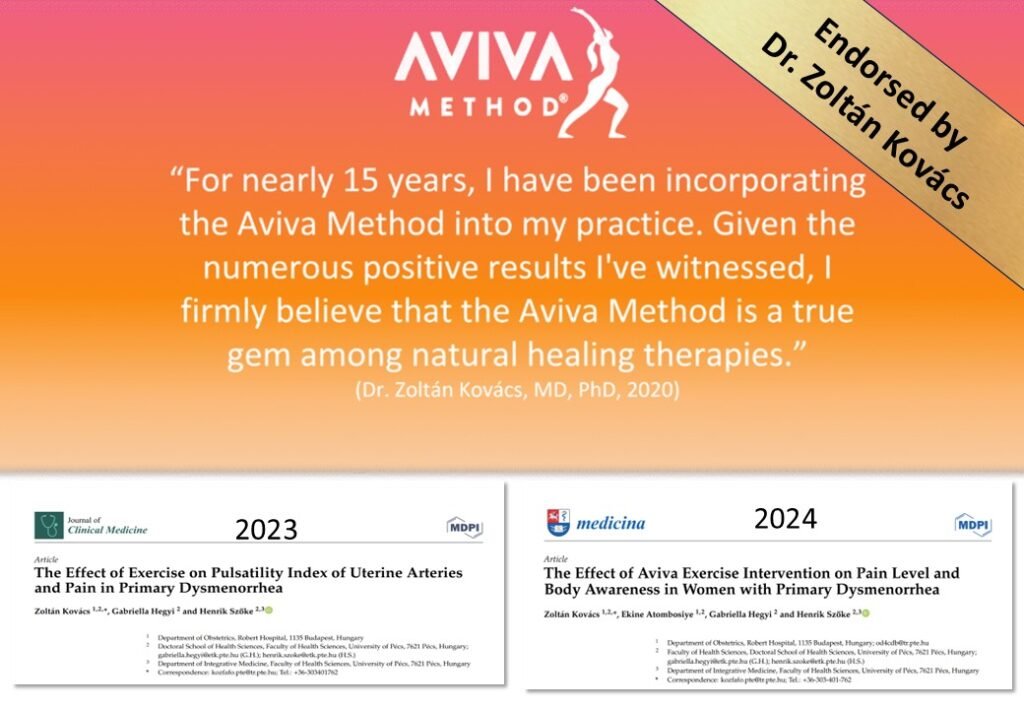
The Aviva Method is a perfect compilation of these exercises.
The goal is not perfection.
The goal is regular movement.
Because hormones generally thrive when the body moves regularly.
7. Respect Recovery and Avoid Overtraining
 7. Respect Recovery and Avoid Overtraining
If movement supports hormonal balance, it might seem logical to assume that more exercise is always better.
But the body doesn’t work that way.
Just as too little movement can create problems, too much exercise without adequate recovery can also place stress on the hormonal system.
When training consistently exceeds recovery capacity, the body may begin shifting into a state of chronic physiological stress.
This can contribute to:
• elevated cortisol
• increased fatigue
• disrupted sleep
• decreased performance
• menstrual irregularities
• reduced reproductive hormone production
In women, excessive exercise combined with insufficient energy intake may contribute to cycle disturbances and, in some cases, loss of menstruation.
Recovery Is Where Adaptation Happens
Exercise creates the stimulus.
Recovery creates the benefit.
This means that rest is not a sign of weakness or laziness.
It is an essential component of progress.
Helpful recovery practices include:
regular rest days
adequate sleep
sufficient calorie and nutrient intake
hydration
stress management
gentle recovery movement
Supporting hormonal health often requires finding the balance between activity and recovery.
8. Reduce Exposure to Endocrine Disruptors
 8. Reduce Exposure to Endocrine Disruptors
Some factors that influence hormones come from inside the body.
Others come from the environment around us.
Certain environmental chemicals are known as endocrine disruptors because they may interfere with normal hormonal signaling.
Examples include substances found in:
• some plastics
• certain pesticides
• some cosmetics
• some household products
• industrial pollutants
Exposure is difficult to avoid completely in modern life.
The goal is not fear or perfection.
The goal is reducing unnecessary exposure where practical.
Simple Steps That May Help
Avoid heating food in plastic containers.
Use glass, ceramic, or stainless steel when possible.
Wash fruits and vegetables thoroughly.
Ventilate your home regularly.
Choose simpler personal care products when practical.
Reduce unnecessary use of heavily fragranced products if they irritate you.
Small Changes Matter
Hormonal health is influenced by cumulative exposures over time.
You don’t need to overhaul your entire lifestyle overnight.
Small, sustainable improvements can add up.
Remember:
Supporting hormonal health isn’t about creating a perfectly toxin-free life.
It’s about making informed choices when reasonable and practical.
9. Track Your Cycle and Symptoms
 9. Track Your Cycle and Symptoms
One of the most powerful tools for supporting hormonal health is also one of the simplest:
Observation.
Many women spend years trying to understand symptoms without realizing that their body may already be providing valuable clues.
The challenge is that patterns often become visible only when we record them.
Why Tracking Matters
Cycle tracking can help you identify:
changes in cycle length
shifts in menstrual flow
recurring PMS symptoms
energy fluctuations
mood patterns
sleep disturbances
possible lifestyle triggers
Over time, this information can reveal connections that would otherwise go unnoticed.
For example, you might discover that:
- Stress consistently worsens PMS
- Poor sleep affects ovulation timing
- Certain foods trigger symptoms
- Symptoms improve when movement increases
- Specific exercises, supplements, or habits ease symptoms
Your Cycle Is Valuable Health Information
The menstrual cycle is sometimes described as a vital sign of women’s health.
It provides ongoing feedback about how the body is functioning.
When tracked consistently, it can become an incredibly useful tool for self-awareness and informed conversations with healthcare professionals.
This is one reason why I encourage women to use a cycle and symptom tracker regularly.
Not to become obsessed with every detail—
but to become familiar with their own patterns.
Because awareness often comes before meaningful change.
10. Consider Pelvic-Focused Movement Practices
 10. Consider Pelvic-Focused Movement Practices
Beyond general physical activity, some women choose movement practices that specifically engage the muscles and tissues associated with the pelvic region.
One example is the Aviva Method, developed by Aviva Steiner.
The method uses dynamic exercises involving the hips, pelvis, lower abdomen, buttocks, lower back, and pelvic floor.
Why the Aviva Method (Dynamic and Rhythmic Pelvic-Focused Movement) May Be Helpful
Practitioners suggest that these exercises may:
- promote awareness of the pelvic region
- support mobility and muscular activation
- encourage circulation in the lower abdominal area
- complement an active lifestyle
- support overall pelvic wellbeing, and
- stimulate specific reflexology points
Some women who practice the method regularly report improvements in:
- Cycle awareness and regularity
- Fertility journey
- Menstrual comfort
- PMS
- Perimenopause symptoms
- Hot Flashes
- Body awareness
- Overall wellbeing
Individual experiences vary, and more research is needed to better understand the mechanisms involved.
However, many women find that the dynamic, specific pelvic-focused movement of the Aviva Method becomes a valuable part of a broader hormone-supportive lifestyle.
A Holistic Perspective
The Aviva Method is not intended to replace medical care, proper diet, and a healthy lifestyle.
Rather, many practitioners use it as part of a comprehensive approach that may also include:
• healthy nutrition
• stress management
• adequate sleep
• regular movement
• cycle awareness
• appropriate medical support when needed
As with many lifestyle practices, consistency often matters more than intensity.
Small actions repeated regularly tend to have the greatest long-term impact.
Expert Perspective
 Expert Perspective
As Aviva Method instructors, we often meet women who arrive looking for a single answer to a complex problem.
Sometimes they hope there is one pill, one supplement, one exercise, or one missing piece that will solve everything.
But hormonal health rarely depends on a single factor.
More often, it reflects the combined influence of sleep, stress, nutrition, movement, recovery, environmental exposures, and overall lifestyle.
What we frequently observe is that when women begin supporting several of these areas together, they often develop a deeper understanding of their body’s signals and report meaningful improvements in their overall wellbeing.
The goal is not perfection.
The goal is creating an environment where the body has the best opportunity to function as intended.
Final Thoughts
Hormonal balance is not something you force.
It is something you support.
A nourishing breakfast.
A better night’s sleep.
A walk outdoors.
A few minutes of deep breathing.
A healthy meal.
A moment of rest.
Special movement practice, such as the Aviva Method.
A greater awareness of your cycle.
Individually, these actions may seem small.
Together, they create the conditions in which hormonal health can thrive.
And perhaps that’s one of the most empowering things to remember:
Your hormones are listening to the messages you send every day.
Not just through what you eat or how you exercise—
but through how you live.
The small choices you make consistently may matter far more than any quick fix ever could.
Frequently Asked Questions About Supporting Hormonal Balance Naturally
Can hormonal imbalance be corrected naturally?
It depends on the underlying cause.
Lifestyle factors such as sleep, nutrition, stress management, movement, and environmental exposures can significantly influence hormonal health. However, some hormonal conditions may require medical evaluation and treatment.
Natural approaches are often most effective when used as part of a comprehensive strategy that addresses the root causes contributing to hormonal imbalance.
How long does it take to notice improvements?
Hormonal changes rarely happen overnight.
Some people notice improvements in energy, sleep, or mood within a few weeks of making supportive lifestyle changes.
Menstrual cycle changes may take longer because reproductive hormones operate within monthly cycles. In many cases, it may take several cycles before patterns begin to shift.
Consistency is often more important than intensity.
What is the most important factor for hormonal balance?
There is rarely a single factor.
Hormonal health is influenced by many interconnected systems including:
• sleep
• stress
• nutrition
• blood sugar regulation
• physical activity
• recovery
• gut health
• environmental exposures
Improving several areas together often produces better results than focusing on only one.
Can stress really affect hormones?
Yes.
Chronic stress can influence cortisol production and may affect reproductive hormones, thyroid function, blood sugar regulation, sleep quality, and inflammation.
This is one reason why stress management is considered an important part of hormonal wellbeing.
Does exercise help balance hormones?
Regular physical activity may support hormonal health by improving insulin sensitivity, reducing inflammation, supporting circulation, and helping regulate stress.
However, excessive exercise without adequate recovery can also place stress on the body and may contribute to hormonal disruptions in some individuals.
Balance is key.
Why should I track my menstrual cycle?
Your cycle provides valuable information about your overall health and hormonal balance.
Tracking can help identify patterns related to:
• PMS symptoms
• energy levels
• mood changes
• sleep quality
• cycle regularity
• possible lifestyle triggers
Over time, cycle tracking can increase body awareness and support more informed health and lifestyle decisions.
Can the Aviva Method support hormonal health?
The Aviva Method is a movement practice that focuses on activating muscles associated with the pelvic region and stimulating specific reflexology points.
Some women and practitioners report benefits related to cycle awareness, menstrual regularity, period comfort, improvement in hormonal panel, and overall well-being when the exercises are practiced regularly.
Experiences vary from person to person, and the method is best viewed as one component of a broader hormone-supportive lifestyle rather than a standalone solution.
When should I seek medical advice?
It is important to consult a healthcare professional if you experience:
• absent periods
• very irregular cycles
• unusually heavy bleeding
• severe pelvic pain
• infertility concerns
• symptoms that significantly affect daily life
Lifestyle support can be valuable, but medical evaluation remains important when symptoms are persistent, severe, or unexplained.