Article

Cycle Influencing Factors Part (5.9): EDCs and PMS

In the previous part, we explored how endocrine-disrupting chemicals (EDCs) may influence ovulation, hormone signaling, and menstrual cycle regularity. In this article, we’ll examine another important question: could environmental chemicals affect how you feel during your cycle? We’ll look at the current evidence on PMS, PMDD, menstrual cramps, and heavy menstrual bleeding.   Many women

Help others discover the Aviva Method.

Cycle Influencing Factors Part (5.9): EDCs and PMS Read More »
Cycle Influencing Factors Part(5.8): EDCs and the Ovulation

“Your menstrual cycle is one of the most sensitive indicators of hormonal health. Because it depends on the precise coordination of many hormones, researchers have long wondered whether environmental chemicals that interact with the endocrine system might also influence menstrual function. The answer, according to current evidence, is both fascinating and complex.”   Over the

Help others discover the Aviva Method.

Cycle Influencing Factors Part(5.8): EDCs and the Ovulation Read More »

Cycle Influencing Factors Part(5.7): EDCs and the Air You Breath

In the previous parts, we explored food, plastics, and drinking water.  We looked at cosmetics, household products, indoor air, and household dust. In this final part, we’ll step outside the home and examine workplaces, environmental pollution, and practical strategies for reducing exposure in a realistic, evidence-based way. Workplaces: When Exposure Becomes More Frequent For many

Help others discover the Aviva Method.

Cycle Influencing Factors Part(5.7): EDCs and the Air You Breath Read More »

Cycle Influencing Factors Part(5.6): The Hidden EDCs Lurking in Your Skincare and Cleaning Cabinet

  In the previous part, we explored how food, food packaging, plastics, and drinking water can contribute to everyday exposure to endocrine-disrupting chemicals (EDCs). In this article, we’ll move beyond the kitchen and examine another important area of daily life—our homes and the products we use on our bodies. The average person uses dozens of

Help others discover the Aviva Method.

Cycle Influencing Factors Part(5.6): The Hidden EDCs Lurking in Your Skincare and Cleaning Cabinet Read More »

Cycle Influencig Factros Part (5.5): EDCs in Your Diet – From Containers to Consumables

  “Endocrine-disrupting chemicals aren’t hidden in one mysterious place—they’re found in many aspects of modern life. The goal isn’t to avoid everything, but to understand where exposures come from and which changes are likely to have the greatest impact.”   In the previous articles, we explored what endocrine-disrupting chemicals (EDCs) are and how they may

Help others discover the Aviva Method.

Cycle Influencig Factros Part (5.5): EDCs in Your Diet – From Containers to Consumables Read More »

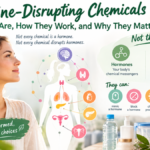
Graphic titled "Endocrine-Disrupting Chemicals: What They Are, How They Work, and Why They Matter" featuring a woman beside an endocrine system diagram, comparing natural hormones with endocrine disruptors, displaying five icons showing how EDCs interfere with signaling, and showing everyday items like a plastic water bottle, lotion, food container, and apple.

Cycle influencing Factors Part(5.4): EDCs Coctail and Low Dosage Effect

  Why Endocrine Disruptors Are Different from Many Other Chemicals For many substances, toxicology follows a simple principle: The higher the dose, the greater the effect. For example, drinking one cup of coffee usually has a smaller effect than drinking ten cups. Many medicines work in a similar way. A larger dose generally produces a

Help others discover the Aviva Method.

Cycle influencing Factors Part(5.4): EDCs Coctail and Low Dosage Effect Read More »

Graphic titled "Endocrine-Disrupting Chemicals: What They Are, How They Work, and Why They Matter" featuring a woman beside an endocrine system diagram, comparing natural hormones with endocrine disruptors, displaying five icons showing how EDCs interfere with signaling, and showing everyday items like a plastic water bottle, lotion, food container, and apple.

Cycle Influencing Factors Part (5.3): How the Endocrine Disruptors Works

“Not everything that affects hormones is a hormone—and not every chemical that enters the body disrupts hormones. Understanding the difference is the first step toward making informed, balanced choices.”   Over the past few decades, scientists have become increasingly interested in a group of substances known as endocrine-disrupting chemicals, often shortened to EDCs. These chemicals

Help others discover the Aviva Method.

Cycle Influencing Factors Part (5.3): How the Endocrine Disruptors Works Read More »

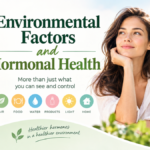
Graphic titled "Environmental Factors and Hormonal Health: More than just what you can see and control" showing a woman smiling beside an endocrine system diagram, six icons labeled Air, Food, Water, Products, Light, and Home, and nature-inspired side panels.

Cycle Influencing Factors (Part 5.2): Potential Sources of Endocrine Disrupting Chemicels (EDCS)

Absolutely. I would make Part 2 the practical bridge between the introduction and the detailed articles that follow. It introduces each major environmental factor without going into excessive detail (since each will have its own article later), while emphasizing realistic, evidence-based choices rather than fear. This keeps the tone consistent with the rest of your

Help others discover the Aviva Method.

Cycle Influencing Factors (Part 5.2): Potential Sources of Endocrine Disrupting Chemicels (EDCS) Read More »

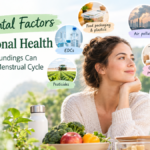
Graphic titled "Environmental Factors and Hormonal Health: How Your Surroundings Can Influence Your Menstrual Cycle, Part 2". A woman rests her chin on her hand surrounded by circular photos labeled Pesticides, EDCs, Food packaging & plastics, Air pollution, Indoor environments, Cosmetics & personal care, Drinking water, Microplastics, and Pregnancy & childhood.

Cycle Influencing Factors (Part 5.1): How Your Surroundings Can Influence Your Menstrual Cycle

Environmental Factors and Hormonal Health When we think about hormonal health, we often focus on the things we can easily see and control—nutrition, exercise, sleep, stress, and medical conditions. These are certainly important. They play a major role in supporting a healthy menstrual cycle and overall well-being. But hormones don’t exist in isolation. Every day,

Help others discover the Aviva Method.

Cycle Influencing Factors (Part 5.1): How Your Surroundings Can Influence Your Menstrual Cycle Read More »

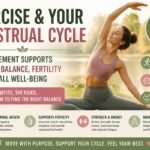
A woman stretching outdoors at sunrise with the title "Exercise and Your Menstrual Cycle: How Movement Supports Hormones & Fertility." The image represents healthy movement, hormonal balance, reproductive health, and wellness.

Cycle Influencing Factors (Part 4.1) When Movement Helps and When It Can Disrupt Hormones

Cycle Influencing Factors Series Most of us have heard that exercise is good for our health. It strengthens muscles and bones, supports cardiovascular fitness, improves mood, and helps manage stress. But exercise also has another important role that is often overlooked: it can significantly influence your menstrual cycle, fertility, and hormonal balance. The relationship between

Help others discover the Aviva Method.

Cycle Influencing Factors (Part 4.1) When Movement Helps and When It Can Disrupt Hormones Read More »

Shopping Cart