The Four Phases of a Healthy Menstrual Cycle
Have you ever wondered why some days you feel energetic and motivated, while on other days you crave rest, comfort, and a quiet evening at home?
Or why your appetite, sleep, mood, and exercise performance seem to change throughout the month?
These shifts are often not random.
They are part of your menstrual cycle—a remarkable rhythm orchestrated by hormones, the brain, the ovaries, and the reproductive system.
Many women are taught that a menstrual cycle is simply the time between one period and the next. In reality, your cycle is much more than menstruation. It is a dynamic process that influences many aspects of physical, emotional, and reproductive health.
Learning about the phases of your cycle can help you better understand your body’s signals, recognize what is typical for you, and make cycle tracking more meaningful.
What Is the Menstrual Cycle?
The menstrual cycle is a recurring series of hormonal changes that prepares the body for a possible pregnancy each month.
The cycle begins on the first day of menstrual bleeding and ends the day before the next period starts.
A healthy menstrual cycle is typically between 21 and 35 days long, with the average cycle lasting approximately 28 days.
One of the most common misconceptions about menstrual cycles is that every woman should have a perfect 28-day cycle with ovulation on day 14. In reality, healthy cycles come in many forms.
Some women naturally have shorter cycles, while others consistently have longer cycles. Small variations of a few days from one cycle to the next are often completely normal.
Factors such as stress, illness, travel, significant weight changes, intense physical activity, and different life stages can influence when ovulation occurs and therefore affect cycle length.
The years following the first period and the years leading up to menopause are particularly common times for cycles to be less predictable.
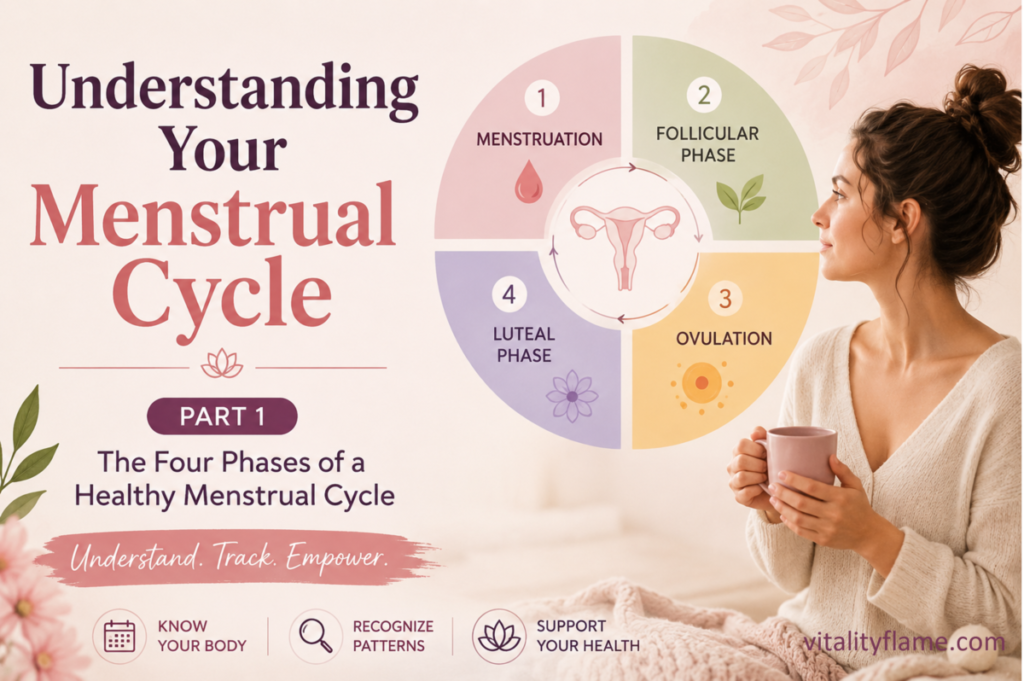
The cycle consists of four key phases:
-
Menstruation
-
Follicular Phase
-
Ovulation
-
Luteal Phase
Although the menstrual cycle is often discussed in relation to fertility, it affects much more than reproduction. Hormonal changes throughout the cycle can influence energy levels, mood, sleep, appetite, body temperature, exercise performance, cervical mucus, and overall well-being.
Many healthcare professionals consider the menstrual cycle an important sign of health because it reflects the complex communication taking place between the brain, hormones, ovaries, and reproductive system.
Let’s explore what happens during each stage.
Phase 1: Menstruation
The Beginning of a New Cycle
Day 1 of your cycle is the first day of menstrual bleeding.
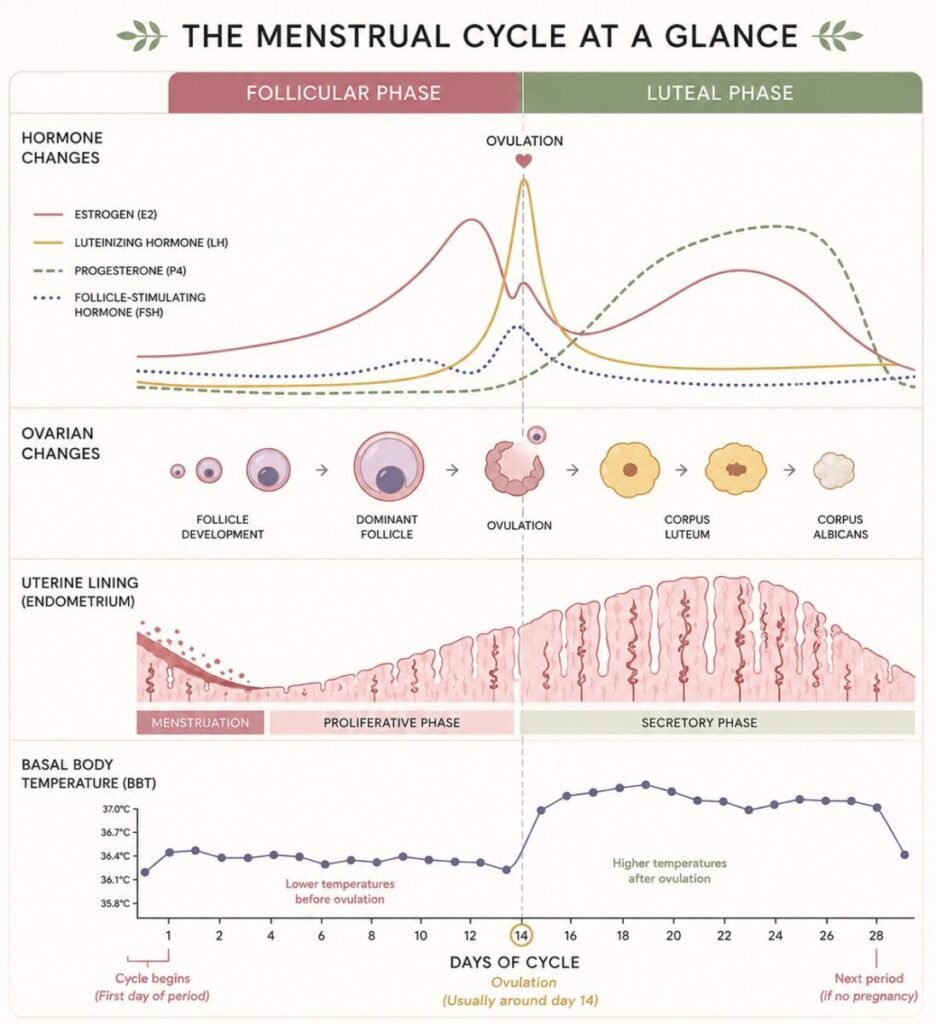
If pregnancy did not occur during the previous cycle, levels of estrogen and progesterone fall. This hormonal shift signals that the uterine lining, which was prepared to support a possible pregnancy, is no longer needed.
As the lining breaks down and sheds, it leaves the body through menstrual bleeding. Menstrual flow contains not only blood, but also cervical secretions, vaginal fluids, and small pieces of endometrial tissue.
For most women, menstruation lasts between 3 and 7 days.
What You May Notice
During menstruation, many women experience:
-
Lower energy levels
-
A greater need for rest
-
Mild cramping
-
Pelvic heaviness
-
Increased emotional sensitivity
-
Reduced exercise performance
Some women feel perfectly normal during their periods, while others prefer to slow down and prioritize rest.
While some women feel ready to continue their usual activities, others find that gentle movement, extra sleep, warm baths, or self-care practices feel especially supportive during this phase.
Both experiences can be normal.
Phase 2: The Follicular Phase
Preparing for Ovulation
The follicular phase begins on the first day of menstruation and continues until ovulation.
This is the most variable phase of the cycle and is responsible for most differences in overall cycle length.
During the follicular phase, several small follicles begin developing in the ovaries. Each follicle contains an immature egg.
As these follicles grow, they produce increasing amounts of estrogen. Usually, one follicle becomes dominant and continues maturing while the others stop developing.
At the same time, estrogen helps rebuild and thicken the uterine lining after menstruation and gradually changes cervical mucus in preparation for ovulation.
What You May Notice
As estrogen increases, many women report:
-
Improved mood
-
More stable energy
-
Better concentration
-
Increased motivation
-
Faster exercise recovery
-
Greater social confidence
Many women find this is a good time for planning, learning new skills, tackling challenging projects, or increasing exercise intensity.
You may suddenly feel more interested in exercise, eager to organize your schedule, or motivated to begin projects you have been postponing.
Many women describe this phase as feeling like a gradual return of energy after menstruation.
Cervical Mucus Changes
As ovulation approaches, cervical mucus often changes.
You may notice:
-
Dryness after menstruation
-
Sticky or tacky mucus
-
Creamy or lotion-like mucus
These changes are part of the body’s natural preparation for ovulation and are influenced by rising estrogen levels.
Why Cycle Length Can Vary
Most variations in cycle length occur during the follicular phase.
The luteal phase after ovulation tends to be relatively consistent, usually lasting between 12 and 16 days.
This means that a longer cycle is often the result of delayed ovulation rather than an unusually long luteal phase.
Phase 3: Ovulation
The Fertile Window
Ovulation is the central event of the menstrual cycle.
It marks the transition between the follicular phase and the luteal phase and occurs when a mature egg is released from the ovary.
In many cycles, ovulation occurs somewhere between days 12 and 16, but healthy ovulation can happen earlier or later depending on the length of the cycle.
Ovulation does not happen randomly. As estrogen levels rise during the follicular phase, they eventually trigger a surge of luteinizing hormone (LH). This LH surge signals the dominant follicle to release its mature egg.
Once released, the egg is captured by the fallopian tube, where fertilization can occur if sperm are present.
What You May Notice
Many women observe:
-
Increased cervical mucus
-
Slippery sensations
-
Increased libido
-
Higher energy
-
Greater confidence
-
Enhanced sociability
Some women feel particularly outgoing, motivated, or socially engaged around ovulation, while others notice little change at all.
Some women also experience mild one-sided pelvic discomfort around ovulation.
Fertile Cervical Mucus
Around ovulation, cervical mucus often becomes:
-
Clear
-
Stretchy
-
Slippery
-
Similar to raw egg white
These changes are caused by rising estrogen levels.
Fertile cervical mucus helps nourish and protect sperm while creating an environment that supports their movement toward the egg.
The Fertile Window
The fertile window includes:
-
few days before ovulation
-
The day of ovulation
-
Possibly the day after ovulation
Because sperm can survive for a few days in fertile cervical mucus, pregnancy can occur from intercourse before ovulation takes place.
Phase 4: The Luteal Phase
The Post-Ovulation Phase
After ovulation, the follicle that released the egg does not simply disappear.
Instead, it transforms into a temporary hormone-producing structure called the corpus luteum.
The corpus luteum becomes the main source of progesterone during the second half of the cycle.
Progesterone helps prepare the uterine lining for a possible pregnancy and influences many of the changes women notice during the luteal phase.
Unlike the follicular phase, the luteal phase is relatively consistent and typically lasts around 12 to 16 days.
What You May Notice
Progesterone can influence many aspects of daily life.
Some women notice:
-
A need for a calmer pace
-
Greater emotional sensitivity
-
Increased appetite
-
Food cravings
-
Breast tenderness
-
A greater need for sleep
-
More introspection
During this phase, some women naturally gravitate toward quieter activities such as reading, journaling, creative hobbies, meditation, or spending time at home.
Not every woman experiences these changes, but many notice recurring patterns from cycle to cycle.
Basal Body Temperature
Progesterone has a natural warming effect on the body’s temperature regulation system.
After ovulation, many women experience a sustained temperature increase of approximately 0.2–0.5°C.
Because this temperature shift occurs only after ovulation, tracking Basal Body Temperature (BBT) can help confirm that ovulation has already taken place.
What Happens If Ovulation Does Not Occur?
Not every menstrual cycle includes ovulation.
In some cycles, the hormonal signals required for ovulation do not occur, and no egg is released. These are called anovulatory cycles.
Occasional anovulatory cycles can occur during adolescence, around perimenopause, or during times of significant physical or emotional stress.
However, frequent anovulatory cycles may be associated with underlying hormonal imbalances or conditions such as PCOS.
Because ovulation is responsible for progesterone production, cycles without ovulation often show different patterns in bleeding, cervical mucus, and temperature.
Supporting Your Cycle Through Healthy Lifestyle Habits
Many women choose to support their menstrual health through lifestyle practices such as regular physical activity, stress management, adequate sleep, and balanced nutrition.
Some women also incorporate the Aviva Method® into their wellness routine as a recreational movement practice that promotes body awareness and regular physical activity.
Practitioners of the Aviva Method often report that regular practice helps them become more aware of their cycle patterns and supports a greater sense of balance throughout the month. Many women report more predictable cycles and improved menstrual well-being as part of their personal journey with the method.
Research investigating the Aviva Method has also reported improvements in overall well-being, reductions in premenstrual symptoms, and decreased menstrual pain among participants. While individual experiences vary, these findings suggest that consistent practice of the Aviva Method exercise sequence may play a supportive role in menstrual health and quality of life.
Supporting Your Cycle Through Rest and Stress Management
While nutrition, movement, and sleep often receive a great deal of attention, stress management is another important piece of menstrual well-being.
The menstrual cycle is influenced by a complex communication network between the brain, hormones, and reproductive system. Periods of ongoing stress may affect this communication and can sometimes contribute to changes in cycle patterns, ovulation timing, sleep quality, mood, and overall well-being.
For this reason, many women find it helpful to include regular relaxation practices as part of their cycle-supportive routine.
To support this process, Vitality Flame has created the Cycle Syncing Hypnotic Relaxation Series—a collection of four guided audio experiences designed to accompany the four phases of the menstrual cycle.
Each session includes a combination of:
- Relaxation techniques
- Breathing exercises
- Guided visualizations
- Reflective inner-work practices
tailored to the unique characteristics of that phase of the cycle.
The intention is not to change or control the cycle, but to create dedicated space for rest, self-awareness, and connection with your body’s natural rhythm.
Whether you are in the reflective days of menstruation, the energizing follicular phase, the expansive ovulatory phase, or the introspective luteal phase, each audio is designed to support the emotional and mental themes that many women experience during that time.
Many women find that combining cycle tracking, healthy lifestyle habits, movement practices such as the Aviva Method®, and regular relaxation creates a more supportive and mindful relationship with their menstrual cycle.
The Cycle Syncing Hypnotic Relaxation Series is intended for relaxation, stress reduction, and personal well-being. It is not intended to diagnose, treat, cure, or prevent any medical condition.
Why Understanding Cycle Phases Matters
Understanding the four phases of your cycle can help you make sense of changes that might otherwise seem random.
For example:
-
Lower energy during menstruation may simply reflect where you are in your cycle.
-
Increased motivation during the follicular phase may coincide with rising estrogen.
-
Fertile cervical mucus can signal approaching ovulation.
-
Increased appetite during the luteal phase may be related to progesterone.
Symptoms are not always problems to eliminate.
Often, they are valuable pieces of information.
Changes in energy, appetite, mood, temperature, sleep, or cervical mucus can provide clues about what is happening hormonally throughout your cycle.
Recognizing these patterns can help you work with your body rather than feeling surprised by it.
Cycle Tracking: Turning Observations Into Insights
One of the most effective ways to learn about your cycle is to track it.
Many women discover that keeping a record of:
-
Menstrual flow
-
Cervical mucus
-
Mood
-
Energy
-
Sleep
-
Appetite
-
Exercise
-
Symptoms
-
Diet
-
Habits
helps reveal patterns that are difficult to notice day by day.
Keeping a cycle journal or menstrual calendar for several months can help you identify your own unique pattern.
Over time, you may notice when you typically ovulate, how long your luteal phase lasts, when certain symptoms tend to appear, and how lifestyle factors such as stress, sleep, exercise, illness, diet, or travel influence your cycle, emotions, and symptoms.
Cycle tracking can also help you recognize changes that may be worth discussing with a healthcare professional.
Your Experience May Not Match Someone Else’s
Although the menstrual cycle follows the same basic biological pattern, the experience of each phase can vary considerably from woman to woman.
Some women notice clear changes in mood, energy, appetite, cervical mucus, and body temperature throughout the month. Others experience much more subtle shifts.
Neither experience is necessarily better or worse.
The goal of cycle awareness is not to compare yourself to someone else’s cycle, but to become familiar with your own body’s unique rhythm.
Your Cycle Is More Than Your Period
Your menstrual cycle is not just a monthly event.
It is an ongoing conversation between your brain, hormones, ovaries, uterus, and body.
Each phase has its own purpose, strengths, and signals.
Most of these hormonal events occur quietly behind the scenes, yet your body often provides clues along the way.
Changes in bleeding patterns, cervical mucus, body temperature, mood, energy, appetite, and sleep can all reflect what is happening during different phases of the cycle.
Learning to recognize these signs is the first step toward greater cycle awareness and a better lifestyle that suits you.
The more you learn about your cycle, the more empowered you can become to understand your health, fertility, and overall well-being.
In Part 2, we’ll take a closer look at menstruation and explore an important question many women have:
What does a healthy period actually look like, and what might your menstrual flow be telling you about your health?