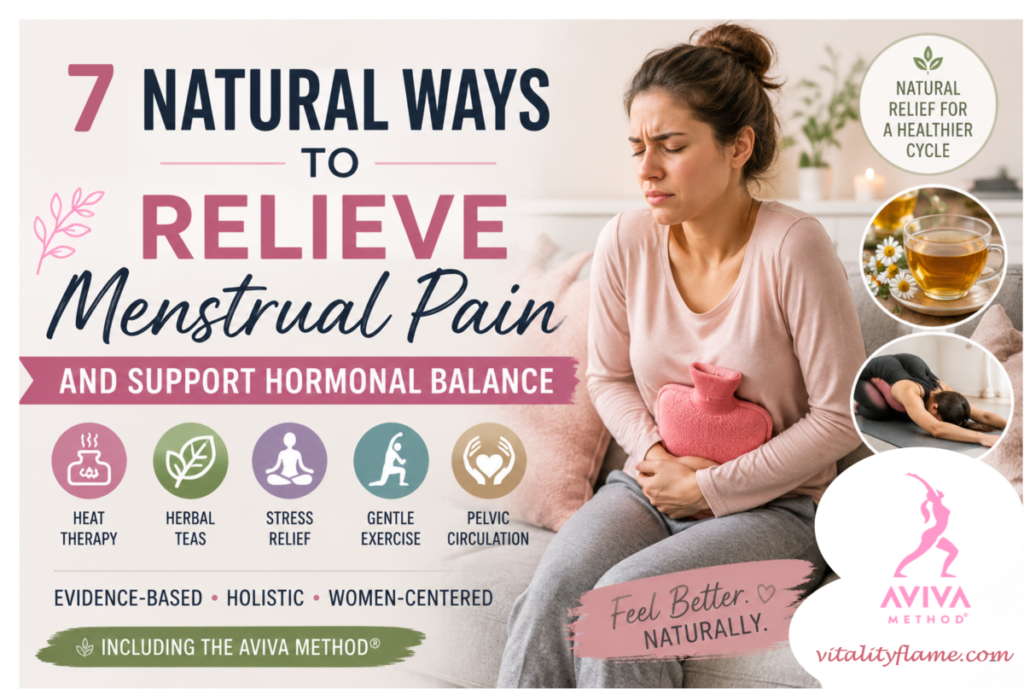
Are you tired of reaching for painkillers every month?
You’re not alone. Studies show that 50–90% of menstruating women experience period pain, ranging from mild discomfort to debilitating cramps that disrupt daily life (Armor et al., 2019).
The good news? Research confirms that natural approaches—especially targeted exercise like the Aviva Method—can significantly reduce menstrual pain without medication. Some women even experience complete relief within just a few months of consistent practice.
In this guide, you’ll discover evidence-based natural strategies to ease period cramps, understand why they work, and learn how to prevent menstrual pain before it starts.
Understanding Period Pain: What’s Really Happening in Your Body
Menstrual pain (primary dysmenorrhea) occurs when your uterus contracts to shed its lining. These contractions are triggered by prostaglandins —hormone-like substances that cause inflammation and pain.
Higher prostaglandin levels = stronger uterine contractions = more intense cramping (Dawood, 2006).
Common symptoms include:
- Lower abdominal cramping
- Lower back pain
- Thigh pain
- Nausea and digestive discomfort
- Fatigue and headaches
The key to lasting relief isn’t quick fixes—it’s prevention. By supporting your body’s natural rhythms through lifestyle, nutrition, movement, and stress management, you can reduce or even eliminate period pain over time.
1. The Aviva Method: Rhythmic Movement for Lasting Menstrual Relief
What Is the Aviva Method?
The Aviva Method is a specialized exercise system designed specifically for women’s hormonal and reproductive health. It combines rhythmic pelvic movements, stretching, and breathwork to improve circulation, balance hormones, and support menstrual comfort.
Unlike general exercise, the Aviva Method targets the pelvic region with gentle, controlled movements that:
- Enhance blood flow to reproductive organs
- Reduce pelvic congestion
- Relax uterine muscles
- Support hormonal balance
- Strengthen the pelvic floor
The Science Behind the Aviva Method
Research consistently shows that exercise has large effects in reducing menstrual pain compared to no treatment—often matching or exceeding the effectiveness of pain medication (Armour et al., 2019).
A comprehensive 2024 systematic review analyzing data from over 8,000 women found that regular physical activity significantly reduces menstrual pain intensity, with exercise showing superior results compared to most other interventions (Ying et al., 2024).
How does exercise relieve period cramps?
- Reduces prostaglandin production : Physical activity naturally lowers inflammatory prostaglandins that trigger cramping (Dawood, 2006)
- Improves pelvic circulation : Enhanced blood flow reduces congestion and muscle tension
- Releases endorphins : Natural pain-relieving hormones that elevate mood
- Relaxes smooth muscles : Gentle movement prevents muscle spasms in the uterus
- Reduces inflammation : Regular exercise has systemic anti-inflammatory effects
The Aviva Method specifically targets these mechanisms through pelvic-focused rhythmic movements that directly address the root causes of menstrual discomfort.
Real Results from Aviva Instructors
As Aviva instructors working with women experiencing menstrual pain, we consistently observe that clients who practice 2–3 times per week report significant reduction or complete elimination of period pain within just a few months .
This isn’t about managing symptoms temporarily—it’s about addressing underlying dysfunction and restoring natural hormonal balance.
2. Herbal Teas: Traditional Remedies with Modern Science
Certain herbal teas contain bioactive compounds that naturally reduce menstrual pain through multiple mechanisms: lowering prostaglandins, relaxing uterine muscles, and reducing inflammation.
Ginger Tea – The Most Researched Anti-Inflammatory
Scientific name : Zingiber officinale
Active compounds : Gingerols, shogaols
How it works : Ginger’s powerful anti-inflammatory compounds inhibit prostaglandin synthesis—similar to NSAIDs but without side effects.
The evidence : Multiple systematic reviews confirm ginger significantly reduces menstrual pain intensity, with some studies showing effectiveness comparable to ibuprofen (Chen et al., 2016; Daily et al., 2015).
How to use : Drink 2–3 cups daily, starting 1–2 days before your period.
Raspberry Leaf Tea – The Traditional Uterine Tonic
Scientific name : Rubus idaeus
Active compounds : Fragarine (alkaloid), flavonoids, tannins, magnesium
How it works: Fragarine tones the smooth muscle of the uterus, helping contractions become more efficient and less painful. The mineral content supports muscle relaxation.
How to use : 1–2 cups daily during the week before menstruation or throughout your cycle.
Chamomile Tea – Natural Antispasmodic
Scientific name : Matricaria chamomilla
Active compounds : Apigenin, bisabolol, chamazulene
How it works : Apigenin acts as a smooth muscle relaxant, directly reducing uterine spasms. Research shows chamomile consumption reduces menstrual pain intensity while promoting relaxation (Khalid, 2021).
How to use : 2–3 cups daily, especially in the evening for combined pain relief and stress reduction.
Peppermint Tea – Smooth Muscle Relaxant
Scientific name : Mentha × piperita
Active compound : Menthol
How it works : Menthol naturally relaxes smooth muscles, reducing spasms and providing mild analgesic effects. Also helps reduce bloating.
How to use : 2–3 cups daily as needed.
Fennel Tea – Clinical Evidence for Dysmenorrhea
Scientific name : Foeniculum vulgare
Active compounds : Anethole, fenchone
How it works : Studies suggest fennel reduces prostaglandin levels and regulates uterine contractions. Clinical trials show significant pain reduction in women with dysmenorrhea (Sadeghi Aval et al., 2019).
How to use : 1–2 cups daily, starting before menstruation.
Cinnamon Tea – Circulation and Anti-Inflammatory Support
Scientific name : Cinnamomum verum
Active compounds : Cinnamaldehyde, polyphenols
How it works : Anti-inflammatory properties reduce pain while improved circulation decreases pelvic congestion.
Lemon Balm Tea – Nervous System Support
Scientific name : Melissa officinalis
Active compounds : Rosmarinic acid, flavonoids
How it works : Calms the nervous system and provides mild antispasmodic effects. Particularly helpful when stress intensifies menstrual symptoms.
3. Heat Therapy: Simple Yet Scientifically Proven
Applying heat to your lower abdomen or back shows moderate effects in reducing menstrual pain (Armour et al., 2019).
How it works :
- Relaxes uterine muscles
- Improves local blood flow
- Reduces prostaglandin-induced spasms
- Stimulates sensory receptors that block pain signals
Application : Use a heating pad, hot water bottle, or warm bath for 15–20 minutes as needed.
4. Anti-Inflammatory Nutrition: Eating to Reduce Pain
What you eat directly influences prostaglandin production and inflammation levels.
Foods That Help Reduce Period Pain:
Omega-3 fatty acids : Wild-caught fish, flaxseeds, walnuts, chia seeds
- Reduce inflammatory prostaglandins
Magnesium-rich foods : Dark leafy greens, pumpkin seeds, dark chocolate, almonds
- Relaxes muscles and reduces cramping
Fiber-rich whole foods : Vegetables, fruits, whole grains, legumes
- Supports estrogen metabolism and hormonal balance
Anti-inflammatory spices : Turmeric, ginger, cinnamon
- Natural COX-2 inhibitors that reduce inflammation
Foods to Avoid:
- Refined sugar and processed foods
- Trans fats and excessive omega-6 oils
- Excessive caffeine and alcohol
- High-sodium foods (increase bloating)
5. Stress Management: Breaking the Pain-Stress Cycle
Stress elevates cortisol levels, which can disrupt hormonal balance and intensify menstrual symptoms.
Evidence-based stress reduction techniques :
- Deep breathing exercises: Activate parasympathetic nervous system (Zou et al., 2018)
- Progressive muscle relaxation: Releases physical tension (Conrad & Roth, 2007)
- Tai Chi, Qi Gong, or gentle Yoga: Combines movement with breath awareness (Kraft et al., 2024; Oh et al., 2024; Zou et al., 2018)
- Meditation : Reduces pain perception (Zeidan et al., 2012)
- Hypnotherapy: May eliminate unconscious blockages (Häuser et al., 2016)
- Walking in nature: Studies suggest that spending time in green environments may help reduce cortisol, one of the body’s primary stress hormones. (Hunter et al., 2019)
- Herbal teas (chamomile, lemon balm): Support nervous system relaxation (Srivastava et al., 2010; Cases et al., 2011)
Practice daily , not just during your period, for cumulative benefits.
6. Sleep Optimization: The Foundation of Hormonal Health
Quality sleep is essential for hormonal regulation and pain management.
Sleep strategies for hormonal health :
- Sleep by 10 PM : Align with natural circadian rhythms
- Morning light exposure : Walk outside within 30 minutes of waking to regulate melatonin
- Consistent sleep schedule : Go to bed and wake at the same time daily
- Cool, dark bedroom : Optimize melatonin production
- Limit evening screen time : Blue light disrupts sleep hormones
Poor sleep increases inflammatory markers and pain sensitivity—making period cramps worse. (Crodelle et al. 2023)
7. Hydration and Gentle Movement Throughout Your Cycle
Adequate hydration reduces bloating and supports cellular function. Aim for 8–10 glasses of water daily, increasing during menstruation.
Gentle daily movement :
- Morning walks (combines light exposure with circulation)
- Stretching
- Light yoga
- Swimming
- The Aviva Method practice (2–3 times weekly)
Avoid : High-intensity exercise during heavy flow days if it feels uncomfortable. Listen to your body.
How to Reduce Period Pain Fast at Home: The Reality Check
The truth about “instant relief“: There is no magic cure for severe period pain in the moment.
However, supportive strategies can provide meaningful comfort:
- Heat application (heating pad or warm bath)
- Gentle pelvic movement (slow hip circles, cat-cow stretches)
- Hydration (warm water or herbal tea)
- Deep breathing exercises (4-7-8 technique)
- Abdominal self-massage (clockwise gentle circles)
- Herbal tea (ginger, chamomile, peppermint)
- Rest in comfortable positions (fetal position, knees to chest)
- Aviva Method gentle movements (if you’re familiar with the practice)
But here’s the crucial insight : The key to lasting relief isn’t managing acute pain—it’s prevention through consistent lifestyle practices .
Prevention: The Real Key to Eliminating Period Pain
Women who address menstrual pain naturally focus on these foundational pillars:
 Regular Aviva Method practice (2–3 times weekly)
 Regular Aviva Method practice (2–3 times weekly)
Directly addresses pelvic circulation, hormonal balance, and muscular tension
Whole-food, fiber-rich nutrition Reduces inflammation and supports estrogen metabolism
Quality sleep (in bed by 10 PM)
Essential for hormonal regulation
Morning light exposure Regulates circadian rhythms and hormone production
Stress management Daily relaxation practices, breathwork, or herbal teas
Adequate hydration Supports all cellular functions and reduces bloating
The result? Many women experience significant reduction or complete elimination of menstrual pain within 2–4 months of consistent practice.
When to Seek Medical Evaluation
While natural approaches help most women with primary dysmenorrhea, see a healthcare provider if you experience:
- Sudden severe pain that’s different from usual
- Pain that doesn’t improve with natural strategies
- Heavy bleeding (soaking through pads/tampons hourly)
- Pain outside of menstruation
- Symptoms that interfere significantly with daily life
These could indicate conditions like endometriosis, fibroids, or pelvic inflammatory disease requiring medical treatment.
Conclusion: Your Path to Pain-Free Periods
Period pain isn’t something you have to accept as normal or manage with medication every month. Scientific evidence strongly supports natural approaches—particularly targeted exercise like the Aviva Method —as effective, sustainable solutions.
The most important takeaway : Consistency matters more than intensity. Regular practice of the Aviva Method 2–3 times weekly, combined with supportive nutrition, quality sleep, stress management, and strategic herbal teas, addresses the root causes of menstrual pain.
Thousands of women have transformed their menstrual health naturally. You can too.
Reference
Armour, M., Parry, K., Steel, K., Smith, C. A., & MacMillan, F. (2019). The effectiveness of self-care and lifestyle interventions in primary dysmenorrhea: A systematic review and meta-analysis. BMC Complementary and Alternative Medicine, 19(22). https://doi.org/10.1186/s12906-019-2433-8
Cases, J., Ibarra, A., Feuillère, N., Roller, M., & Sukkar, S. G. (2011). Pilot trial of
Melissa officinalis L. leaf extract in the treatment of volunteers suffering from mild-to-moderate anxiety disorders and sleep disturbances. Mediterranean Journal of Nutrition and Metabolism, 4(3), 211–218. https://doi.org/10.1007/s12349-010-0045-4
Chen, C. X., Barrett, B., & Kwekkeboom, K. L. (2016). Efficacy of ginger for dysmenorrhea: A systematic review and meta-analysis of randomized controlled trials. Pain Medicine, 17(4), 750–760. https://doi.org/10.1093/pm/pnv047
Conrad, A., & Roth, W. T. (2007). Muscle relaxation therapy for anxiety disorders: It works but how? Journal of Anxiety Disorders, 21(3), 243–264. https://doi.org/10.1016/j.janxdis.2006.08.001
Crodelle, J., Vanty, C., & Booth, V. (2023). Modeling homeostatic and circadian modulation of human pain sensitivity. Frontiers in Neuroscience, 17, 1166203. https://doi.org/10.3389/fnins.2023.1166203
Daily, J. W., Yang, M., & Park, S. (2015). Efficacy of ginger for alleviating symptoms of primary dysmenorrhea: A systematic review and meta-analysis. Journal of Alternative and Complementary Medicine, 21(1), 1–8. https://doi.org/10.1089/acm.2014.0161
Häuser, W., Hagl, M., Schmierer, A., & Hansen, E. (2016). The efficacy, safety and applications of medical hypnosis: A systematic review of meta-analyses. Deutsches Ärzteblatt International, 113(17), 289–296. https://doi.org/10.3238/arztebl.2016.0289
Hunter, M. R., Gillespie, B. W., & Chen, S. Y.-P. (2019). Urban nature experiences reduce stress in the context of daily life based on salivary biomarkers. Frontiers in Psychology, 10, 722. https://doi.org/10.3389/fpsyg.2019.00722
Iacovides, S., Avidon, I., & Baker, F. C. (2015). What we know about primary dysmenorrhea today: A critical review. Human Reproduction Update, 21(6), 762–778. https://doi.org/10.1093/humupd/dmv039
Jo, J., & Lee, S. H. (2018). Heat therapy for primary dysmenorrhea: A systematic review and meta-analysis of its effects on pain relief and quality of life. Scientific Reports, 8, 16252. https://doi.org/10.1038/s41598-018-34303-z
Kraft, J., Waibl, P. J., & Meissner, K. (2024). Stress reduction through taiji: A systematic review and meta-analysis. BMC Complementary Medicine and Therapies, 24, 210. https://doi.org/10.1186/s12906-024-04493-3
Oh, J.-H., Sung, S.-H., Park, J.-K., Jang, S., Shin, B.-C., & Lee, S. (2024). Qigong therapy for stress management: A systematic review of randomized controlled trials. Healthcare, 12(23), 2342. https://doi.org/10.3390/healthcare12232342
Sadeghi Aval, S. B., et al. (2019). Effects of fennel on primary dysmenorrhea: A systematic review. Journal of Pediatric and Adolescent Gynecology. https://doi.org/10.1016/j.jpag.2018.11.004
Srivastava, J. K., Shankar, E., & Gupta, S. (2010). Chamomile: A herbal medicine of the past with bright future. Molecular Medicine Reports, 3(6), 895–901. https://doi.org/10.3892/mmr.2010.377
Xiang, Y., Li, Q., Lu, Z., Yu, Z., Ma, G., & Li, Y. (2025). Efficacy and safety of therapeutic exercise for primary dysmenorrhea: A systematic review and meta-analysis. Frontiers in Medicine, 12. https://doi.org/10.3389/fmed.2025.1540557
Zeidan, F., Grant, J. A., Brown, C. A., McHaffie, J. G., & Coghill, R. C. (2012). Mindfulness meditation-related pain relief: Evidence for unique brain mechanisms in the regulation of pain. Neuroscience Letters, 520(2), 165–173. https://doi.org/10.1016/j.neulet.2012.03.082
Zheng, Q., Huang, G., Cao, W., & Zhao, Y. (2024). Comparative effectiveness of exercise interventions for primary dysmenorrhea: A systematic review and network meta-analysis. BMC Women’s Health, 24, 610. https://doi.org/10.1186/s12905-024-03453-w