Heavy Periods Explained: Causes, Symptoms, and When to Seek Help
Heavy menstrual bleeding is one of the most common reasons women visit a gynecologist.
Many women assume that heavy periods are simply “normal for them.”
Perhaps your mother had heavy periods.
Perhaps you’ve always experienced them.
Perhaps you’ve learned to carry extra pads everywhere and plan your life around your cycle.
But heavy menstrual bleeding should never be dismissed without understanding why it is happening.
Sometimes heavy periods are simply a variation of normal.
In other cases, they may be your body’s way of signaling:
- hormonal imbalance
- lack of ovulation
- uterine fibroids
- adenomyosis
- endometriosis
- thyroid dysfunction
- blood clotting disorders
- perimenopause
- or, more rarely, cancer
Understanding the underlying cause is the first step toward improving your cycle and protecting your long-term health.
What Is Considered a Heavy Period?
The medical term for unusually heavy menstrual bleeding is menorrhagia.
A normal menstrual period typically:
- lasts between 3 and 7 days
- involves approximately 30–80 mL of blood loss
- gradually becomes lighter toward the end
Heavy menstrual bleeding may involve:
- soaking through a pad or tampon every hour
- needing double protection
- waking during the night to change protection
- passing large blood clots
- bleeding longer than 7 days
- experiencing fatigue or dizziness during menstruation
Many women underestimate their blood loss because heavy bleeding has become their normal.
Why Does Menstrual Bleeding Occur in the First Place?
To understand heavy periods, we first need to understand normal menstruation.
Each month estrogen stimulates the uterine lining (endometrium) to grow.
After ovulation, progesterone transforms this lining into a stable, mature environment capable of supporting pregnancy.
If pregnancy does not occur:
- progesterone falls
- the lining breaks down
- menstruation begins
The uterus then contracts to shed the lining while blood vessels constrict to limit blood loss.
A healthy period is therefore a carefully coordinated process involving:
- hormones
- blood vessels
- inflammation
- tissue breakdown
- tissue repair
- blood clotting
When any of these processes become disrupted, heavy bleeding can occur.
The Most Common Hormonal Cause: Anovulation
One of the most overlooked causes of heavy periods is anovulation.
Anovulation means ovulation did not occur.
This is surprisingly common:
- during adolescence
- during perimenopause
- with PCOS
- during periods of significant stress
- after major illness
- after stopping hormonal contraception
Why Does Missing Ovulation Cause Heavy Bleeding?
This is where understanding progesterone becomes crucial.
When ovulation occurs:
- the egg is released
- the follicle becomes the corpus luteum
- progesterone is produced
Progesterone stabilizes and organizes the uterine lining.
Without ovulation:
- no corpus luteum develops
- progesterone remains low
- estrogen continues stimulating the lining
The endometrium becomes thicker and thicker.
Eventually the body can no longer maintain this overgrown tissue.
Instead of shedding in an organized way, the lining breaks down unpredictably.
The result may be:
- very heavy bleeding
- prolonged bleeding
- clotting
- irregular bleeding
- spotting before or after menstruation
This pattern is often called estrogen breakthrough bleeding.
Can Estrogen Dominance Cause Heavy Periods?
Many women have heard the term estrogen dominance.
While the term is often used differently in different health communities, there is a physiological reality behind it.
When progesterone is insufficient relative to estrogen:
- the uterine lining grows excessively
- blood vessel development becomes abnormal
- menstrual bleeding often becomes heavier
This frequently occurs in:
- anovulatory cycles
- PCOS
- perimenopause
- obesity
- chronic stress
Women may experience:
- heavy periods
- blood clots
- PMS
- breast tenderness
- bloating
- mood changes
Why Do Blood Clots Appear During Menstruation?
One of the most alarming experiences for many women is seeing blood clots.
Small clots occasionally occur during menstruation and are often normal.
But why do they form?
Normally, the body releases natural anticoagulants that help menstrual blood flow smoothly.
When bleeding becomes very heavy, the body cannot always keep up.
Blood accumulates inside the uterus faster than it can be broken down.
As a result:
- blood begins to coagulate
- clots form
- the uterus must expel them
Large or frequent clots often indicate:
- heavy blood loss
- fibroids
- adenomyosis
- hormonal imbalance
- anovulatory cycles
Uterine Fibroids and Heavy Periods
Fibroids are among the most common causes of heavy menstrual bleeding.
Fibroids are non-cancerous growths that develop within the uterine muscle.
Some women have no symptoms.
Others experience:
- extremely heavy periods
- prolonged bleeding
- pelvic pressure
- clotting
- anemia
Why Do Fibroids Cause Heavy Bleeding?
Several mechanisms may contribute.
Fibroids can:
Increase Surface Area
More uterine tissue means more tissue shedding during menstruation.
Distort Blood Vessels
Fibroids often alter the normal blood vessel structure within the uterus.
Interfere With Uterine Contractions
The uterus normally contracts to stop bleeding.
Fibroids may reduce this efficiency.
Promote Inflammation
Fibroids can alter inflammatory signaling within the uterine environment.
The result can be periods that feel almost impossible to control.
Adenomyosis: A Common but Underrecognized Cause
Adenomyosis occurs when endometrial tissue grows into the muscular wall of the uterus.
Many women are never diagnosed.
Symptoms often include:
- heavy periods
- large clots
- severe menstrual cramps
- prolonged bleeding
- pelvic pressure
Why Does Adenomyosis Cause Heavy Bleeding?
The displaced tissue responds to hormonal changes each month.
This creates:
- inflammation
- enlargement of the uterus
- abnormal uterine contractions
- increased blood vessel formation
Together, these changes can significantly increase menstrual blood loss.
Can Endometriosis Cause Heavy Periods?
Yes.
Although endometriosis is often associated with pain, heavy bleeding can also occur.
Endometriosis is a condition in which tissue similar to the uterine lining grows outside the uterus.
The resulting inflammation can disrupt:
- hormone signaling
- prostaglandin production
- uterine function
Many women experience:
- heavy periods
- painful periods
- pelvic pain
- fertility challenges
PCOS and Heavy Menstrual Bleeding
Many women assume PCOS only causes missing periods.
In reality, PCOS can also cause extremely heavy periods.
The mechanism is usually anovulation.
Months may pass without ovulation.
During this time:
- estrogen continues stimulating the lining
- the lining becomes excessively thick
When shedding finally occurs, bleeding can be dramatic and prolonged.
Thyroid Disorders and Heavy Periods
The thyroid gland influences nearly every hormonal system in the body.
Hypothyroidism in particular is associated with:
- heavy periods
- prolonged periods
- irregular cycles
Low thyroid hormone can affect:
- ovulation
- estrogen metabolism
- progesterone production
- clotting mechanisms
This is why thyroid testing is often recommended when heavy periods develop.
Blood Clotting Disorders
Sometimes the problem is not the uterus.
Sometimes the issue lies within the blood clotting system itself.
Conditions such as:
- Von Willebrand disease
- platelet disorders
- certain inherited clotting disorders
may cause:
- very heavy periods
- prolonged bleeding
- easy bruising
- nosebleeds
In some women, heavy periods are the first sign of an underlying bleeding disorder.
Perimenopause and Heavy Bleeding
Heavy periods become particularly common during perimenopause.
As ovarian function becomes less predictable:
- ovulation becomes less consistent
- progesterone production decreases
- hormonal fluctuations increase
The result may be:
- heavy bleeding
- clotting
- irregular cycles
- spotting
Although this is common, it should never automatically be assumed to be “just menopause.”
Medical evaluation remains important.
Can Cancer Cause Heavy Menstrual Bleeding?
Yes.
While most heavy periods are not caused by cancer, it is important not to ignore persistent changes.
Heavy bleeding may occasionally be associated with:
- endometrial cancer
- cervical cancer
- uterine cancer
Warning signs include:
- bleeding between periods
- bleeding after menopause
- bleeding after sex
- new heavy bleeding after age 40
- unexplained pelvic pain
Any of these symptoms warrant prompt medical assessment.
Can Heavy Periods Cause Anemia?
Absolutely.
This is one of the most common consequences of chronic heavy menstrual bleeding.
When blood loss exceeds the body’s ability to replace iron:
- iron stores decline
- hemoglobin drops
- anemia develops
Symptoms may include:
- fatigue
- dizziness
- headaches
- shortness of breath
- hair loss
- poor concentration
- heart palpitations
Many women spend years treating fatigue without realizing their heavy periods are the root cause.
When Should You See a Doctor?
Seek medical advice if you experience:
- bleeding lasting longer than 7 days
- soaking a pad every hour
- large blood clots (larger than a coin)
- bleeding between periods
- bleeding after sex
- bleeding after menopause
- severe pain
- symptoms of anemia
- sudden changes in your cycle
Heavy menstrual bleeding should always be investigated rather than assumed to be normal.
Can Lifestyle Factors Influence Heavy Periods?
Lifestyle alone does not explain every case.
However, factors that may contribute include:
- chronic stress
- obesity
- poor sleep
- insulin resistance
- lack of physical activity
- nutritional deficiencies
These factors can affect hormone balance and ovulation.
Supporting Hormonal Health Naturally
Depending on the underlying cause, supportive measures may include:
- maintaining a healthy body weight
- managing stress
- improving sleep quality
- supporting blood sugar balance
- tracking ovulation
- addressing nutrient deficiencies
- following medical recommendations
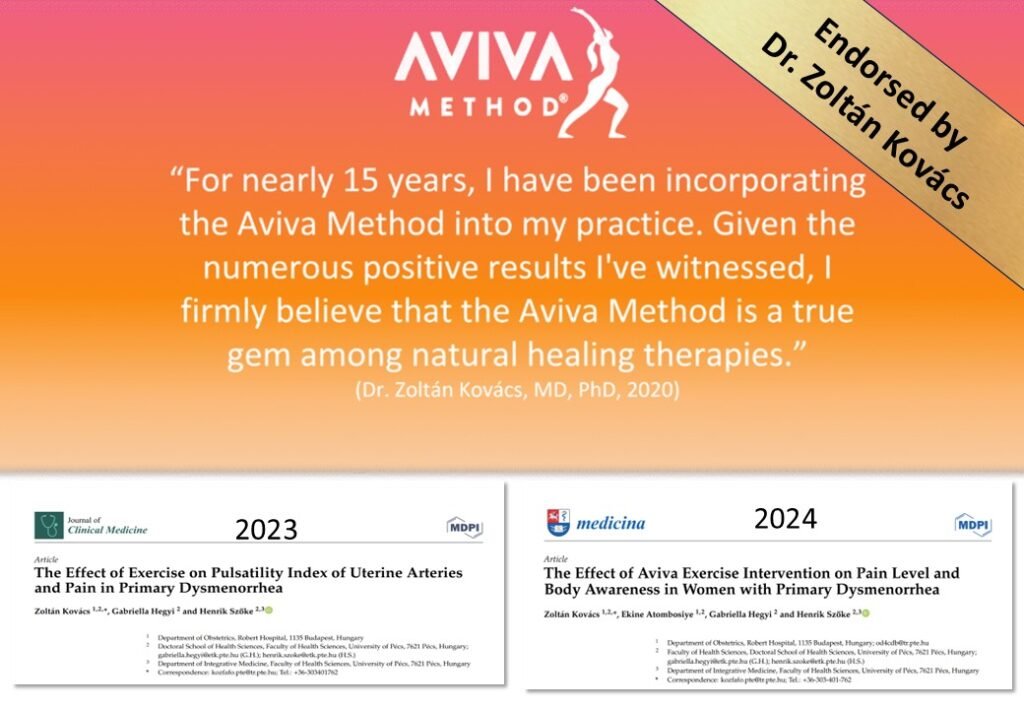
Some women also explore movement-based approaches such as the Aviva Method to support pelvic circulation, body awareness, and overall reproductive health.
For nearly three decades, the Aviva Method has been helping women in Hungary, and we have received countless reports on how it supports hormonal balance. Many practitioners have shared that, after practicing the Aviva exercises regularly, their cycles became consistent and stable, and their menstrual flow returned to a normal range.
While these individual experiences are truly inspiring, they do not guarantee results. We remain open to working with researchers who wish to scientifically validate the method’s effectiveness.
However, persistent heavy bleeding should always be medically evaluated first to identify the underlying cause. Always follow the advice of your healthcare professional.
Key Takeaway
Tracking your cycle is key to understanding your body’s signals. Start monitoring your patterns today—you can find a free printable tracking sheet here. It’s a simple yet powerful tool to help you stay in tune with your hormonal balance.
Heavy menstrual bleeding is not a diagnosis.
It is a symptom.
Your body is communicating that something in the complex interplay among hormones, the uterine lining, blood vessels, inflammation, ovulation, or clotting may not be functioning optimally.
Sometimes the cause is relatively simple.
Sometimes it requires medical treatment.
And occasionally, heavy bleeding can be the first sign of a serious condition.
Understanding why heavy periods occur empowers you to ask better questions, seek appropriate care, and become a more informed observer of your own cycle.
Your menstrual cycle is one of the body’s most valuable health signals. When bleeding becomes unusually heavy, prolonged, or disruptive, it deserves attention—not dismissal.