Common Causes of Spotting Explained: What’s Normal and What Isn’t?
Educational purposes only. This article is not medical advice and does not replace consultation with a qualified healthcare professional.
Introduction
Have you ever noticed brown discharge a few days before your period?
Perhaps you’ve seen light pink spotting in the middle of your cycle.
Maybe your period seemed to finish, only for brown spotting to continue for several more days.
Or perhaps you’ve experienced unexpected bleeding between periods and wondered:
“Is this normal?”
You’re not alone.
Spotting and irregular bleeding are among the most common menstrual concerns women experience throughout their reproductive years.
In many cases, spotting is completely harmless and simply reflects normal hormonal fluctuations.
In other cases, it may be your body’s way of signaling that something needs attention.
Learning to understand the different types of spotting can help you distinguish between normal cycle variations and symptoms that may deserve medical evaluation.
In this article, we’ll explore:
-
What spotting actually is
-
Common causes of spotting
-
Spotting before menstruation
-
Spotting after menstruation
-
Ovulation spotting
-
Implantation bleeding
-
Bleeding between periods
-
Perimenopause spotting
-
Spotting related to hormonal contraception
-
When spotting may indicate an underlying health issue
-
When to seek medical advice
Let’s begin.
What Is Spotting?
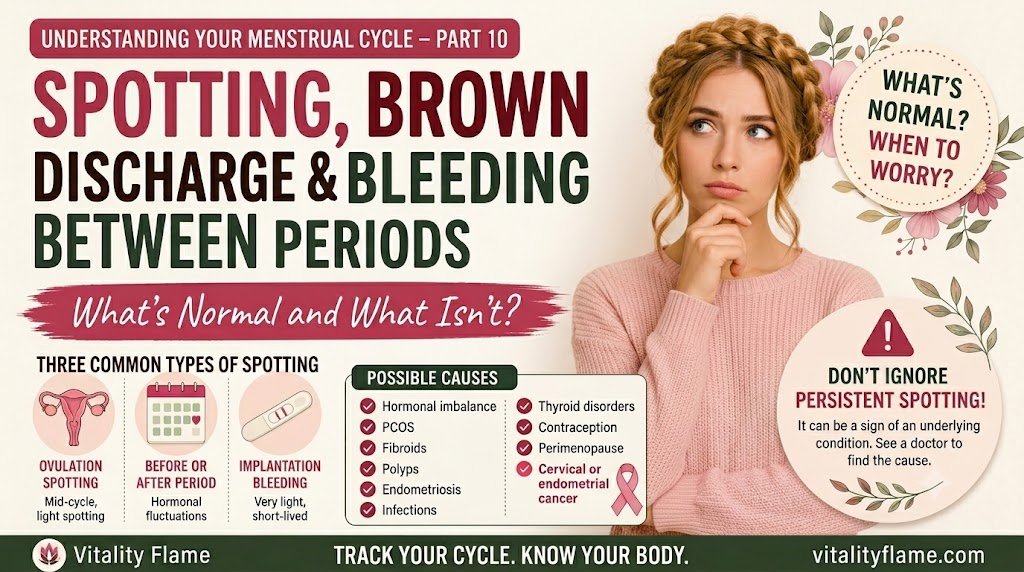
Spotting refers to light bleeding that occurs outside of your normal menstrual flow.
Unlike a menstrual period, spotting is usually:
-
Very light
-
Intermittent
-
Only noticeable on toilet paper or underwear
-
Not heavy enough to require regular menstrual protection
Spotting may appear:
-
Pink
-
Light red
-
Rust-colored
-
Brown
Brown spotting is especially common because brown blood is simply older blood that has taken longer to leave the uterus.
Many women worry when they see brown discharge.
In most cases, brown spotting simply means the blood is moving more slowly through the reproductive tract and has had time to oxidize.
The color itself is often less important than the timing and pattern.
Is Spotting Normal?
Sometimes yes.
Sometimes no.
The key question is not:
“Do I have spotting?”
but rather:
“When and how frequently is it happening?”
Certain types of spotting are commonly considered normal:
-
Light spotting immediately after menstruation
-
Brief ovulation spotting
-
Implantation bleeding
-
Temporary spotting when starting hormonal contraception
-
Occasional spotting during perimenopause
Other patterns deserve closer attention:
-
Spotting before every period
-
Persistent spotting throughout the cycle
-
Bleeding after intercourse
-
Spotting after menopause
-
Heavy bleeding between periods
Spotting After Your Period
Many women notice one or two days of brown discharge after their menstrual flow appears to have ended.
This is often completely normal.
During menstruation, not all blood leaves the uterus at the same speed.
Small amounts of residual blood may continue exiting the body over the next day or two.
This commonly appears as:
-
Brown discharge
-
Dark brown spotting
-
Light rust-colored staining
If the spotting lasts only a short time after an otherwise normal period, it is often considered a normal variation.
When Should You Pay Attention?
If spotting continues for many days after menstruation ends, or becomes a recurring pattern, possible causes may include:
-
Hormonal fluctuations
-
Cervical polyps
-
Endometrial polyps
-
Uterine fibroids
-
Infections
-
Endometritis
-
Thyroid disorders
-
Certain medications
-
Perimenopause
Persistent post-menstrual spotting should be discussed with a healthcare professional.
Ovulation Spotting
One of the most common causes of mid-cycle spotting is ovulation.
Ovulation typically occurs around the middle of the cycle.
Many women never notice it.
Others experience subtle signs such as:
-
Increased cervical mucus
-
Mild pelvic discomfort
-
Breast tenderness
-
Increased libido
-
Light spotting
Ovulation spotting usually occurs approximately 10–14 days before the next period.
It often appears as:
-
Light pink spotting
-
Brown discharge
-
Very mild bleeding
and usually lasts only:
-
A few hours
-
One day
-
Occasionally up to two days
Why Does Ovulation Spotting Happen?
Researchers believe two mechanisms may contribute.
1. Follicle Rupture
During ovulation, the mature follicle releases an egg.
This process can occasionally cause minor bleeding from tiny blood vessels surrounding the follicle.
2. Hormonal Changes
Around ovulation, estrogen reaches its peak.
Immediately afterward, hormone levels temporarily shift.
In some women, this brief hormonal transition may trigger slight shedding of a small portion of the uterine lining.
The result can be light spotting.
Ovulation spotting is generally considered normal if it is:
-
Light
-
Brief
-
Infrequent
Implantation Bleeding
One of the most searched menstrual questions online is:
“Could this be implantation bleeding?”
Implantation bleeding may occur when a fertilized egg attaches to the uterine lining.
If it occurs, it usually happens:
-
About 6–12 days after ovulation
-
Roughly one week before an expected period
Typical implantation spotting is:
-
Very light
-
Pink or brown
-
Short-lived
Many women who become pregnant never experience implantation bleeding at all.
It is also important to understand that several days of continuous bleeding are unlikely to represent implantation bleeding.
When in doubt, pregnancy testing and medical guidance are appropriate.
Spotting Before Your Period
This is one of the most common cycle questions women ask.
“Why am I spotting before my period starts?”
A small amount of spotting immediately before menstrual flow begins can occasionally occur.
However, spotting that repeatedly begins several days before menstruation may warrant further investigation.
Possible explanations include:
-
Hormonal fluctuations
-
Perimenopause
-
Hormonal contraception
-
Thyroid disorders
-
Stress-related cycle changes
-
Ovulatory dysfunction
-
Structural causes such as polyps or fibroids
Some researchers and clinicians suggest that recurrent premenstrual spotting may sometimes be associated with insufficient progesterone exposure during the luteal phase.
Because progesterone helps stabilize the uterine lining, lower progesterone activity may contribute to earlier breakdown of the endometrium in some women.
However, this is only one possible explanation and should not be assumed without proper medical evaluation.
What Is Intermenstrual Bleeding?
Intermenstrual bleeding simply means bleeding that occurs between two menstrual periods.
This bleeding is often heavier than simple spotting and may last for several days.
Possible causes include:
-
Hormonal fluctuations
-
Ovulation
-
Pregnancy-related changes
-
Contraceptive adjustments
-
Infections
-
Polyps
-
Fibroids
-
Endometriosis
-
Adenomyosis
-
Thyroid disorders
-
PCOS
-
Cervical abnormalities
Because the range of possible causes is so broad, persistent intermenstrual bleeding should always be evaluated by a healthcare professional.
Spotting and Hormonal Birth Control
Spotting is extremely common when starting:
-
Birth control pills
-
Hormonal IUDs
-
Implants
-
Contraceptive injections
Your body often needs time to adjust to changing hormone levels.
Breakthrough bleeding is especially common during the first few months.
In many cases it gradually improves.
However, consult your healthcare provider if bleeding becomes:
-
Heavy
-
Prolonged
-
Painful
-
Persistent
or suddenly changes after months of stability.
Spotting During Perimenopause
As women approach menopause, hormone levels become increasingly unpredictable.
Ovulation may occur inconsistently.
Some cycles are ovulatory.
Others are not.
As a result, women commonly experience:
-
Spotting before periods
-
Spotting after periods
-
Irregular bleeding
-
Heavy periods
-
Skipped periods
Perimenopause is one of the most common causes of cycle irregularity in women in their forties and early fifties.
However, abnormal bleeding during this stage of life should not automatically be assumed to be harmless.
Medical evaluation remains important.
Medical Conditions That Can Cause Spotting
While occasional spotting can be completely normal, persistent or recurrent spotting should never be automatically dismissed as a hormonal issue.
One of the most important messages of this article is this:
Spotting is a symptom, not a diagnosis.
The spotting itself is not the problem—it is a clue that may help identify what is happening inside the body.
Sometimes the explanation is completely harmless. Other times, spotting may be the first noticeable sign of a condition requiring medical treatment.
For this reason, any new, persistent, unexplained, or recurring spotting should be discussed with a healthcare professional.
Let’s look at some of the most common causes.
Uterine Polyps
Polyps are small growths that develop from the lining of the uterus (endometrium) or the cervix.
Most polyps are benign (non-cancerous), but because they contain blood vessels and delicate tissue, they can bleed easily.
Why do polyps cause spotting?
Imagine a small piece of tissue protruding into the uterine cavity.
As the uterus contracts, hormone levels fluctuate, or sexual intercourse occurs, these fragile blood vessels may become irritated and bleed.
This can result in:
-
Spotting between periods
-
Bleeding after intercourse
-
Spotting before or after menstruation
-
Unexpected bleeding at random times in the cycle
Many women have no other symptoms.
Uterine Fibroids
Fibroids are benign growths that develop within the muscular wall of the uterus.
Depending on their size and location, they may alter the normal function of the uterine lining.
Why do fibroids cause spotting?
Fibroids can:
-
Distort the uterine cavity
-
Increase the surface area of the uterine lining
-
Interfere with normal blood vessel function
-
Affect the uterus’s ability to contract effectively
As a result, bleeding may occur when it shouldn’t.
Women with fibroids often experience:
-
Spotting between periods
-
Heavy periods
-
Prolonged periods
-
Passage of blood clots
-
Pelvic pressure or fullness
Endometriosis
Endometriosis occurs when tissue similar to the uterine lining develops outside the uterus.
These implants continue responding to hormonal changes throughout the cycle.
Why can endometriosis cause spotting?
Endometriosis is associated with:
-
Chronic inflammation
-
Altered hormone signaling
-
Changes in normal endometrial function
These factors may contribute to:
-
Spotting before periods
-
Spotting after periods
-
Irregular bleeding
-
Painful menstruation
-
Pelvic pain
-
Fertility challenges
Not every woman with endometriosis experiences spotting, but it can be one of the symptoms.
Adenomyosis
Adenomyosis develops when endometrial tissue grows into the muscular wall of the uterus.
Why does adenomyosis cause spotting?
The abnormal location of this tissue can make it difficult for the uterus to shed the lining efficiently and evenly.
This may lead to:
-
Prolonged bleeding
-
Spotting before periods
-
Spotting after periods
-
Heavy menstrual bleeding
-
Painful menstruation
Many women describe feeling as though their period “never completely finishes.”
Polycystic Ovary Syndrome (PCOS)
PCOS is one of the most common hormonal conditions affecting women of reproductive age.
A key feature of PCOS is irregular or absent ovulation.
Why can PCOS cause spotting?
When ovulation does not occur regularly:
-
Progesterone production becomes inconsistent
-
The uterine lining may continue growing under the influence of estrogen
-
The lining becomes unstable
Instead of being shed in a predictable menstrual period, the lining may break down unpredictably.
This can lead to:
-
Spotting between periods
-
Irregular bleeding
-
Long cycles
-
Missed periods
-
Heavy bleeding after long gaps
Thyroid Disorders
The thyroid gland influences many reproductive hormones.
Both hypothyroidism (underactive thyroid) and hyperthyroidism (overactive thyroid) can disrupt menstrual cycles.
Why does thyroid disease cause spotting?
Thyroid hormones help regulate communication between:
-
The brain
-
Pituitary gland
-
Ovaries
When this communication becomes disrupted, ovulation and hormone production may become less predictable.
The result may include:
-
Spotting
-
Irregular cycles
-
Heavy periods
-
Missed periods
Infections
Certain infections can cause spotting or bleeding.
Examples include:
-
Cervical infections
-
Pelvic inflammatory disease (PID)
-
Sexually transmitted infections (STIs)
-
Endometritis (infection of the uterine lining)
Why do infections cause spotting?
Infections create inflammation.
Inflamed tissues become:
-
More fragile
-
More sensitive
-
More likely to bleed
This is why infections may cause:
-
Spotting
-
Bleeding after intercourse
-
Pelvic pain
-
Unusual discharge
-
Foul-smelling discharge
-
Fever
Prompt medical evaluation is important.
Perimenopause
As women approach menopause, ovulation becomes less predictable.
Some cycles ovulate normally.
Others do not.
Why does perimenopause cause spotting?
Hormone levels fluctuate more dramatically than during earlier reproductive years.
These fluctuations may lead to:
-
Spotting before periods
-
Spotting after periods
-
Longer cycles
-
Shorter cycles
-
Heavy bleeding
-
Skipped periods
Although spotting is common during perimenopause, it should never simply be assumed to be harmless without proper evaluation.
Cervical Cancer and Endometrial Cancer
This is the section many articles avoid discussing—but it is important.
Most cases of spotting are NOT caused by cancer.
However, abnormal bleeding can be one of the earliest symptoms of several gynecological cancers.
These include:
-
Cervical cancer
-
Endometrial (uterine) cancer
-
Less commonly, vaginal cancer
Why can cancer cause spotting?
Cancerous tissues often develop abnormal blood vessels.
These blood vessels are fragile and can bleed easily.
Bleeding may occur:
-
Between periods
-
After intercourse
-
After menopause
-
Randomly without any obvious trigger
For some women, abnormal bleeding is the very first warning sign.
This is one reason healthcare professionals take unexpected bleeding seriously.
Early detection dramatically improves treatment outcomes.
When Should I See a Doctor About Spotting?
Spotting is common.
Spotting is often harmless, but it is important not to ignore persistent or unusual bleeding patterns because only a healthcare professional can determine the underlying cause.
Spotting should never be ignored, and you should seek medical advice if you experience:
-
It is persistent
-
It keeps returning
-
It becomes heavier
-
It occurs after menopause
-
It appears after intercourse
-
It is accompanied by pain, fever, fatigue, or other symptoms
Depending on your symptoms, your doctor may recommend:
-
A pelvic examination
-
Ultrasound imaging
-
Blood tests
-
Hormone testing
-
Cervical screening (Pap smear)
-
Additional investigations if needed
Frequently Asked Questions
Is brown discharge before a period normal?
Occasionally yes. Recurrent spotting several days before every period deserves further evaluation.
Can ovulation cause spotting?
Yes. Some women experience light spotting around ovulation due to hormonal changes or follicle rupture.
How long should ovulation spotting last?
Usually a few hours to one or two days.
Is implantation bleeding common?
Not every woman experiences implantation bleeding. When it occurs, it is typically very light and short-lived.
Can stress cause spotting?
Yes. Significant physical or emotional stress can influence hormone production and disrupt normal cycle patterns.
Can PCOS cause spotting?
Yes. Irregular ovulation in PCOS can contribute to unpredictable spotting and bleeding.
Should I worry about spotting after menopause?
Yes. Any postmenopausal bleeding should be evaluated by a healthcare professional.
Can Lifestyle Affect Spotting?
Lifestyle factors influence hormonal regulation.
Supporting overall hormonal health may include:
-
Prioritizing sleep
-
Managing stress
-
Regular physical activity
-
Eating a nutrient-dense diet
-
Supporting healthy body weight
-
Tracking menstrual cycles
These approaches cannot replace medical care when needed, but they may support healthy cycle function.
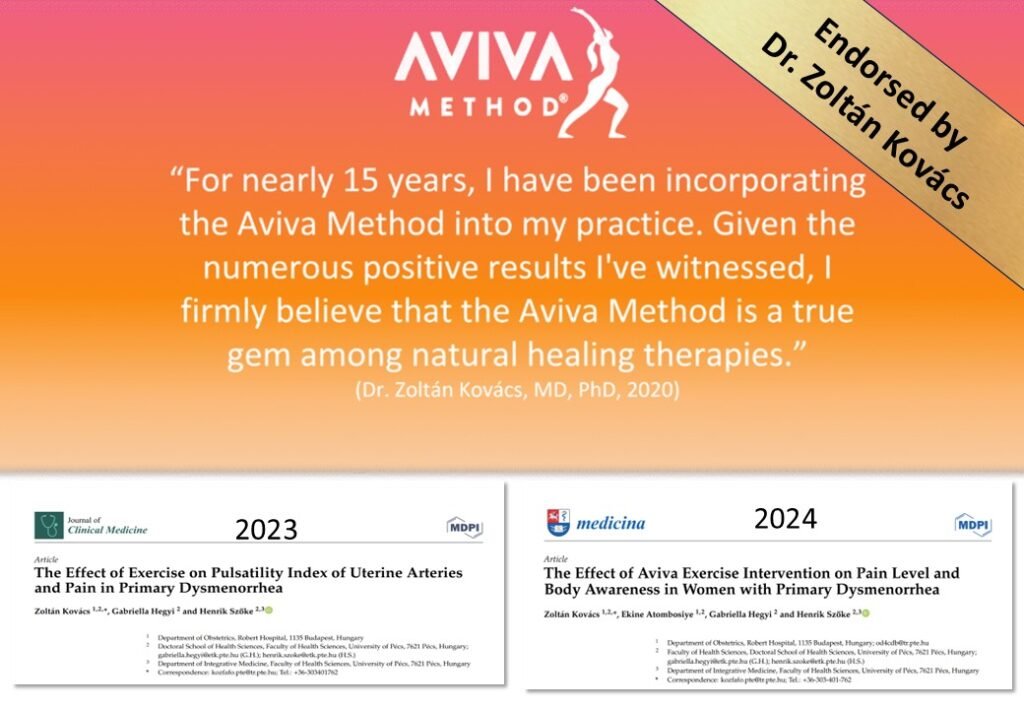
A Note on Cycle Awareness and the Aviva Method
One of the greatest benefits of cycle awareness is learning what is normal for your body.
The earlier you notice changes, the sooner you can investigate potential causes.
Many women also explore supportive movement practices such as the Aviva Method.
The Aviva Method is a movement-based exercise system designed to support circulation in the pelvic region and reproductive organs.
Many practitioners report improvements in cycle awareness and menstrual comfort as part of a broader lifestyle approach.
However, spotting should never automatically be assumed to be hormonal.
Persistent or unusual bleeding always deserves appropriate medical evaluation.
Final Thoughts
Spotting can be confusing, frustrating, and sometimes alarming.
The good news is that many forms of spotting are completely normal.
Ovulation spotting, temporary contraceptive-related spotting, and occasional hormonal fluctuations are often harmless.
At the same time, persistent bleeding between periods should not be ignored.
Your menstrual cycle is one of your body’s most valuable health signals.
By learning to understand the timing, pattern, and characteristics of spotting, you can become a more informed observer of your own health and know when it may be time to seek professional guidance.
In the next article of this series, we’ll explore heavy periods, prolonged bleeding, blood clots, and the factors that may contribute to excessive menstrual bleeding.