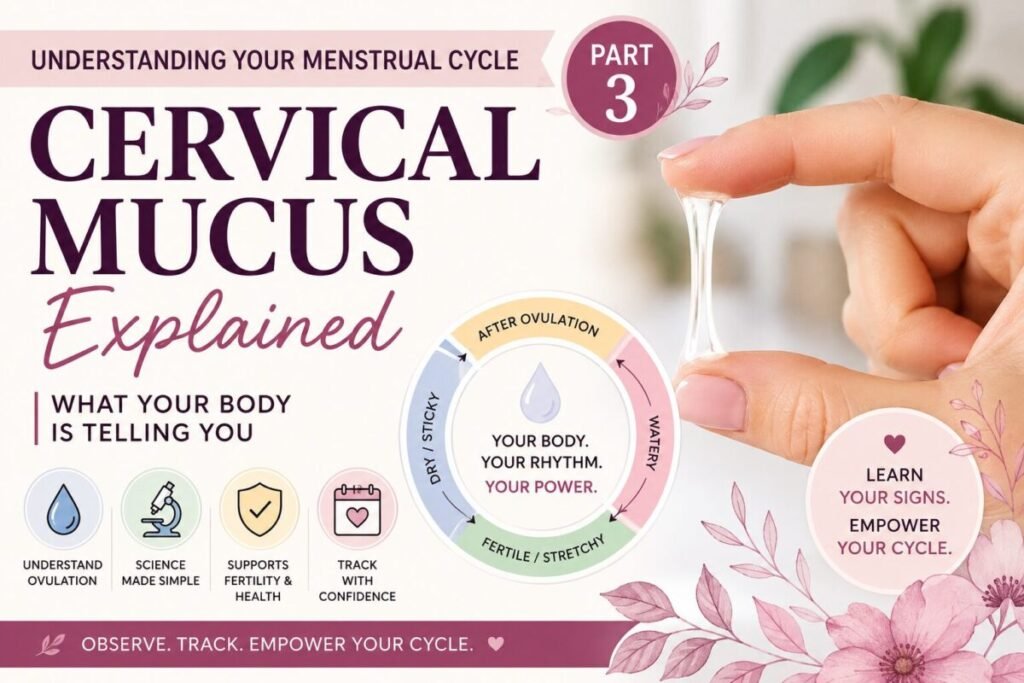
What Your Discharge Can Tell You About Your Cycle
Have you ever noticed changes in your vaginal discharge throughout the month?
Perhaps some days feel dry, while others seem wetter. Maybe you’ve noticed creamy discharge one week and clear, stretchy mucus another.
Many women observe these changes without realizing that their bodies are providing valuable clues about hormonal activity, ovulation, and reproductive health.
Far from being something embarrassing or inconvenient, cervical mucus is one of the most fascinating signs of the menstrual cycle. It changes in response to hormones, helps protect the reproductive tract, and plays an essential role in fertility.
Learning to recognize these patterns can help you better understand your cycle and become more aware of your body’s natural rhythm.
What Is the Cervix?
Before we talk about cervical mucus, it helps to understand where it comes from.
The cervix is the lower, narrow portion of the uterus that connects the uterus to the vagina. In women of reproductive age, it is approximately 3–4 cm (1–1.5 inches) long and acts as a gateway between the uterus and the outside world.
Although small, the cervix performs several important functions throughout a woman’s life.
It:
-
Produces cervical mucus
-
Helps regulate sperm entry into the uterus
-
Protects the uterus from infection
-
Remains closed during pregnancy
-
Gradually opens during childbirth
One of its most remarkable functions is the production of cervical mucus.
What Is Cervical Mucus?
Cervical mucus is a fluid produced by specialized glands located within the cervical canal.
These glands continuously respond to changing hormone levels throughout the menstrual cycle.
As estrogen and progesterone rise and fall, they influence:
-
How much mucus is produced
-
The water content of the mucus
-
Its texture
-
Its elasticity
-
Its pH
-
Its ability to support or discourage sperm movement
This is why cervical mucus can look very different at different times of the month.
Far from being a random discharge, cervical mucus is a highly specialized biological fluid that changes in response to the body’s reproductive needs.
What Is Cervical Mucus Made Of?
Although cervical mucus may appear simple, it is surprisingly complex.
Healthy cervical mucus contains:
-
Water
-
Mucins (specialized mucus-forming proteins)
-
Electrolytes such as sodium, potassium, and chloride
-
Sugars and carbohydrates
-
Amino acids
-
Enzymes
-
Immune factors and antibodies
-
Trace minerals
The proportions of these components change throughout the cycle.
As a result, cervical mucus may appear:
-
Dry
-
Sticky
-
Creamy
-
Watery
-
Stretchy
depending on where you are in your cycle.
Why Does Cervical Mucus Matter?
Many women first learn about cervical mucus when trying to conceive.
However, cervical mucus provides information that extends beyond fertility.
Tracking mucus patterns can help you:
-
Better understand your cycle
-
Recognize approaching ovulation
-
Learn your body’s hormonal rhythm
-
Identify cycle changes over time
-
Increase cycle awareness
Even if pregnancy is not your goal, cervical mucus can be valuable information about your reproductive health.
How Hormones Change Cervical Mucus
The changing balance between estrogen and progesterone influences the amount, texture, water content, and fertility-supporting properties of cervical mucus throughout the cycle.
Estrogen
As estrogen rises before ovulation, cervical mucus becomes:
-
More abundant
-
More hydrated
-
More slippery
-
More elastic
-
More alkaline
Progesterone
After ovulation, progesterone becomes dominant.
Under its influence, cervical mucus becomes:
-
Thicker
-
Stickier
-
Less abundant
-
Less elastic
These predictable hormonal changes create the mucus patterns many women observe throughout the month.
The Typical Cervical Mucus Pattern
Although every woman is unique, many healthy cycles follow a similar progression.
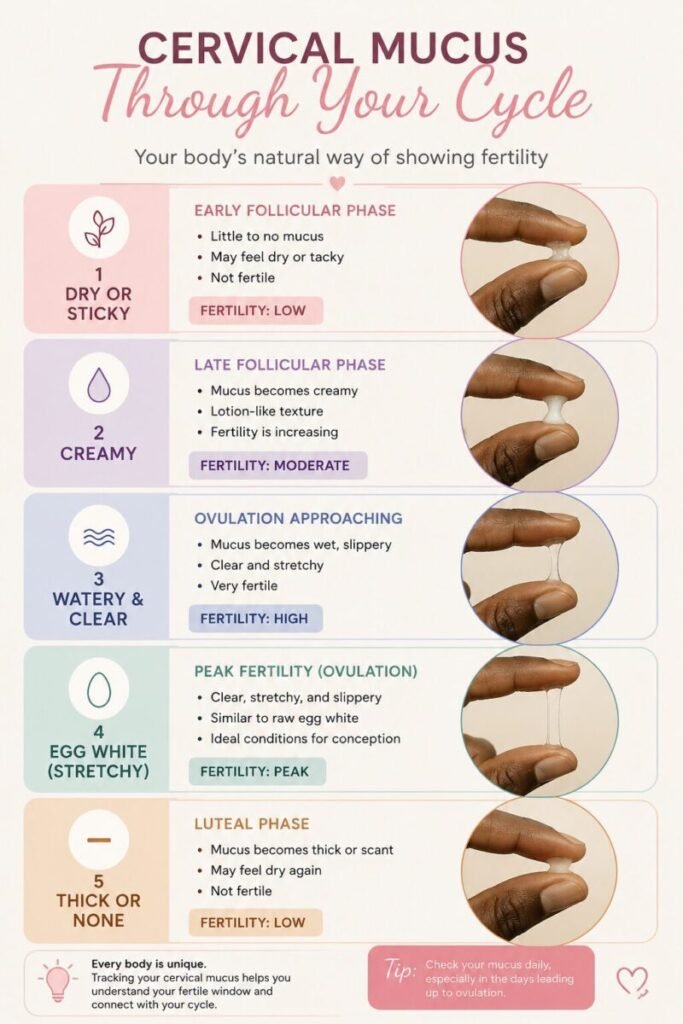
Menstruation
During menstruation, cervical mucus is difficult to observe because menstrual blood masks it.
At this stage, focus on tracking your period rather than mucus.
Dry Days
After menstruation ends, many women experience several days with little or no noticeable mucus.
You may notice:
-
Dryness
-
Minimal discharge
-
No obvious sensation
In your tracking journal:
D = Dry
Sticky or Tacky Mucus
As estrogen begins to rise, mucus often becomes:
-
Sticky
-
Tacky
-
Thick
-
Slightly crumbly
It may appear:
-
White
-
Cloudy
-
Pale yellow
In your journal:
T = Tacky
Creamy or Lotion-Like Mucus
As ovulation approaches, mucus often becomes:
-
Creamy
-
Smooth
-
Moist
-
Lotion-like
Some women compare it to hand lotion or yogurt.
In your journal:
L = Lotion-like
Watery Mucus
Many women notice mucus becoming:
-
More abundant
-
Clearer
-
Wet
-
Slippery
In your journal:
W = Watery
This often indicates increasing fertility.
Egg-White Cervical Mucus
Around ovulation, many women experience their most fertile mucus.
This mucus is often:
-
Clear
-
Stretchy
-
Slippery
-
Elastic
It may stretch several centimeters between the fingers before breaking.
In your journal:
S = Stretchy
Many women compare it to raw egg white.
This is one of the strongest signs that ovulation may be approaching.
Why Does Fertile Cervical Mucus Become Stretchy?
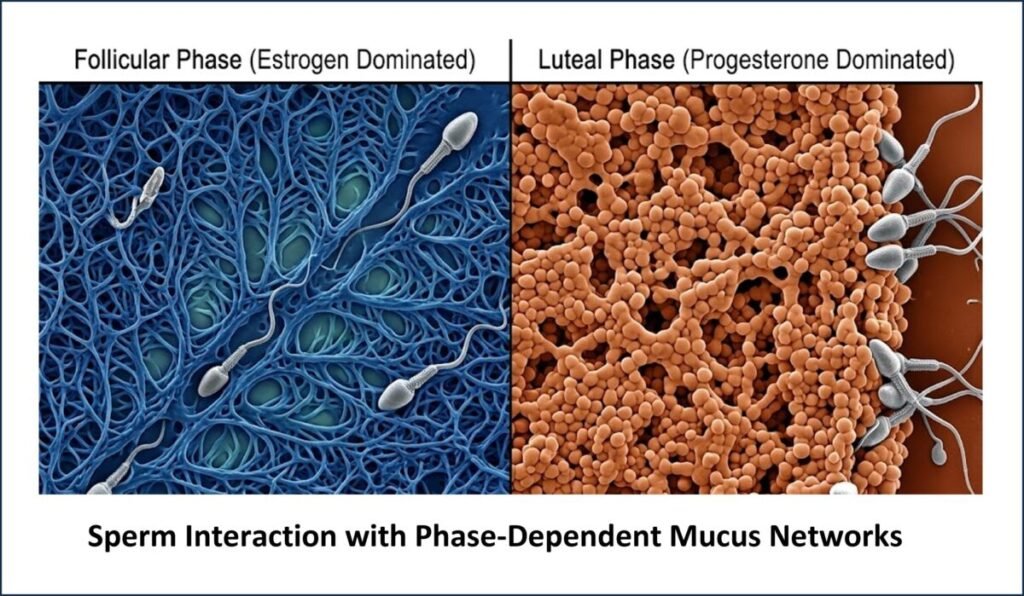
As ovulation approaches, estrogen stimulates the cervix to produce mucus that is approximately 95–98% water.
At the same time, the structure of the mucus changes.
Instead of forming a dense barrier, the mucus develops microscopic channels that help sperm travel through the cervix toward the uterus.
This is why fertile mucus feels slippery, stretchy, and lubricative.
The body’s goal at this stage is to support reproduction.
The pH of Cervical Mucus
Another important change involves acidity and alkalinity.
The vagina is normally acidic, with a pH of approximately:
3.8–4.5
This acidic environment helps protect against infections but is not ideal for sperm survival.
As ovulation approaches, cervical mucus becomes more alkaline.
Fertile cervical mucus typically reaches a pH of approximately:
7–8.5
This helps protect sperm from vaginal acidity and creates a more supportive environment for their survival and movement.
Fertile Cervical Mucus: Nature’s Sperm Support System
Fertile cervical mucus does much more than simply allow sperm to pass.
It actively supports them.
Research suggests fertile cervical mucus helps:
-
Nourish sperm
-
Protect sperm from acidity
-
Support sperm motility
-
Increase sperm survival
-
Filter out abnormal sperm
-
Guide healthy sperm toward the uterus
Because of these protective properties, sperm may survive in fertile cervical mucus for up to 5 days.
This is one reason pregnancy can occur from intercourse several days before ovulation.
The Remarkable “Ferning” Pattern
Around ovulation, cervical mucus undergoes another interesting transformation.
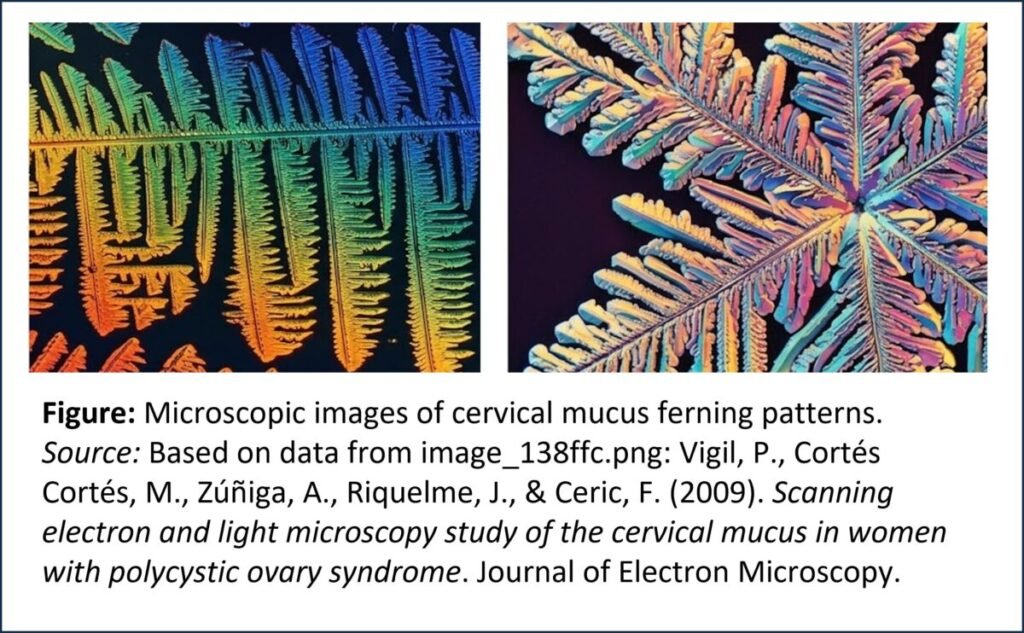
As sodium and electrolyte concentrations increase, dried mucus can form beautiful crystal patterns that resemble fern leaves when viewed under a microscope.
This phenomenon is known as ferning.
Ferning is considered a classic sign of high estrogen levels and approaching ovulation.
Although most women will never observe it directly, it highlights how dramatically cervical mucus changes during the fertile window.
What Happens After Ovulation?
Once ovulation occurs, progesterone rises.
The cervix responds by producing mucus that is:
-
Thicker
-
Less hydrated
-
Less elastic
-
More difficult for sperm to penetrate
The microscopic channels that previously helped sperm travel gradually disappear.
Instead, the mucus begins forming a protective barrier within the cervical canal.
Many women notice:
-
Less mucus
-
Sticky discharge
-
Increased dryness
These changes often indicate that ovulation has already occurred.
Cervical Mucus Is More Than a Fertility Sign
Many fertility awareness resources focus on cervical mucus as a sign of fertility.
While this is certainly important, cervical mucus also serves a protective role.
Throughout the cycle, it helps:
-
Maintain reproductive tract health
-
Protect the uterus from microorganisms
-
Respond to hormonal changes
-
Support normal reproductive function
Viewed this way, cervical mucus is much more than discharge—it is a dynamic reflection of the body’s changing hormonal landscape.
How to Check Cervical Mucus
Many women observe mucus simply by paying attention throughout the day.
You may notice:
-
Dryness
-
Moisture
-
Slipperiness
-
Discharge on toilet paper
-
Discharge in underwear
Some women also examine mucus directly with clean fingers to assess its texture and stretchiness.
If you want to try it out, after washing your hands, you can gently collect a small amount of cervical mucus from the vaginal opening or just inside the vagina before peeing. Observe how it looks and feels, and whether it stretches between your fingers.
The most important factor is consistency.
Try observing around the same time each day and recording your observations.
What Can Influence Cervical Mucus Quality?
Cervical mucus is highly responsive to hormonal changes throughout the menstrual cycle. Because cervical mucus plays an important role in fertility, changes in its quantity, consistency, or pattern can sometimes reflect changes in the body’s hormonal environment.
Several factors that influence hormonal balance may also affect cervical mucus quality, including:
- Stress and emotional well-being
- Sleep quality and duration
- Nutrition and hydration
- Certain foods and dietary patterns
- Body weight and significant weight changes
- Regular physical activity or intense exercise
- Age and reproductive stage
- Breastfeeding
- Perimenopause and menopause transition
- Certain medications, including some antihistamines and hormonal contraceptives
- Vaginal lubricants used during intercourse
- Smoking
- Surgery involving the cervix
- Hormonal conditions such as PCOS, thyroid disorders, or hyperprolactinemia
- Vaginal infections, including yeast infections and bacterial vaginosis
- Sexually transmitted infections (STIs)
Are There Ways to Support a Healthy Cervical Mucus Pattern?
Because cervical mucus is influenced by hormones, lifestyle factors that support overall reproductive health may also support healthy mucus production.
Some general habits that may help include:
- Staying well hydrated
- Eating a balanced diet rich in fruits and vegetables
- Managing stress
- Getting adequate sleep
- Engaging in regular physical activity
Some women also choose to incorporate body-awareness and movement practices into their wellness routine.
Among women who practice the Aviva Method® regularly, it is not uncommon to hear reports of changes in cervical mucus patterns. Some practitioners who previously noticed fertile-type, egg-white cervical mucus throughout much of their cycle report that, over time, their mucus appeared to follow a more distinct cyclical pattern, with fertile mucus occurring closer to ovulation and less fertile mucus appearing after ovulation.
Others who had experienced vaginal dryness describe noticing improved natural lubrication and greater comfort during certain phases of their cycle.
These observations are based on individual experiences shared by practitioners and have not been established as outcomes for all women. However, many women choose the Aviva Method as part of a broader wellness routine to support cycle awareness, body awareness, and reproductive well-being.
Why Tracking Cervical Mucus Can Be So Helpful
Unlike basal body temperature, which helps confirm ovulation after it occurs, cervical mucus often provides clues before ovulation.
This can help you better understand:
-
Fertility patterns
-
Hormonal changes
-
Cycle phase transitions
-
Month-to-month variations
Over time, tracking can reveal patterns that might otherwise go unnoticed.
Make Cycle Tracking Easier with a Dedicated Journal
Understanding your cycle becomes much easier when you record your observations consistently.
Many women find that details such as cervical mucus, menstrual flow, mood, energy levels, sleep, appetite, exercise, habits, diet, and symptoms can be difficult to remember from month to month.
Keeping a cycle journal allows you to see patterns that might otherwise go unnoticed.
To support cycle awareness, Vitality Flame created the Cycle Tracking Journal, a practical tool designed to help you record important cycle signs in one place. Over time, these observations can provide valuable insights into your body’s unique rhythm and help you become more familiar with what can affect the different phases of your cycle.
Whether you are tracking for general cycle awareness, fertility awareness, or simply to better understand what supports or hinders your health, a dedicated journal can make the process more organized and meaningful.
Final Thoughts
Cervical mucus is one of the body’s natural signs of the menstrual cycle.
It changes throughout the month for a reason.
The more you observe it with curiosity and consistency, the more you may learn about your unique hormonal rhythm.
In Part 4, we’ll explore how the cervical position changes throughout the cycle.
Important Note
This article is intended for educational purposes only and should not be used to diagnose, treat, or prevent any medical condition. If you experience unusual discharge, strong odors, itching, burning, pain, or symptoms that concern you, consult a qualified healthcare professional.
Reference Articles
Kurita, T. (2018). Cervix: Cell biology. In M. K. Skinner (Ed.), Encyclopedia of reproduction (2nd ed., Vol. 2, pp. 347–352). Elsevier. https://doi.org/10.1016/B978-0-12-801238-3.64405-7
Broekmans, F. J., & Fauser, B. C. J. M. (2016). Female infertility: Evaluation and management. In J. L. Jameson, L. J. De Groot, D. M. de Kretser, L. C. Giudice, A. Grossman, S. Melmed, J. T. Potts Jr., G. C. Weir, & A. P. Vinik (Eds.), Endocrinology: Adult and pediatric (7th ed., Chapter 132, pp. 2260–2274.e4). Elsevier. https://doi.org/10.1016/B978-0-323-18907-1.00132-3
Vigil, P., Cortés Cortés, M., Zúñiga, A., Riquelme, J., & Ceric, F. (2009). Scanning electron and light microscopy study of the cervical mucus in women with polycystic ovary syndrome. Journal of Electron Microscopy, 58(1), 21–27. https://doi.org/10.1093/jmicro/dfn032