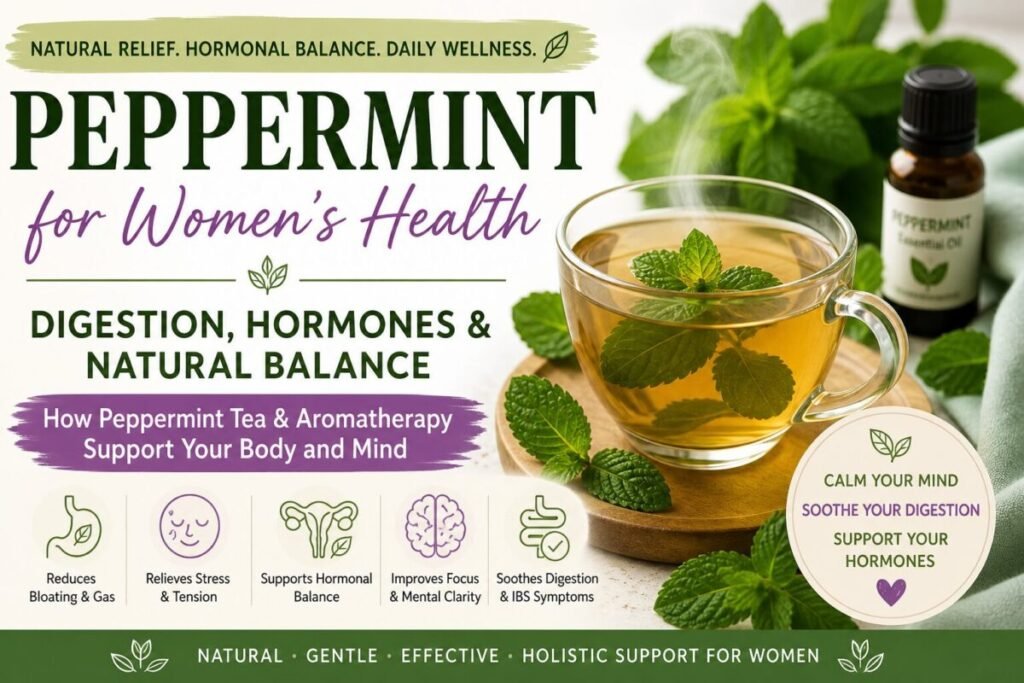
Natural Support for Digestion & PMS
Bloating after meals.
Lower abdominal discomfort.
Digestive tension before your period.
Feeling heavy, inflamed, or tight in your belly.
If you recognize these symptoms, your body is not overreacting—it’s communicating.
Very often, these signs are connected to:
- digestion
- stress and the nervous system
- hormonal balance
And one simple, natural support that can gently help restore this balance is Mentha × piperita (peppermint).
Why Digestion Matters for Hormonal Health
Your digestive system is not separate from your hormones—it actively influences them.
It helps:
- eliminate excess estrogen
- regulate inflammation
- support gut bacteria (which affect hormone balance)
When digestion is not functioning optimally, it can contribute to:
- bloating
- PMS symptoms
- abdominal discomfort
- hormonal imbalance
Peppermint: A Natural Support for Digestion and Calm
Mentha × piperita (peppermint) has been used for centuries to support digestion and relieve discomfort.
Its main active compounds, including menthol, have been studied for their:
- antispasmodic (muscle-relaxing)
- anti-inflammatory
- calming effects on the digestive tract
(McKay & Blumberg, 2006)
How Peppermint Works in the Body
Peppermint doesn’t “force” digestion—it helps your body relax and regulate.
🌿 Relaxes Smooth Muscles
Menthol helps relax the smooth muscles of the digestive tract, reducing spasms and cramping
(Grigoleit & Grigoleit, 2005)
👉 This is why it’s often used for:
- bloating
- abdominal pain
- IBS symptoms
🌬️ Reduces Gas and Bloating
By relaxing intestinal muscles, peppermint helps trapped gas move more easily through the system
(McKay & Blumberg, 2006)
🔥 Reduces Inflammation
Peppermint contains compounds with mild anti-inflammatory effects, helping calm irritation in the gut
(Grigoleit & Grigoleit, 2005)
🧠 Supports the Gut–Brain Connection
Peppermint has a gentle calming effect on the nervous system.
👉 This matters because:
- stress directly affects digestion
- digestive tension often worsens hormonal symptoms
⚙️ Indirectly Supports Hormonal Balance
Healthy digestion helps:
- eliminate excess estrogen
- reduce inflammatory load
👉 This creates a more balanced internal environment for hormones.
When Is Peppermint Helpful for Women?
Peppermint may be especially supportive in:
🌸 PMS-related bloating
- abdominal tension
- water retention feeling
- digestive discomfort
🔄 Cycle-related digestive changes
Many women notice digestion slows or becomes more sensitive before menstruation.
🌿 Irritable Bowel Syndrome (IBS)
Peppermint oil has been shown to reduce symptoms like pain and bloating
(Cash et al., 2016)
🍽️ After meals
Supports smoother digestion and reduces heaviness
😌 Stress-related digestive discomfort
Helpful when digestion is affected by nervous system tension
The Truth About “Quick Relief”
Peppermint can feel fast-acting—but:
- it doesn’t “fix” the root cause
- it works best as support, not a cure
👉 Think of it as:
relieving tension so your body can function better.
🍵 How to Use Peppermint as Herbal Tea
One of the simplest and most effective ways to benefit from Mentha × piperita is as a herbal tea.
It’s gentle, accessible, and works especially well for:
- bloating
- digestive discomfort
- cycle-related tension
- stress-related symptoms
How to Prepare Peppermint Tea
🌿 Ingredients:
- 1–2 teaspoons dried peppermint leaves
(or a small handful of fresh leaves) - 250 ml (1 cup) hot water
☕ Instructions:
- Bring water to a boil, then let it cool slightly (about 90–95°C)
- Pour over the peppermint leaves
- Cover and let steep for 5–10 minutes
- Strain and enjoy
👉 Covering the cup helps preserve the essential oils (including menthol)
How Much Can You Drink Per Day?
For most adults:
- ✔️ 1–3 cups per day is considered safe and effective
- Best times:
- after meals → supports digestion
- in the evening → supports relaxation
How Long Can You Use It?
Peppermint tea is generally safe for regular use, but it’s still helpful to use it consciously:
🌿 General guideline:
- Use daily for 1–2 weeks when symptoms are present
- Then take a short break (a few days)
👉 This helps your body stay responsive and prevents over-reliance.
⚠️ When to Be Careful
Peppermint tea is gentle, but consider caution if you have:
- acid reflux (may worsen symptoms)
- gallbladder issues
👉 If you are taking medication:
- it’s best to check with your doctor or pharmacist
🌿 Simple Daily Ritual Idea
A warm cup of peppermint tea can become more than just a remedy.
👉 It can be a pause:
- slowing down after meals
- reconnecting with your body
- creating a moment of calm
And sometimes, this nervous system support is just as important as the herb itself.
🌬️ Peppermint in Aromatherapy: Mind–Body Support
Peppermint is not only helpful internally—it also works through aromatherapy.
When inhaled, Mentha × piperita essential oil interacts with the nervous system and brain.
🧠 Mental Clarity and Energy
Peppermint activates sensory receptors linked to alertness, improving focus and reducing fatigue
(Raudenbush et al., 2002)
🌬️ Supports Breathing
Menthol creates a cooling sensation that can make breathing feel easier and more open.
How to Use Peppermint Aromatherapy
- Inhale from a tissue (1–2 drops)
- Use a diffuser (3–5 drops)
- Apply topically (diluted with carrier oil)
A Holistic Approach: Internal + Physical Support
Peppermint supports your body internally—especially digestion and the nervous system.
To complement this, movement supports hormonal signaling and circulation.
The Aviva Method helps:
- improve pelvic circulation
- stimulate hormonal glands
- support reproductive health
Why This Combination Works
- Peppermint → reduces tension, supports digestion
- Aviva Method → activates circulation and hormonal response
👉 Together, they support a more balanced, responsive system
📚 References
Cash, B. D., Epstein, M. S., & Shah, S. M. (2016).
A novel delivery system of peppermint oil is an effective therapy for irritable bowel syndrome symptoms. Digestive Diseases and Sciences, 61(2), 560–571.
Grigoleit, H. G., & Grigoleit, P. (2005).
Pharmacology and preclinical pharmacokinetics of peppermint oil. Phytomedicine, 12(8), 612–616.
Herz, R. S. (2009).
Aromatherapy facts and fictions: A scientific analysis of olfactory effects on mood, physiology and behavior. International Journal of Neuroscience, 119(2), 263–290.
McKay, D. L., & Blumberg, J. B. (2006).
A review of the bioactivity and potential health benefits of peppermint tea (Mentha piperita L.). Phytotherapy Research, 20(8), 619–633.
Raudenbush, B., Meyer, B., & Eppich, W. (2002).
The effects of odors on objective and subjective measures of athletic performance. International Journal of Sport Psychology, 33(3), 329–346.