Have you ever felt like your body doesn’t quite feel like home anymore?
Not in a dramatic way.
Not something you can easily explain to others.
Just a quiet sense that something is… off.
If you’ve been feeling this way, you’re not imagining it.
Hormonal imbalances rarely show up as one clear symptom.
Instead, they appear as patterns — subtle at first, then harder to ignore.
Pause for a Moment: Do You Recognize These Symptoms in Your Case?
You don’t need to have all the symptoms.
But it may be worth gently paying attention if:
- Several symptoms appear together
- The same patterns return cycle after cycle
- Your body feels different from what used to be “normal.”
- Changes have happened gradually over time
Sometimes, awareness is the first step…
- Do You wake up tired, even after sleeping enough?
- Does your mood shift quickly or feel unfamiliar?
- Does your cycle become irregular, painful, or unpredictable?
- Does your energy come in waves — and crashes?
- Do Your body changes in ways that don’t feel like you
- You feel more anxious, sensitive, or overwhelmed
- Something just doesn’t feel like you anymore
It’s not always dramatic.
But it’s enough to make you pause and wonder:
“What is happening to me?”
Hormonal imbalance is not a single medical diagnosis.
The symptoms often associated with it are very common.
-
Up to 80–90% of women experience premenstrual symptoms at some point in their lives
-
Around 1 in 10 women live with Polycystic Ovary Syndrome (PCOS)
-
Many women report ongoing patterns like fatigue, mood changes, or cycle irregularities — often for years before understanding the underlying causes
 Why It Can Feel So Hard to Understand the Signs of Hormonal Imbalance?
 Why It Can Feel So Hard to Understand the Signs of Hormonal Imbalance?
One of the most frustrating parts of hormonal imbalance is that the symptoms don’t always seem connected.
You might experience fatigue, mood changes, cycle irregularities, and skin issues — and they can feel like completely separate problems.
But hormones don’t work in isolation.
They function as a system — like a network where everything is connected.
So when one area shifts, others often follow.
What feels random…
is often deeply interconnected beneath the surface.
Early signs are mild, like a whisper, which is easy to ignore
 Early signs are mild, like a whisper, which is easy to ignore
Hormonal shifts often begin subtly.
You may first notice:
- Slight changes in your cycle
- Mild fatigue or lower energy
- Increased sensitivity to stress
- Occasional mood fluctuations
These early signs are easy to dismiss — but they are often the first signals.
We often realize it when symptoms become harder to ignore, and the underlying conditions become more serious.
 We often realize it when symptoms become harder to ignore, and the underlying conditions become more serious.
Over time, symptoms may become more persistent:
- Ongoing fatigue
- More noticeable cycle disruptions
- Weight changes
- Sleep disturbances
- Emotional ups and downs
Symptoms Can Come and Go
 Symptoms Can Come and Go
Hormonal symptoms are not always constant.
You might feel better for a while…
and then the symptoms return.
This can feel confusing — even discouraging.
But it’s often a sign that your body is responding to changing conditions such as stress, sleep, or nutrition.
Hormonal balance is dynamic — not fixed.
Different Life Phases, Different Signals
 Different Life Phases, Different Signals
Hormonal changes can show up differently depending on your life stage:
- After stopping hormonal contraception
- During prolonged stress
- After pregnancy or childbirth
- In perimenopause
- Or in the different phases of the cycle.
The same body — but different internal conditions. And also, it is easy to say that it is common and normal in this age or stage.
How can you recognize a hormonal imbalance, and when does it first emerge?
 How can you recognize a hormonal imbalance, and when does it first emerge?
You don’t have to fix everything at once.
Sometimes, the most powerful first step is simply understanding your own patterns.
 This is where the Cycle and Symptom Tracking Diary comes into play.
- Tracking your menstrual cycle and related symptoms.
- Noticing changes in energy, mood, and physical state.
- Monitoring your habits.
- Identifying factors that trigger stress.
- Discovering Connections.
Why Cycle Tracking Can Be So Helpful
 Why Cycle Tracking Can Be So Helpful
Cycle tracking isn’t only useful when something feels wrong.
Even if you feel generally well, it can give you a deeper understanding of your body’s natural rhythm.
Over time, it allows you to:
-
notice early changes before they become stronger symptoms
-
recognize possible triggers (stress, lifestyle, life situations)
-
see whether certain patterns repeat from cycle to cycle
-
understand what is normal for you — not just what is considered “average”
What might feel confusing in the moment…
often becomes clearer when you can see it over time.
If it helps, you can start with a free downloadable cycle and symptom tracking sheet — a simple way to begin connecting the dots at your own pace.
Awareness doesn’t fix everything instantly — but it gently opens the door to change.
Common Signs of Hormonal Imbalance
 Common Signs of Hormonal Imbalance
1. Changes in Your Menstrual Cycle
 1. Changes in Your Menstrual Cycle
Your cycle is one of the clearest reflections of hormonal balance.
You may notice:
- Irregular or missed periods
- Very heavy or very light bleeding
- Spotting between cycles
- Painful menstruation
- Difficulty conceiving
Conditions like Polycystic Ovary Syndrome (PCOS), Endometriosis, Polyp, Fibrosis can sometimes be part of the picture.
Hormonal fluctuations affecting the menstrual cycle are often linked to broader endocrine and stress-related mechanisms (Michopoulos et al., 2013).
 Your cycle is not just about reproduction.
It’s a reflection of your internal balance.
2. Persistent Fatigue
 2. Persistent Fatigue
This kind of fatigue feels different.
Not just “I need more sleep,” but:
- Struggling to wake up in the morning
- Feeling drained even after resting
- Energy crashes during the day
- Poor sleep or frequent waking
Chronic stress can disrupt the body’s hormonal regulation systems, particularly the stress response axis (Charmandari et al., 2005).
This is often connected to how your body regulates stress hormones like Cortisol.
3. Unexplained Weight Changes
 3. Unexplained Weight Changes
You might feel like your body is no longer responding the way it used to.
- Weight gain (especially around the abdomen)
- Difficulty losing weight
- Sudden weight loss
- Strong sugar cravings
- Energy dips after eating
Research shows that metabolic factors like Insulin Resistance play a key role in hormonal imbalances (Diamanti-Kandarakis & Dunaif, 2012).
This isn’t about willpower.
It’s about internal signaling.
 4. Mood Swings and Emotional Changes
Hormones shape not only the body — but also how we feel.
You may notice:
- Irritability or sudden mood shifts
- Anxiety or inner tension
- Emotional sensitivity
- Low motivation
Neuroendocrine changes can influence mood and emotional regulation (Michopoulos et al., 2013).
5. Skin, Hair, and Physical Changes
 5. Skin, Hair, and Physical Changes
Sometimes your body speaks in visible ways:
- Adult acne
- Hair thinning or hair loss
- Dry skin
- Brittle nails
- Hot flashes or night sweats
- Vaginal dryness
Inflammation and hormonal signaling are closely connected in these processes (Skoracka et al., 2017).
6. Changes in Libido or Connection
 6. Changes in Libido or Connection
This is often the most quietly experienced — and least talked about.
- Reduced libido
- Discomfort during intimacy
- Feeling disconnected from your body
Hormonal balance plays a role not only in physical function, but in how safe and connected you feel within yourself.
Summary of Symptoms that may be caused by Hormonal Imbalance
 Summary of Symptoms that may be caused by Hormonal Imbalance
 Hormonal imbalance can affect multiple systems:
Cycle & Reproductive:
- Irregular periods
- Painful menstruation
- Fertility challenges
Energy & Sleep:
- Chronic fatigue
- Morning exhaustion
- Sleep disturbances
Metabolic:
- Weight changes
- Sugar cravings
- Energy crashes
Emotional & Cognitive:
- Mood swings
- Anxiety
- Brain fog
Physical Signs:
- Acne
- Hair loss
- Dry skin
- Hot flashes
What can you do if these symptoms feel familiar?
The information provided above may help you recognize patterns, but not to diagnose.
Many of these symptoms can have different underlying causes, including nutritional deficiencies, thyroid conditions, chronic stress, or other medical concerns.
If you recognize several of these signs, it may be worth exploring them further with a qualified healthcare professional.
An Effective Natural Movement-Based Safe Hormonal Balance Support Really Exists
 An Effective Natural Movement-Based Safe Hormonal Balance Support Really Exists
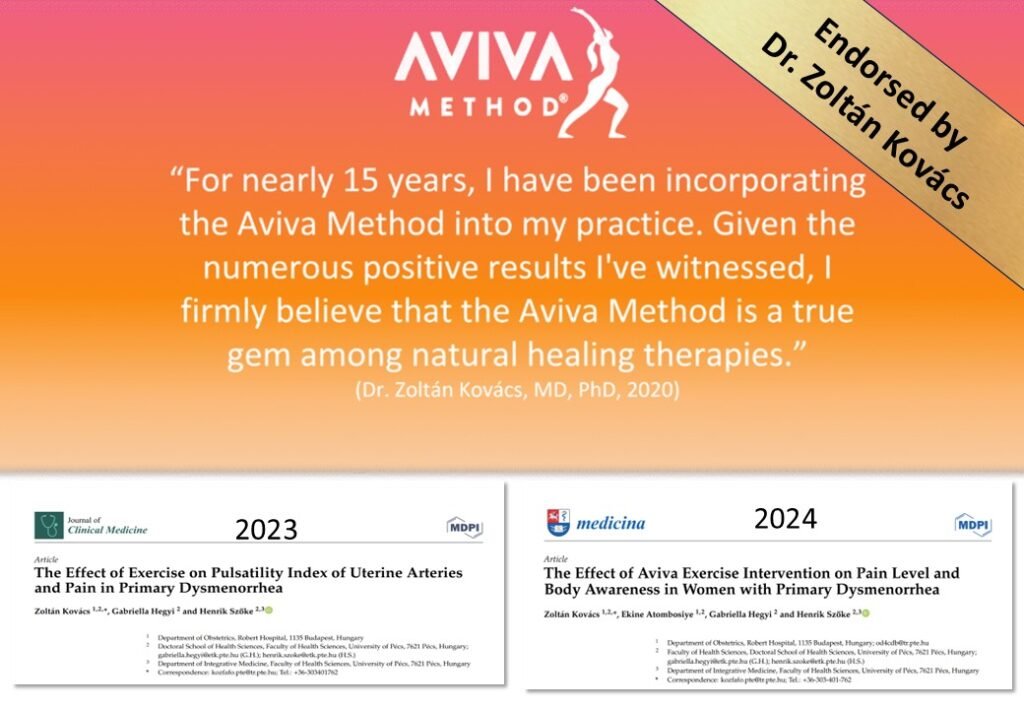
Certified Aviva Method instructors often meet women who come with already identified challenges — sometimes with a clear diagnosis linked to hormonal imbalance, and other times with symptoms that haven’t yet been fully explored.
Some are referred to by gynecologists or endocrinologists as a complementary approach.
In other cases, patterns and symptoms become visible during the initial assessment, and we encourage them to seek further medical evaluation to better understand the underlying causes.
What we witness consistently, however, is this:
When women or men learn the exercise sequence of the Aviva Method and practice it regularly and consistently, many begin to notice gradual changes.
Not in a forced or immediate way, but over time:
-
symptoms may begin to ease
-
cycles may become more regular
-
energy, libido, and overall well-being can improve
-
and the connection to their body often deepens
Some also share that their treatment needs have changed (positively) over time with regular medical supervision.
You can read success stories here.
Of course, this is always individual, and the method is not a replacement for medical care.
But as a supportive, body-based practice, it can play a meaningful role in helping the body move toward balance.
Recognizing the signs is where awareness begins, but behind these symptoms often lies a deeper story.
In the upcoming articles, we’ll take a closer look at:
-
what may be contributing to hormonal imbalances
-
how lifestyle, stress, and environment play a role
-
what you can do to support your hormonal balance
and the most common conditions linked to these changes — explained in a more detailed and understandable way
Sometimes the smallest patterns you notice today can become the turning point for how you feel tomorrow.
About the Author
This article was written by Demeter Zita. PhD in Biology and Environmental Sciences and certified Aviva Method instructor, Menstrual, Fertility, Hormonal Health, and Menopause Coach.
She supports women and men with hormonal balance and reproductive health through movement and body awareness.