Cycle Influencing Factors Series
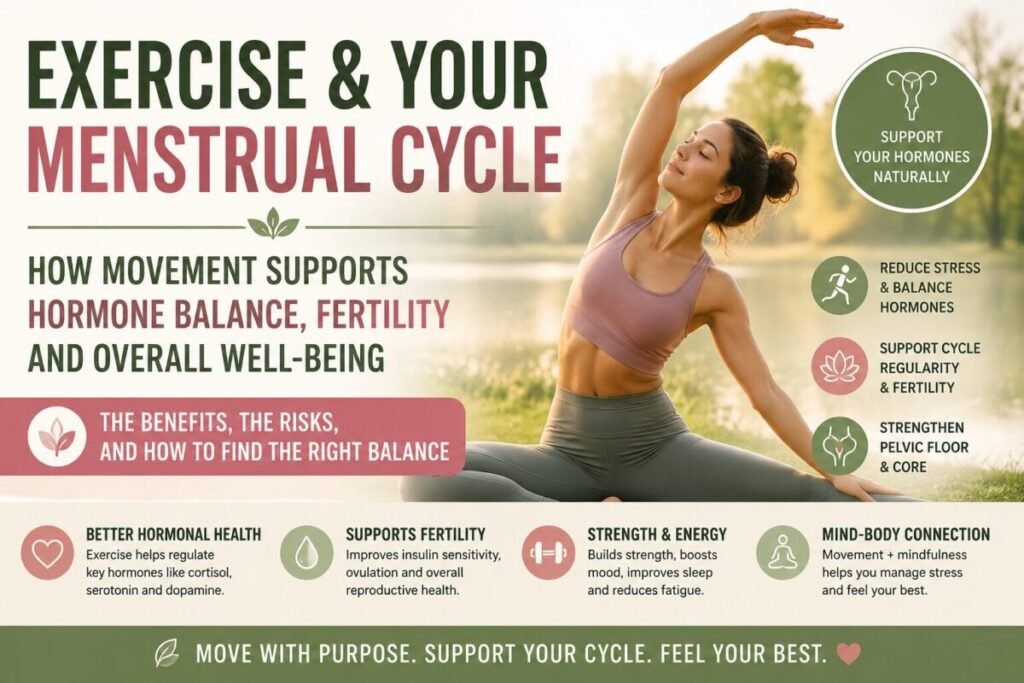
Most of us have heard that exercise is good for our health. It strengthens muscles and bones, supports cardiovascular fitness, improves mood, and helps manage stress.
But exercise also has another important role that is often overlooked: it can significantly influence your menstrual cycle, fertility, and hormonal balance.
The relationship between exercise and hormones is not always simple. The right amount of movement can support ovulation, improve cycle regularity, reduce stress, and promote overall reproductive health. However, excessive exercise or inadequate recovery can have the opposite effect, disrupting hormone production and even causing periods to disappear.
Understanding this balance can help you use movement as a powerful tool to support your cycle rather than unintentionally work against it.
Why Exercise Affects Your Menstrual Cycle
Your reproductive hormones do not work independently. The menstrual cycle is controlled by a complex communication network involving:
-
the brain
-
the hypothalamus
-
the pituitary gland
-
the ovaries
-
the thyroid gland
-
the adrenal glands
Exercise influences many of these systems simultaneously.
Movement affects blood circulation, insulin sensitivity, stress hormones, metabolism, sleep quality, body composition, and energy availability. Because all of these factors influence reproductive hormones, physical activity can have a profound impact on menstrual health.
The key is finding the right balance.
Better Circulation Supports Reproductive Health
One of the immediate effects of exercise is increased blood circulation throughout the body.
Healthy circulation helps transport:
-
oxygen
-
nutrients
-
hormones
-
immune cells
to tissues while helping remove metabolic waste products.
This includes circulation to the pelvic region, where the ovaries, uterus, and surrounding tissues depend on adequate blood flow to function optimally.
While circulation alone does not solve hormonal problems, healthy blood flow supports the body’s natural processes and contributes to overall reproductive well-being.
Many women notice that regular movement helps them feel less sluggish, reduces pelvic tension, and improves their sense of overall vitality.
Exercise Improves Insulin Sensitivity
One of the most important ways exercise supports hormonal balance is through its effect on insulin.
Insulin is a hormone that helps regulate blood sugar levels. When cells become less sensitive to insulin, the body must produce more of it to keep blood sugar under control.
This condition, known as insulin resistance, is associated with:
-
irregular cycles
-
anovulation
-
weight gain
-
fertility challenges
-
polycystic ovary syndrome (PCOS)
When you exercise, your muscles use glucose for energy. This helps improve insulin sensitivity, meaning your body can use insulin more efficiently.
For women with PCOS or metabolic imbalances, improving insulin sensitivity may support healthier hormone production and more regular ovulation.
This is one reason why regular physical activity is often recommended as part of a holistic approach to reproductive health.
Exercise and Stress Hormones
In the previous article of this series, we explored how chronic stress can affect the menstrual cycle.
Stress influences the delicate communication between the brain and the reproductive system. When stress hormones remain elevated for long periods, ovulation and menstrual regularity may be affected.
This is where exercise can be incredibly beneficial.
Moderate physical activity promotes the release of endorphins and other neurotransmitters associated with well-being. Many women notice improved mood, reduced anxiety, and better emotional resilience when they exercise regularly.
Physical activity can also help regulate cortisol, the body’s primary stress hormone.
Regular movement essentially teaches the body how to respond to challenges more efficiently and recover more effectively afterward.
This is one reason why exercise is often considered one of the most powerful natural tools for stress management.
Exercise, Sleep, and Hormonal Balance
Exercise does not only affect your hormones directly.
It also influences one of the most important foundations of hormonal health: sleep.
Regular physical activity is associated with:
-
better sleep quality
-
improved sleep duration
-
easier sleep onset
-
more stable energy levels
Since sleep is essential for hormone production, recovery, and nervous system regulation, this creates another pathway through which exercise can support reproductive health.
As we discussed in Part 1 of this series, sleep and hormonal health are closely connected. Movement and sleep often work together as partners in supporting a healthy cycle.
The Often-Overlooked Thyroid Connection
The thyroid gland plays a critical role in regulating metabolism, energy production, body temperature, and reproductive function.
When thyroid function becomes impaired, women may experience:
-
fatigue
-
unexplained weight gain
-
irregular cycles
-
fertility challenges
-
increased risk of miscarriage
Exercise does not treat thyroid disorders, but it can support overall metabolic health, improve insulin sensitivity, help manage stress, and contribute to maintaining a healthy body weight.
All of these factors may indirectly support healthy thyroid function and hormonal balance.
Because thyroid hormones influence ovulation and reproductive health, thyroid wellness is an important piece of the hormonal puzzle.
Exercise and Fertility
Many women trying to conceive wonder whether exercise helps or harms fertility.
For most women, moderate physical activity is beneficial.
Regular movement supports:
-
cardiovascular health
-
metabolic health
-
insulin sensitivity
-
stress management
-
healthy body composition
-
overall well-being
All of these factors contribute to an environment that supports reproductive function.
However, fertility and exercise follow an important principle:
More is not always better.
While moderate exercise can support fertility, excessive exercise combined with inadequate nutrition or recovery can interfere with ovulation.
When Healthy Exercise Becomes Too Much
Although movement is one of the most powerful tools for supporting health, it is possible to have too much of a good thing.
The female body constantly evaluates whether conditions are favorable for reproduction. When it perceives significant physical stress, inadequate nutrition, or insufficient energy availability, reproduction may be temporarily deprioritized.
From an evolutionary perspective, this makes sense. If resources are scarce, the body focuses on survival before reproduction.
One of the ways this protective mechanism can appear is through menstrual cycle disturbances.
Understanding Relative Energy Deficiency in Sport (RED-S)
In recent years, researchers have increasingly recognized a condition called Relative Energy Deficiency in Sport (RED-S).
RED-S occurs when the body consistently uses more energy than it receives through food, leaving insufficient energy for normal physiological functions.
Although originally studied in athletes, RED-S can affect anyone who:
-
exercises intensely
-
follows restrictive diets
-
skips meals regularly
-
under-fuels training
-
experiences chronic energy deficits
When energy availability becomes too low, the body begins conserving resources.
This can affect:
-
reproductive hormones
-
thyroid function
-
bone health
-
immune function
-
metabolism
-
recovery
-
mood
-
fertility
One of the earliest warning signs in women is often a change in the menstrual cycle.
Hypothalamic Amenorrhea: When Periods Disappear
One of the most significant consequences of chronic energy deficiency and excessive exercise is hypothalamic amenorrhea.
The hypothalamus is a region of the brain that helps coordinate reproductive hormone production.
Under normal circumstances, it sends signals that stimulate the release of hormones necessary for ovulation and menstruation.
However, when the body perceives prolonged stress, undernutrition, excessive exercise, or significant weight loss, these signals may become weaker or stop altogether.
The result can be:
-
irregular cycles
-
infrequent periods
-
missed periods
-
lack of ovulation
-
reduced estrogen levels
-
fertility difficulties
Many women assume that losing their period is simply a normal consequence of being very fit.
In reality, a missing period is often an important message from the body that something may be out of balance.
The Female Athlete Triad
Closely related to RED-S is a condition known as the Female Athlete Triad.
This involves three interconnected issues:
-
Low energy availability
-
Menstrual dysfunction
-
Reduced bone density
When estrogen levels remain low for extended periods, bone health may be affected, increasing the risk of stress fractures and osteoporosis later in life.
This is one reason why menstrual cycle health should never be dismissed as a minor issue.
The menstrual cycle provides valuable information about overall health and physiological well-being.
Signs Your Exercise Routine May Be Affecting Your Hormones
Not every woman who exercises intensely will develop hormonal problems.
However, it may be worth evaluating your routine if you notice:
-
irregular cycles
-
missed periods
-
unusually light periods
-
worsening fertility challenges
-
persistent fatigue
-
frequent injuries
-
difficulty recovering after workouts
-
sleep disturbances
-
decreased libido
-
unexplained mood changes
These symptoms do not necessarily mean something is wrong, but they may indicate that your body needs more recovery, more nutrition, less stress, or a different exercise approach.
Recovery Matters as Much as Exercise
One of the biggest misconceptions in fitness culture is that progress comes only from training harder.
In reality, adaptation happens during recovery.
Your body needs adequate resources to:
-
repair tissues
-
replenish energy stores
-
produce hormones
-
regulate inflammation
-
support reproductive function
This is why recovery is an essential part of hormonal health.
Prioritize Sleep
Sleep is one of the most important recovery tools available.
During sleep, the body regulates hormone production, repairs tissues, supports immune function, and restores nervous system balance.
Aim for consistent sleep habits and sufficient nightly rest whenever possible.
Support Recovery with Nutrition
Exercise requires fuel.
Women who consistently under-eat while maintaining high activity levels may be at greater risk of hormonal disruptions.
A balanced diet that provides adequate energy, protein, healthy fats, vitamins, and minerals supports both recovery and reproductive health.
Manage Stress
Physical stress and emotional stress both affect the body.
Combining intense exercise with high work stress, poor sleep, and inadequate nutrition may place a substantial burden on the hormonal system.
This is why stress-management practices such as relaxation exercises, mindfulness, deep breathing, and restorative activities can be valuable complements to exercise.
How Much Exercise Is Enough?
There is no single exercise prescription that works for everyone.
Age, health status, reproductive goals, fitness level, stress levels, and lifestyle all influence what amount of exercise may be ideal.
General health guidelines recommend at least 150 minutes of moderate-intensity aerobic activity per week, along with muscle-strengthening activities on two or more days each week. Rather than focusing on a specific number of strength-training minutes, experts recommend working all major muscle groups regularly while allowing adequate recovery between sessions.
However, supporting hormonal health does not necessarily require long hours in the gym.
Consistency often matters more than intensity.
Walking, cycling, swimming, dancing, Tai chi, Qi gong, yoga, strength training, hiking, Pilates, Aviva, and many other forms of movement can all contribute to overall health and well-being.
The most effective exercise routine is often the one that you enjoy enough to maintain consistently.
Can Certain Types of Movement Specifically Support Reproductive Health, Hormonal Balance, or Fertility?
While most forms of exercise are designed to improve general fitness, some movement systems were created with women’s reproductive health in mind.
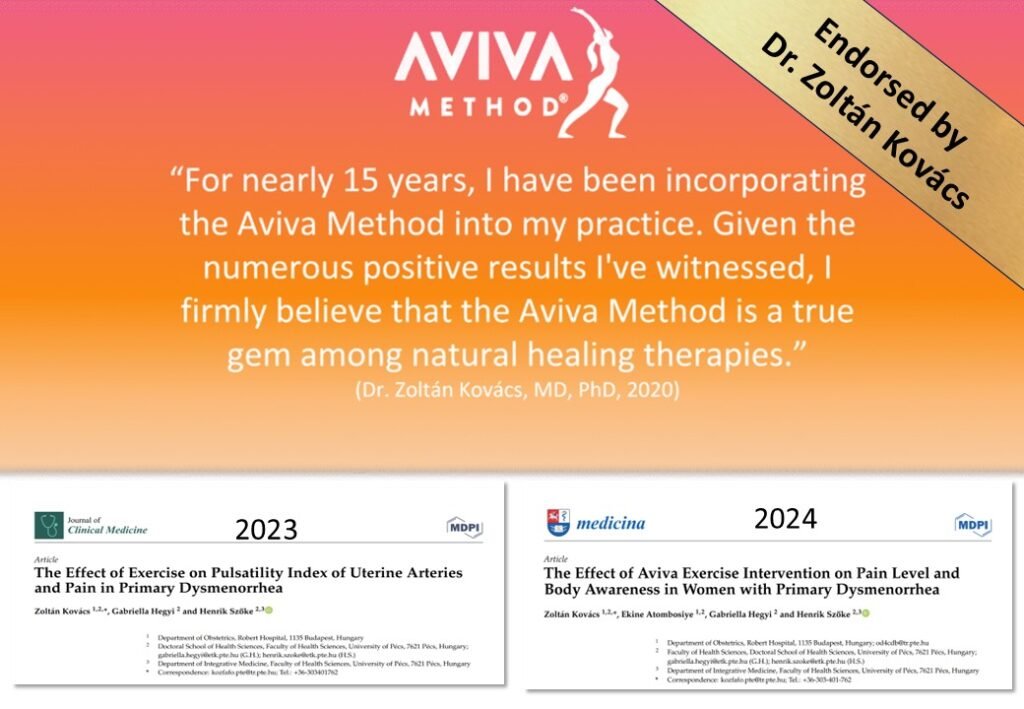
One example is the Aviva Method.
The Aviva Method combines rhythmic movement, pelvic-floor activation, dynamic hip and trunk movements, body awareness, and circulation-focused exercises that target the pelvic region.
Unlike high-intensity fitness programs, the Aviva Method is practiced at a moderate intensity and incorporates both activation and recovery.
The Basic Aviva Exercise sequence is typically practiced two to three times per week, with a rest day between sessions.
A complete session generally includes:
-
approximately 15 minutes of preparation and warm-up
-
around 30 minutes of dynamic rhythmic exercises
-
approximately 15 minutes of relaxation and recovery
This combination provides cardiovascular activity, functional muscle engagement, mobility work, pelvic-floor activation, and a dedicated recovery phase within a single practice.
Many women appreciate the Aviva Method because it was specifically designed to support awareness of the reproductive system and encourage healthy circulation in the pelvic region as part of a holistic approach to hormonal wellness.
Like any healthy movement practice, it works best when combined with:
-
adequate nutrition
-
quality sleep
-
stress management
-
cycle awareness
-
healthy lifestyle habits
Finding the Right Balance
The relationship between exercise and hormones teaches us an important lesson:
More is not always better.
The goal is not to exercise as much as possible.
The goal is to find a sustainable level of movement that supports your body’s natural rhythms, helps you feel energized, and promotes long-term health.
For some women, this may involve strength training several times per week.
For others, it may include walking, swimming, yoga, or reproductive-health-focused movement practices such as the Aviva Method.
The best exercise program is not necessarily the most intense one.
It is the one that helps your body thrive.
Key Takeaways
✓ Regular exercise may support hormonal balance, menstrual health, fertility, and overall well-being.
✓ Physical activity may improve circulation, insulin sensitivity, stress resilience, and metabolic health.
✓ Exercise may indirectly support thyroid health through its positive effects on metabolism, stress management, and body composition.
✓ Moderate targeted exercises such as the Aviva Method may support fertility, while excessive exercise combined with inadequate nutrition may interfere with ovulation.
✓ RED-S and hypothalamic amenorrhea can occur when energy expenditure consistently exceeds energy intake.
✓ Recovery, sleep, nutrition, and stress management are essential parts of hormonal health.
✓ The Aviva Method offers a moderate, reproductive-health-focused movement practice that combines activation, circulation, body awareness, and recovery.
✓ A healthy menstrual cycle is often one of the body’s most valuable indicators that your hormonal systems are functioning well.