Your Menstrual Cycle Is More Than Just a Period
Have you ever wished your body could simply tell you what it needs?
What if it already does?
Every month, your body sends countless signals.
Changes in
– energy,
– mood,
– sleep,
– appetite,
– cervical mucus,
– libido,
– breast tenderness,
– bloating,
– headaches,
– cravings, and
– bleeding patterns
all tell a story about what is happening inside your body.
The problem is not that your body isn’t communicating.
The problem is that most of us were never taught how to listen.
Many women grow up thinking their menstrual cycle begins when bleeding starts and ends when bleeding stops. The rest of the month often feels like a mystery. Symptoms appear, moods shift, energy fluctuates, and periods arrive—sometimes expected, sometimes surprising.
But your menstrual cycle is much more than your period.
It is a dynamic reflection of your hormonal health, overall well-being, and the interaction between your body and your lifestyle.
This is why cycle tracking can be such a powerful tool.
Not because it helps predict your next period.
But because it helps you understand yourself.
Your Menstrual Cycle Is a Vital Sign
When you visit a doctor, several measurements help evaluate your health.
– Your blood pressure.
– Your heart rate.
– Your body temperature.
– Your respiratory rate.
These are often called vital signs because they provide important information about how your body is functioning.
Many healthcare professionals now refer to the menstrual cycle as a “fifth vital sign.”
Why?
Because a healthy menstrual cycle depends on the successful cooperation of multiple body systems.
For ovulation and menstruation to occur normally, your:
-
brain
-
hypothalamus
-
pituitary gland
-
ovaries
-
thyroid
-
adrenal glands
-
metabolism
-
nervous system
must all work together.
When something disrupts that balance, your cycle often notices first.
In many cases, changes in the menstrual cycle appear long before other symptoms become obvious.
Your cycle can therefore provide valuable clues about your health.
Your Cycle Reflects More Than Reproductive Health
Many women think cycle tracking is only important if they are trying to conceive.
In reality, your cycle can reveal much more.
The menstrual cycle is influenced by:
-
stress
-
sleep quality
-
nutrition
-
exercise habits
-
illness
-
medications
-
thyroid function
-
blood sugar regulation
-
hormonal imbalances
-
approaching perimenopause
Because hormones affect nearly every system in the body, changes in your cycle often mirror changes occurring elsewhere.
Think of your cycle as a monthly report card from your body.
It cannot diagnose medical conditions, but it can provide valuable clues that something may need attention.
Your Body Leaves Clues Throughout the Month
Many women only pay attention to their cycle when their period arrives.
But your body provides information throughout the entire month.
For example:
During the follicular phase, rising estrogen may increase:
-
energy
-
motivation
-
confidence
-
sociability
-
mental clarity
Around ovulation, many women notice:
-
fertile cervical mucus
-
increased libido
-
improved mood
-
heightened confidence
-
increased physical energy
During the luteal phase, progesterone becomes the dominant hormone.
Some women notice:
-
increased calmness
-
greater need for rest
-
increased appetite
-
breast tenderness
-
bloating
-
emotional sensitivity
As hormone levels begin to decline before menstruation, some women experience PMS symptoms such as:
-
irritability
-
mood swings
-
fatigue
-
headaches
-
cravings
-
sleep disturbances
None of these changes happen randomly.
They reflect the hormonal shifts occurring throughout the cycle.
Tracking allows you to observe these patterns instead of being surprised by them every month.
Why Most Women Never Notice Their Patterns
Imagine trying to understand the weather by looking outside only one day each month.
You would miss most of what is happening.
The same is true for your cycle.
Without tracking, it is easy to forget:
-
when symptoms started
-
how long they lasted
-
how severe they were
-
what may have triggered them
-
what may have improved them
Many women feel that their symptoms are unpredictable.
However, when they begin tracking, they often discover that the same patterns repeat month after month.
– The bloating that always begins five days before menstruation.
– The headaches that appear after stressful weeks.
– The increased energy around ovulation.
– The fatigue that follows several nights of poor sleep.
Once these patterns become visible, the cycle begins to make much more sense.
Cycle Tracking Creates Awareness
One of the greatest benefits of cycle tracking is awareness.
Awareness creates understanding.
Understanding creates choices.
Instead of asking:
“Why do I feel terrible today?”
you may begin asking:
“Where am I in my cycle?”
Instead of feeling frustrated by recurring symptoms, you may start recognizing predictable hormonal patterns.
Instead of feeling disconnected from your body, you begin building a relationship with it.
Cycle tracking shifts your perspective from reacting to symptoms toward understanding them.
Every Cycle Tells a Story
No two women experience their cycles in exactly the same way.
Some notice dramatic changes from week to week.
Others experience only subtle shifts.
Some women struggle with PMS.
Others barely notice any symptoms.
Some have highly predictable cycles.
Others experience variation from month to month.
There is no single “correct” way to experience a menstrual cycle.
The goal of cycle tracking is not to force your body into perfection.
The goal is to learn your own patterns.
Your own rhythms.
Your own normal.
Because once you understand your cycle, you begin to understand your body in a deeper and more meaningful way.
So, what is worth tracking?
Many women start tracking their cycle by recording the first day of their period.
While this is an excellent starting point, it only scratches the surface of what your cycle can tell you.
Your menstrual cycle is not just about menstruation. It reflects the complex interaction between your reproductive hormones, stress levels, sleep quality, nutrition, exercise habits, emotional well-being, and overall health.
The more information you consistently track, the easier it becomes to identify patterns and understand how your body responds to different situations.
Think of cycle tracking as collecting clues. One cycle may not reveal much. But after several months, those clues begin to form a clear picture.
Track Your Menstrual Bleeding
Your period itself provides valuable information.
Many women only record when bleeding starts and ends, but there is much more you can observe.
You may wish to track:
-
Flow intensity
-
Blood color
-
Blood texture
-
Presence of clots
-
Spotting before or after menstruation
These observations can reveal recurring patterns and help you notice changes over time.
Blood Amount
Flow can vary significantly throughout menstruation.
Your tracker allows you to record:
-
Spotting
-
Light flow
-
Moderate flow
-
Abundant flow
-
Very heavy flow
Knowing your typical pattern helps you recognize when something changes.
Blood Color
Blood color can change throughout menstruation.
Fresh red blood often indicates newer blood leaving the uterus relatively quickly.
Dark red or brown blood is usually older blood that has spent more time in the uterus before being expelled.
Both can be completely normal depending on the stage of menstruation.
Blood Texture
You may also notice differences in consistency.
Menstrual blood may appear:
-
Smooth and liquid
-
Thick
-
Stringy
-
Containing small clots
Tracking these patterns helps you become familiar with what is normal for your body.
Track Cervical Mucus
One of the most valuable cycle signs is cervical mucus.
The cervix continuously produces mucus, but its appearance changes throughout the cycle under the influence of hormones.
These changes provide important clues about fertility and hormonal shifts.
Tracking cervical mucus can help you:
-
Understand your fertility window
-
Recognize hormonal transitions
-
Confirm that ovulation may have occurred
-
Notice unusual changes
Track Physical Symptoms
Hormones influence far more than fertility.
Throughout the cycle, fluctuations in estrogen, progesterone, prostaglandins, and other hormones can affect the entire body.
Common symptoms worth tracking include:
-
Breast tenderness
-
Bloating
-
Headaches
-
Migraines
-
Acne
-
Pelvic discomfort
-
Fatigue
-
Joint pain
-
Muscle aches
Many women are surprised to discover that symptoms they assumed were random actually follow predictable monthly patterns.
For example:
-
Breast tenderness often develops during the luteal phase as progesterone rises.
-
Bloating frequently increases before menstruation due to hormonal effects on fluid balance and digestion.
-
Headaches may occur when estrogen levels drop rapidly before menstruation.
Tracking allows you to identify these connections.
Track Your Emotional State
Hormones influence neurotransmitters such as serotonin, dopamine, and GABA.
As hormone levels change throughout the cycle, emotional changes may also occur.
Consider tracking:
-
Calmness
-
Anxiety
-
Irritability
-
Sensitivity
-
Low mood
-
Positive mood
This information becomes particularly valuable if you experience PMS symptoms.
After several months, many women begin noticing patterns such as:
-
Increased emotional sensitivity during the late luteal phase
-
Greater confidence around ovulation
-
Improved mood during the follicular phase
Understanding these patterns often reduces frustration because you begin to anticipate changes instead of being surprised by them.
Track Sleep
Sleep is one of the most powerful regulators of hormonal health.
During sleep, the body performs essential repair and recovery processes.
Poor sleep can affect:
-
Cortisol
-
Insulin sensitivity
-
Appetite regulation
-
Emotional resilience
-
Reproductive hormones
You may wish to track:
-
Difficulty falling asleep
-
Frequent waking
-
Early morning waking
-
Restful sleep
Over time, you may notice that months with poorer sleep are also associated with more PMS symptoms, lower energy, or greater emotional sensitivity.
Track Digestion
Many women are surprised to discover how closely the digestive system responds to hormonal fluctuations.
You may notice:
-
Constipation
-
Normal bowel movements
-
Loose stools
-
Diarrhea
- Excessive gas
For example, many women experience diarrhea shortly before or during menstruation.
This is largely due to prostaglandins—chemical messengers released by the uterine lining. While prostaglandins help create uterine contractions that shed the lining, they can also stimulate the intestines, increasing bowel activity.
Tracking digestive changes often reveals patterns that would otherwise be overlooked.
Track Appetite and Cravings
Hormones can influence both appetite and food preferences.
You may notice:
-
Increased hunger
-
Reduced appetite
-
Cravings for sweets
-
Cravings for salty foods
These changes are especially common during the luteal phase.
Tracking them helps you understand whether cravings occur predictably with hormonal changes or are linked to other factors such as stress, poor sleep, or emotional challenges.
Track Lifestyle Factors: The Missing Piece of the Puzzle
Many women diligently record their periods, ovulation signs, and symptoms but overlook one of the most valuable parts of cycle tracking: lifestyle factors.
Your menstrual cycle is highly responsive to your environment and daily habits.
Stress, sleep, nutrition, exercise, travel, illness, and emotional events can all influence hormone production and regulation.
This means that tracking symptoms without tracking lifestyle factors is often like trying to solve a puzzle while missing half the pieces.
Over time, lifestyle tracking helps answer questions such as:
-
Why was PMS worse this month?
-
Why did ovulation occur later than usual?
-
Why was this cycle longer?
-
Why was I more tired than normal?
-
Why did I experience unusual spotting?
-
Why did my cramps suddenly worsen?
Often, the answer becomes clear when you look at what was happening in your life.
Track Stress Levels
Stress is one of the most powerful influences on the menstrual cycle.
When the brain perceives stress, it activates the hypothalamic-pituitary-adrenal (HPA) axis.
This results in increased production of cortisol, the body’s primary stress hormone.
Short-term stress is a normal and healthy response.
However, when stress becomes chronic, elevated cortisol can begin interfering with the hypothalamic-pituitary-ovarian (HPO) axis that regulates the menstrual cycle.
Tracking your daily stress level can help reveal whether hormonal changes are occurring alongside stressful periods of life.
Track Sleep
Sleep is one of the most important regulators of hormonal health.
During sleep, the body performs essential repair and recovery processes while regulating many hormones, including:
-
Cortisol
-
Melatonin
-
Growth hormone
-
Insulin
-
Reproductive hormones
Consider recording:
-
Bedtime
-
Wake-up time
-
Total sleep duration
-
Sleep quality
After several months, many women discover clear relationships between sleep quality and cycle symptoms.
Track Your Nutrition
Food provides the building blocks for hormones and supports countless biological processes.
Tracking nutrition is not about counting every calorie.
Instead, it is about observing patterns.
You may choose to record:
-
Fruits and vegetables
-
Protein-rich meals
-
Processed foods
-
Added sugars
-
Water intake
-
Caffeine consumption
-
Alcohol consumption
Many women begin noticing associations such as:
-
Increased bloating after highly processed meals
-
Stronger cravings during stressful periods
-
Better energy with balanced meals
-
More digestive symptoms after certain foods
Tracking helps turn assumptions into observations.
Track Physical Activity
Movement influences circulation, metabolism, stress regulation, insulin sensitivity, and overall well-being.
Different forms of exercise may affect the cycle differently.
You may choose to track any type of exercise that you’re performing and practic such as:
-
Walking
-
Strength training
-
Running
-
Yoga
-
Stretching
-
Swimming
-
Cycling
-
The Aviva Method
Many women notice improvements in:
-
Energy levels
-
PMS symptoms
-
Mood
-
Menstrual comfort
When movement becomes a regular part of their routine.
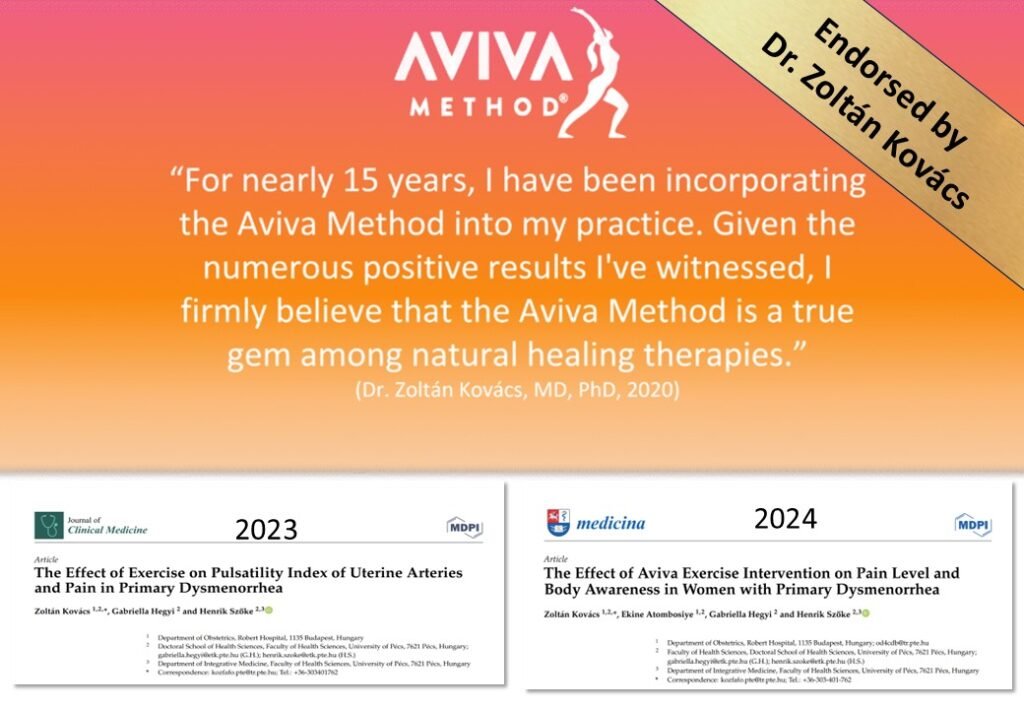
In particular, many women practicing the Aviva Method report improvements in cycle awareness, menstrual comfort, PMS symptoms, and overall reproductive well-being.
Tracking your exercise habits allows you to observe how your own body responds over time.
Track Relaxation and Self-Care Practices
Most people track stress.
Far fewer track recovery.
Yet recovery may be just as important.
Consider recording your stress management strategy such as:
-
Meditation
-
Breathing exercises
-
Guided relaxation
-
Hypnotic relaxation
-
Yoga
-
Nature walks
-
Reading
-
Creative hobbies
-
Time spent with loved ones
These activities can help regulate the stress response and support emotional resilience.
Tracking them helps identify which practices have the greatest positive effect on your well-being.
Track Significant Events
Life events often explain cycle changes that hormones alone cannot.
Examples include:
-
Exams
-
Work deadlines
-
Travel
-
Illness
-
Relationship changes
-
Family stress
-
Major celebrations
-
Moving house
-
Bereavement
When reviewing your tracker months later, these notes often provide valuable context.
A delayed ovulation or unusually difficult PMS month may suddenly make perfect sense.
Track Habits and Lifestyle Changes
Your tracker can also become a personal experiment.
Whenever you introduce a new habit, consider recording it.
Examples include:
-
Starting the Aviva Method
-
Improving sleep habits
-
Reducing caffeine
-
Increasing water intake
-
Beginning meditation
-
Following a new nutrition plan
-
Taking supplements
-
Spending more time outdoors
Over time, you may discover which changes genuinely support your health and which make little difference.
Your Cycle Does Not Exist in Isolation
One of the most important lessons cycle tracking can teach is that your cycle reflects your overall health.
Your hormones respond to:
-
Stress
-
Sleep
-
Nutrition
-
Exercise
-
Emotional well-being
-
Daily habits
-
Life circumstances
The more complete your tracking becomes, the more clearly these connections emerge.
Eventually, cycle tracking becomes much more than recording periods.
It becomes a tool for understanding the relationship between your lifestyle, your hormones, and your overall well-being.
The Goal Is Awareness, Not Perfection
Many women hesitate to start tracking because they fear doing it incorrectly.
There is no perfect way to track your cycle.
Some women record only a few observations.
Others enjoy tracking many details.
The goal is not to create perfect records.
The goal is to become more aware of your body’s unique patterns.
Every cycle teaches you something.
And the more consistently you observe, the more clearly your body begins to tell its story.
A Simple Way to Start Tracking Your Cycle
At first, cycle tracking may sound overwhelming. Many women imagine detailed charts, complicated fertility methods, or spending a lot of time recording information every day.
In reality, it can be surprisingly simple.
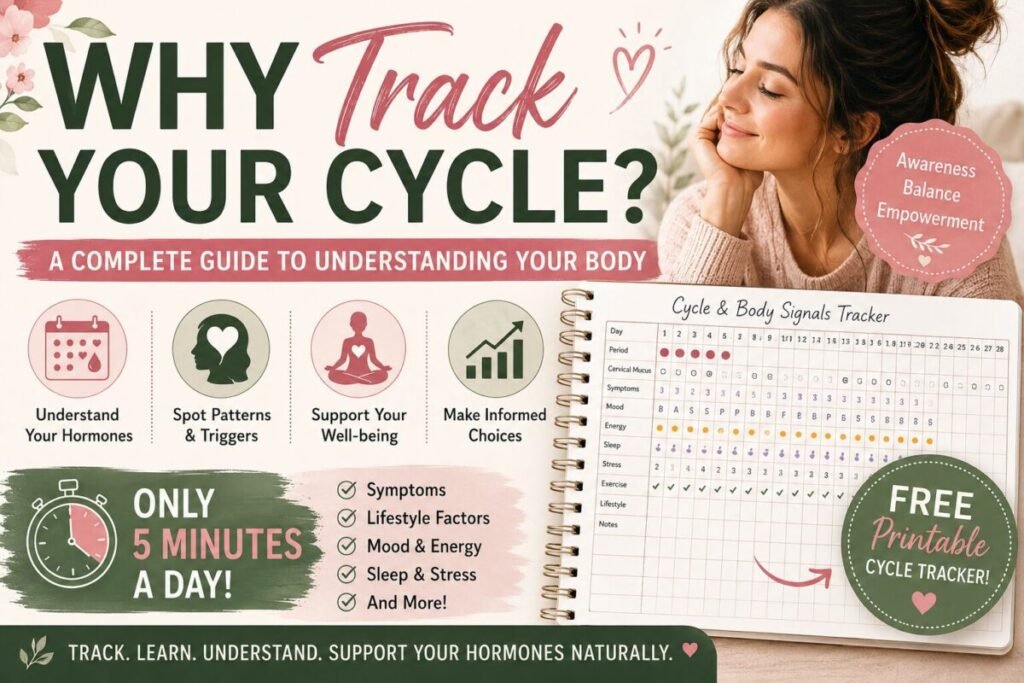
The printable Cycle Tracker available on Vitality Flame was designed as a practical bullet-style tracker that takes only about five minutes at the end of each day to complete.
Most information is organized into easy-to-follow tables, allowing you to quickly record:
- your menstrual bleeding
- cervical mucus observations
- physical symptoms
- emotional changes
- energy levels
- sleep quality
- exercise
- stress levels
- relaxation practices
- lifestyle habits
The tracker also includes blank customizable rows, allowing you to personalize it according to your own needs.
You may decide to track:
- specific foods
- caffeine intake
- alcohol consumption
- supplements
- medications
- hydration
- digestive symptoms
- headaches
- skin changes
- libido
- work stress
- family events
- travel
- anything else that may influence your cycle
This flexibility allows your tracker to become uniquely yours.
After only a few cycles, many women begin noticing patterns they had never recognized before.
You may discover that:
- poor sleep increases PMS symptoms
- stressful weeks delay ovulation
- certain foods worsen bloating
- regular exercise improves mood
- relaxation practices reduce premenstrual symptoms
- specific habits support more balanced cycles
These discoveries can be incredibly empowering because they transform your cycle from something that feels unpredictable into something you can better understand and support.
Download Your Free Cycle Tracker Here
To help you get started, I created a free printable Cycle Tracker that you can download and try for yourself.
It is simple, beginner-friendly, customizable, and designed to help you uncover the unique patterns of your body.
There is no right or wrong way to use it.
The goal is not perfection.
The goal is awareness.
And awareness is often the first step toward meaningful change.
What Comes Next?
Tracking your cycle is only the beginning.
Once you start collecting information, a natural question appears:
Why do these patterns happen?
Why does stress sometimes delay ovulation?
Why can poor sleep worsen PMS?
How does nutrition influence hormones?
Can exercise improve cycle symptoms?
Why do some women notice changes after travel, illness, or major life events?
In our next article series, Lifestyle Factors That Influence Your Menstrual Cycle, we will explore these questions in detail.
We’ll examine how different lifestyle factors—including stress, sleep, nutrition, exercise, relaxation, environmental influences, and daily habits—can affect hormones, ovulation, PMS symptoms, menstrual health, and overall cycle regularity.
Understanding these connections can help you move beyond simply observing your cycle and begin actively supporting it.
Because cycle tracking doesn’t just tell you what is happening.
It helps you understand why it may be happening.
And that knowledge can become one of the most powerful tools for supporting your hormonal health.