How to manage Pre Menstrual Simptomes Naturally: Stress, Sleep, Nutrition, Exercise, and the Aviva Method
In the previous articles, we explored what Premenstrual Syndrome (PMS) is, why it develops, and the biological mechanisms behind common symptoms such as bloating, breast tenderness, headaches, fatigue, food cravings, digestive disturbances, mood swings, and anxiety.
Understanding the mechanisms is important. However, understanding what influences these mechanisms is equally important.
Not every woman experiences PMS in the same way. Some women barely notice hormonal fluctuations, while others feel physically and emotionally overwhelmed during the days leading up to menstruation.
Why?
Part of the answer lies in genetics and individual sensitivity to hormonal changes. However, lifestyle factors also play a major role. Stress, sleep quality, nutrition, physical activity, blood sugar regulation, and underlying hormonal imbalances can all influence the severity of PMS symptoms.
The encouraging news is that many of these factors are modifiable.
Why PMS Severity Varies from Woman to Woman
The same hormonal fluctuations occur in most ovulatory cycles.
Yet two women with similar hormone levels may experience very different symptoms.
Researchers increasingly believe that PMS is less about abnormal hormone levels and more about how sensitive the brain and body are to hormonal changes.
Several factors appear to influence this sensitivity:
- Chronic stress
- Sleep deprivation
- Poor nutrition
- Blood sugar instability
- Inflammation
- Lack of physical activity
- Underlying hormonal disorders
- Thyroid dysfunction
- Insulin resistance
- Polycystic Ovary Syndrome (PCOS)
- Perimenopause
These factors do not necessarily cause PMS directly, but they can amplify symptoms significantly.
Stress: One of the Biggest PMS Triggers
Many women notice that their PMS becomes much worse during stressful periods of life.
This is not a coincidence.
The Stress Response System
When we experience stress, the body activates the hypothalamic-pituitary-adrenal (HPA) axis.
This triggers the release of cortisol, often called the stress hormone.
Cortisol is extremely useful in short-term emergencies.
However, chronic stress keeps cortisol elevated for prolonged periods.
This affects many other hormonal systems, including the reproductive system.
How Cortisol Affects the Menstrual Cycle
The reproductive system depends on precise communication between:
- The hypothalamus
- The pituitary gland
- The ovaries
Chronic stress can interfere with this communication.
Elevated cortisol may suppress the release of GnRH (gonadotropin-releasing hormone), which subsequently affects:
- FSH production
- LH production
- Ovulation
- Corpus luteum function
- Progesterone production
As a result, women may experience:
- Irregular cycles
- Delayed ovulation
- Luteal phase insufficiency
- Increased PMS symptoms
In some women, chronic stress may even contribute to anovulatory cycles.
Stress and the Brain
Stress does not only affect reproductive hormones.
High cortisol also affects:
- Serotonin
- Dopamine
- GABA
These neurotransmitters play important roles in:
- Mood regulation
- Emotional resilience
- Motivation
- Anxiety control
- Sleep
This is one reason why stress often worsens irritability, anxiety, food cravings, emotional sensitivity, and fatigue before menstruation.
Guided Relaxation and Hypnotic Audio Support
Since stress and nervous system dysregulation can significantly worsen PMS symptoms, relaxation practices may be extremely valuable.
Women often benefit from:
- guided relaxation recordings
- mindfulness meditation
- breathing exercises
- hypnosis-based relaxation
- body scan practices
- yoga nidra
Regular relaxation practice may help:
- lower cortisol
- improve sleep
- reduce anxiety
- improve emotional resilience
- decrease pain sensitivity
You may also wish to explore:
Free Guided Relaxation Audio
Download the free guided relaxation audio available on this website.
It was specifically created to support:
- stress reduction
- emotional balance
- relaxation
- hormonal well-being
Cycle Syncing Premium Series
For women who want a deeper understanding of their hormonal rhythms, the Cycle Syncing Premium Series provides additional guidance on:
- understanding each cycle phase
- adapting lifestyle to hormonal changes
- managing PMS naturally
- improving body awareness
- supporting reproductive health
Sleep: The Forgotten Hormone Regulator
Sleep is one of the most powerful hormonal regulators available to us.
Unfortunately, it is often overlooked.
Melatonin and Circadian Rhythm
During darkness, the pineal gland produces melatonin.
Melatonin helps regulate:
- Sleep quality
- Circadian rhythms
- Immune function
- Inflammation
- Hormonal communication
Poor sleep disrupts melatonin production and increases cortisol levels.
Sleep and PMS
Women who sleep poorly often report:
- Worse mood symptoms
- More food cravings
- Increased fatigue
- Greater anxiety
- More severe PMS
Research consistently shows that sleep deprivation increases emotional reactivity and reduces stress resilience.
In practical terms, a woman who is already hormonally sensitive may experience much stronger PMS symptoms when she is chronically sleep deprived.
Supporting Healthy Sleep
Helpful habits include:
- Maintaining a consistent sleep schedule
- Limiting screens before bedtime
- Reducing evening caffeine intake
- Keeping the bedroom cool and dark
- Practicing relaxation techniques before sleep
Blood Sugar and PMS
Blood sugar regulation is often overlooked when discussing PMS.
Yet it may have a profound effect on symptoms.
Blood Sugar Swings and Mood
When blood sugar rises rapidly and then crashes:
- Irritability increases
- Anxiety may worsen
- Fatigue increases
- Cravings intensify
- Concentration decreases
These symptoms often resemble PMS itself.
Women who consume large amounts of refined carbohydrates and sugar may therefore experience more severe symptoms.
Helpful Nutritional Strategies
Focus on:
- Protein-rich meals
- High-fiber vegetables
- Healthy fats
- Whole grains
- Stable meal timing
These strategies help reduce blood sugar fluctuations and may improve energy and mood stability throughout the luteal phase.
Nutrients That May Support PMS
Several nutrients have been studied for their potential role in PMS management.
Magnesium
Magnesium is involved in hundreds of biochemical reactions.
It helps regulate:
- Nervous system function
- Muscle relaxation
- Stress response
- Sleep quality
Low magnesium status has been associated with:
- Headaches
- Anxiety
- Muscle tension
- Food cravings
Good sources include:
- Nuts
- Seeds
- Dark leafy greens
- Legumes
Vitamin B6
Vitamin B6 participates in neurotransmitter production, including serotonin.
Adequate levels may support:
- Mood regulation
- Emotional stability
- Energy metabolism
Omega-3 Fatty Acids
Omega-3 fats possess anti-inflammatory properties.
They may help support:
- Mood
- Menstrual comfort
- Cardiovascular health
- Brain function
Sources include:
- Fatty fish
- Sardines
- Mackerel
- Salmon
- Flaxseeds
- Chia seeds
Foods That May Worsen PMS
Some women notice symptom improvement when reducing:
Excess Sugar
May contribute to:
- Blood sugar instability
- Energy crashes
- Increased cravings
- Mood fluctuations
Highly Processed Foods
Often contain:
- Excess sodium
- Refined carbohydrates
- Unhealthy fats
These may worsen:
- Inflammation
- Water retention
- Fatigue
Excess Salt
May increase:
- Water retention
- Bloating
- Breast tenderness
Excess Caffeine
In sensitive individuals, caffeine may worsen:
- Anxiety
- Breast tenderness
- Sleep disturbances
- Irritability
Alcohol
Alcohol may interfere with:
- Sleep quality
- Blood sugar regulation
- Mood stability
PMS and Underlying Hormonal Conditions
Sometimes severe PMS is not solely due to normal hormonal fluctuations.
Other conditions may contribute.
Thyroid Dysfunction
Both hypothyroidism and hyperthyroidism can worsen:
- Fatigue
- Mood symptoms
- Menstrual irregularities
Insulin Resistance
Insulin resistance may affect ovarian hormone production and increase inflammation.
PCOS
Women with PCOS frequently experience:
- Irregular cycles
- Ovulatory dysfunction
- Hormonal imbalances
These can contribute to more severe PMS symptoms.
Perimenopause
During perimenopause, hormonal fluctuations often become more dramatic and unpredictable.
Many women report worsening PMS symptoms during this transition.
Exercise and PMS
Regular physical activity is one of the most consistently supported lifestyle interventions for PMS.
Exercise may help:
- Improve circulation
- Reduce stress
- Support serotonin production
- Improve sleep quality
- Reduce inflammation
- Support metabolic health
Women who exercise regularly often report fewer PMS symptoms than sedentary women.
The Aviva Method and PMS
One of the most interesting exercise approaches for menstrual health is the Aviva Method.
The Aviva Method is a system of dynamic movements specifically designed to stimulate circulation in the pelvic region and support reproductive health.
Many women report improvements in:
- PMS symptoms
- Menstrual discomfort
- Cycle regularity
- Ovulatory function
- Overall menstrual well-being
Why Might the Aviva Method Help?
Several physiological mechanisms may be involved.
Improved Pelvic Circulation
The exercises increase blood flow to the pelvic organs.
Improved circulation may support:
- Ovarian function
- Uterine health
- Tissue oxygenation
Support for Hormonal Regulation
Healthy ovulation and corpus luteum function are essential for balanced progesterone production.
Many PMS symptoms are linked to disturbances occurring during the luteal phase.
By supporting normal reproductive function, the Aviva Method may indirectly help improve hormonal balance.
Stress Reduction
Like many forms of rhythmic movement, Aviva exercises may help regulate the nervous system.
Reduced stress may support:
- Lower cortisol levels
- Improved sleep
- Better emotional resilience
- Improved hormonal communication
Improved Lymphatic and Venous Circulation
Many women report reductions in:
- Bloating
- Water retention
- Pelvic congestion
This may be partly related to improved circulation and lymphatic flow.
What Does Research Suggest?
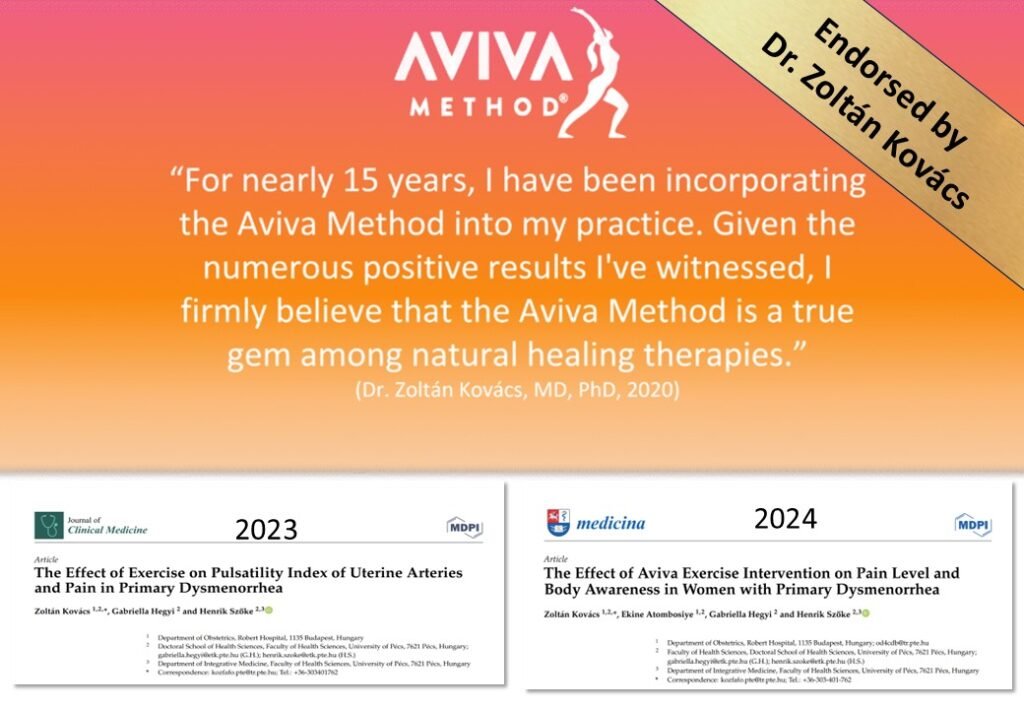
A clinical study investigating the Aviva Method reported improvements in PMS symptoms among participants.
In addition to research findings, many instructors and practitioners have observed that women frequently report:
- Less bloating
- Improved mood stability
- Reduced breast tenderness
- Reduced irritability
- Less severe PMS overall
Some women even report that symptoms they had experienced for years disappeared completely after regularly practicing the method.
While individual experiences vary and more research is always welcome, these reports suggest that targeted movement may play a valuable role in supporting menstrual health.
Track Your Symptoms and Discover Your Personal PMS Patterns
One of the most powerful tools for managing PMS is something surprisingly simple: observation.
Many women know that they feel different before their period, but they are not always sure exactly when symptoms begin, which symptoms appear first, or what factors make them better or worse. Without tracking, it can be difficult to recognize patterns that repeat month after month.
PMS is highly individual. For some women, stress is the main trigger. For others, poor sleep, excessive caffeine, lack of exercise, or dietary choices may play a larger role. Some women notice improvements after introducing relaxation techniques, cycle-synced lifestyle changes, or regular Aviva Method practice.
Keeping track of your cycle and symptoms can help you:
- Identify when your symptoms typically begin.
- Recognize which symptoms are most disruptive.
- Discover possible triggers that worsen PMS.
- Notice which lifestyle changes help you feel better.
- Observe improvements over time.
- Better understand your unique hormonal rhythm.
- Provide useful information if you decide to consult a healthcare professional.
To help with this process, I created a free printable Cycle and Symptom Tracking Sheet.
The tracker allows you to record:
- Your menstrual cycle dates.
- Physical symptoms such as bloating, breast tenderness, headaches, fatigue, digestive changes, or cramps.
- Emotional symptoms such as irritability, anxiety, mood swings, sadness, or overwhelm.
- Lifestyle factors including sleep, stress levels, exercise, nutrition, and self-care habits.
- Personal observations and notes.
There are also blank spaces so you can customize the tracker according to your own experience. Every cycle is unique, and your tracker should reflect what matters most to you.
Many women are surprised by what they discover after tracking for just two or three cycles. Patterns that previously felt random often become much clearer. You may notice that your symptoms consistently worsen after stressful weeks, improve when you prioritize sleep, or become less intense when you practice regular movement such as the Aviva Method.
Awareness is often the first step toward meaningful change. By understanding your body’s patterns, you can make more informed decisions and develop a lifestyle that supports your hormonal well-being throughout the entire cycle.
👉 Download the free printable Cycle and Symptom Tracking Sheet and start exploring your own unique patterns today.
Final Thoughts
PMS is not simply a collection of random symptoms. It is the result of a complex interaction between reproductive hormones, neurotransmitters, stress physiology, sleep quality, inflammation, nutrition, and individual sensitivity to hormonal fluctuations.
Although hormonal changes cannot be completely eliminated, the body’s response to those changes can often be influenced.
Managing stress, prioritizing sleep, supporting blood sugar stability, eating a nutrient-dense diet, engaging in regular physical activity, and addressing underlying health conditions may significantly reduce symptom severity.
For many women, the Aviva Method has become an additional tool that supports hormonal health, cycle awareness, and menstrual well-being. Combined with healthy lifestyle habits, it may help women experience a smoother luteal phase, fewer PMS symptoms, and a more positive relationship with their menstrual cycle.
Understanding your cycle is not about fighting your hormones. It is about learning to work with your body’s natural rhythms and supporting the systems that help you feel your best throughout the month.