What Short, Long, Missing & Unpredictable Cycles May Mean
Trying to understand your menstrual cycle can sometimes feel confusing.
One month your period arrives exactly when expected.
The next month it comes a week early.
Or perhaps it is delayed by several weeks.
Sometimes a period disappears entirely.
Many women immediately wonder:
- Am I pregnant?
- Is something wrong with my hormones?
- Is this normal?
- Should I see a doctor?
The good news is that cycle changes are often explainable once you understand what is happening behind the scenes.
Your menstrual cycle is controlled by a remarkable communication system involving the brain, pituitary gland, ovaries, uterus, and hormones. When any part of this system changes, the timing of ovulation can change—and that often changes the length of your cycle.
In this article, we’ll explore:
- what is considered a normal cycle
- what makes a cycle irregular
- why periods may come early or late
- why ovulation matters
- what causes long, short, or absent cycles
- when cycle changes are normal
- when medical evaluation may be appropriate
First: What Is a Menstrual Cycle?
A menstrual cycle is counted from:
Day 1 of one menstrual period to Day 1 of the next menstrual period.
Many women have been taught that a “normal” cycle is 28 days.
However, 28 days is simply an average.
Healthy cycles can vary considerably.
Typical Healthy Cycle Ranges
| Cycle Feature | Typical Range |
|---|---|
| Cycle length | 21–35 days |
| Menstrual bleeding | 3–7 days |
| Average blood loss | Around 30–40 mL |
| Heavy bleeding | More than 80 mL |
| Follicular phase | Variable |
| Luteal phase | Usually 12–14 days |
The most important concept to understand is this:
Most differences in cycle length occur because ovulation happens earlier, later, or not at all.
What Actually Controls Your Cycle?
The menstrual cycle is controlled by a communication network known as the:
Hypothalamic-Pituitary-Ovarian (HPO) Axis
This system involves:
The Hypothalamus
A small area of the brain that releases GnRH (gonadotropin-releasing hormone).
The Pituitary Gland
Located beneath the brain.
In response to GnRH it releases:
- FSH
- LH
The Ovaries
These respond to FSH and LH by producing:
- Estrogen
- Progesterone
The precise coordination of these hormones allows:
- follicle development
- ovulation
- corpus luteum formation
- menstruation
When this communication is disrupted, cycle changes can occur.
What Is Considered an Irregular Cycle?
A common myth is that any cycle that is not exactly 28 days is irregular.
This is not true.
Most healthy women experience some variation from month to month.
Many specialists consider a cycle irregular when cycle length varies by more than approximately 7–10 days between cycles.
For example:
Usually Normal Variation
- 27 days
- 29 days
- 31 days
More Significant Variation
- 23 days
- 36 days
- 27 days
- 40 days
A healthy cycle does not have to be identical every month.
Your body is a living biological system, not a clock.
Why Cycle Length Usually Reflects Ovulation Timing
This may be the single most important concept in cycle awareness.
Many women focus on the day their period arrives.
However, cycle length is primarily determined by ovulation timing.
Consider these examples.
Cycle A
Ovulation: Day 14
Period: Day 28
Cycle B
Ovulation: Day 25
Period: Day 39
The second period appears “late.”
But the period itself is not the problem.
Ovulation occurred later.
The menstrual period simply followed ovulation approximately two weeks later.
Instead of asking:
Why is my period late?
it is often more useful to ask:
Why was my ovulation delayed?
Why Cycle Regularity Changes During Life
Not every stage of reproductive life looks the same.
Puberty: The First Years After Menarche
After a girl’s first period, the HPO axis is still maturing.
The communication between:
- brain
- pituitary gland
- ovaries
is not yet fully established.
Because of this:
- cycles are often long
- cycles may be irregular
- ovulation may not occur every cycle
This is usually normal during the first few years after menarche.
The Reproductive Years
During adulthood, hormonal communication becomes more predictable.
Most women experience:
- more regular ovulation
- more stable cycle lengths
- peak fertility
This is typically the most hormonally stable phase of life.
Perimenopause
As ovarian reserve gradually declines, ovulation becomes less predictable.
Cycles may become:
- shorter
- longer
- irregular
- occasionally anovulatory
This transition often begins during the 40s but varies considerably between women.
What Causes a Short Cycle?
A cycle consistently shorter than 21 days is considered unusually short.
Possible causes include:
Early Ovulation
If ovulation occurs earlier than usual, the cycle may become shorter.
Perimenopause
Earlier ovulation becomes more common during the menopausal transition.
Thyroid Disorders
Both hypothyroidism and hyperthyroidism can affect cycle timing.
Stress and Illness
Significant physical or emotional stress may alter hormone production.
What Causes a Long Cycle?
A cycle longer than 35 days is considered long.
The most common reason is:
Delayed Ovulation
Ovulation eventually occurs, but later than expected.
Examples:
- illness
- travel
- stress
- poor sleep
- significant lifestyle changes
can all delay ovulation.
A long cycle does not automatically mean that ovulation failed to occur.
How Stress Can Affect Your Cycle
Many women notice cycle changes during stressful periods.
This is not simply psychological.
Stress activates another hormonal system called the:
Hypothalamic-Pituitary-Adrenal (HPA) Axis
This increases production of:
Cortisol
The body’s primary stress hormone.
High cortisol levels can interfere with reproductive hormone signaling.
This may:
- slow follicle development
- delay ovulation
- lengthen cycles
- occasionally stop menstruation temporarily
This is thought to be an evolutionary protective mechanism.
When survival is perceived as a priority, reproduction may temporarily move into the background.
What Is Anovulation?
Anovulation means:
Ovulation did not occur.
Many women are surprised to learn that bleeding can still occur.
Without ovulation:
- no corpus luteum forms
- progesterone remains low
- hormone patterns differ significantly
Can You Have a Period Without Ovulating?
Yes.
This is one of the most misunderstood aspects of menstrual health.
A woman may experience bleeding without ovulation.
However, this is not a true menstrual period in the same hormonal sense.
Instead, the uterine lining builds under estrogen influence and eventually sheds irregularly.
This is called an anovulatory bleed.
Signs That Ovulation May Not Have Occurred
Possible clues include:
- very long cycles
- highly irregular cycles
- absent fertile cervical mucus
- no sustained temperature rise
- unpredictable bleeding
Cycle awareness methods cannot diagnose anovulation but may provide useful clues.
Common Causes of Anovulation
PCOS
The most common cause.
Thyroid Disorders
Both underactive and overactive thyroid function can interfere with ovulation.
Elevated Prolactin
High prolactin can suppress reproductive hormones.
Significant Stress
Can temporarily suppress ovulation.
Under-Eating or Excessive Exercise
The body may perceive insufficient energy availability.
Perimenopause
Anovulatory cycles become increasingly common.
What Is a Short Luteal Phase?
After ovulation, the follicle transforms into the:
Corpus Luteum
The corpus luteum produces progesterone.
Progesterone:
- prepares the uterine lining
- supports implantation
- raises basal body temperature
Most luteal phases last approximately:
12–14 days.
Sometimes cycle tracking suggests a shorter luteal phase.
This may appear as:
- temperature rise
- followed by an earlier-than-expected drop
Because assessment can be complex, concerns should be discussed with a healthcare professional.
What If Your Period Stops Completely?
The absence of menstruation is called:
Amenorrhea
There are two major types.
Primary Amenorrhea
Menstruation never begins by the expected age.
Secondary Amenorrhea
A woman who previously menstruated stops having periods.
Common Causes of Secondary Amenorrhea
- pregnancy
- breastfeeding
- PCOS
- thyroid disorders
- elevated prolactin
- significant weight loss
- excessive exercise
- chronic stress
- premature ovarian insufficiency
- perimenopause
Pregnancy should always be considered first.
Gynecological Conditions That Can Affect Cycle Length
Polycystic Ovary Syndrome (PCOS)
One of the most common causes of:
- irregular cycles
- delayed ovulation
- anovulation
Functional Ovarian Cysts
May temporarily delay ovulation.
Premature Ovarian Insufficiency
Can cause irregular or absent cycles before age 40.
Perimenopause
Naturally alters ovulation patterns.
Conditions That Affect Bleeding More Than Cycle Length
Some gynecological conditions primarily affect the amount of bleeding rather than the timing of ovulation.
These include:
- endometriosis
- adenomyosis
- uterine fibroids
- endometrial polyps
Can Environmental Factors Influence Cycles?
Researchers continue to investigate the effects of:
- endocrine-disrupting chemicals
- air pollution
- industrial chemicals
- pesticides
Some studies suggest associations with:
- altered ovulation
- cycle irregularity
- fertility changes
However, research is still evolving.
Tracking Your Cycle Can Reveal Patterns
Cycle awareness goes far beyond fertility.
Tracking may help identify relationships between:
- stress
- sleep
- nutrition
- exercise
- illness
- travel
- hormonal symptoms
Over time, many women begin to recognize what supports their cycle and what tends to disrupt it.
This is one reason I created my Cycle & Symptom Tracking Journal, including free printable pages that help you observe your body’s patterns month after month.
Supporting a Healthy Cycle Naturally
Many women find support through:
- regular practice of the Aviva Exercises
- quality sleep
- stress management
- balanced nutrition
- stable blood sugar levels
- reducing highly processed foods
- supporting metabolic health
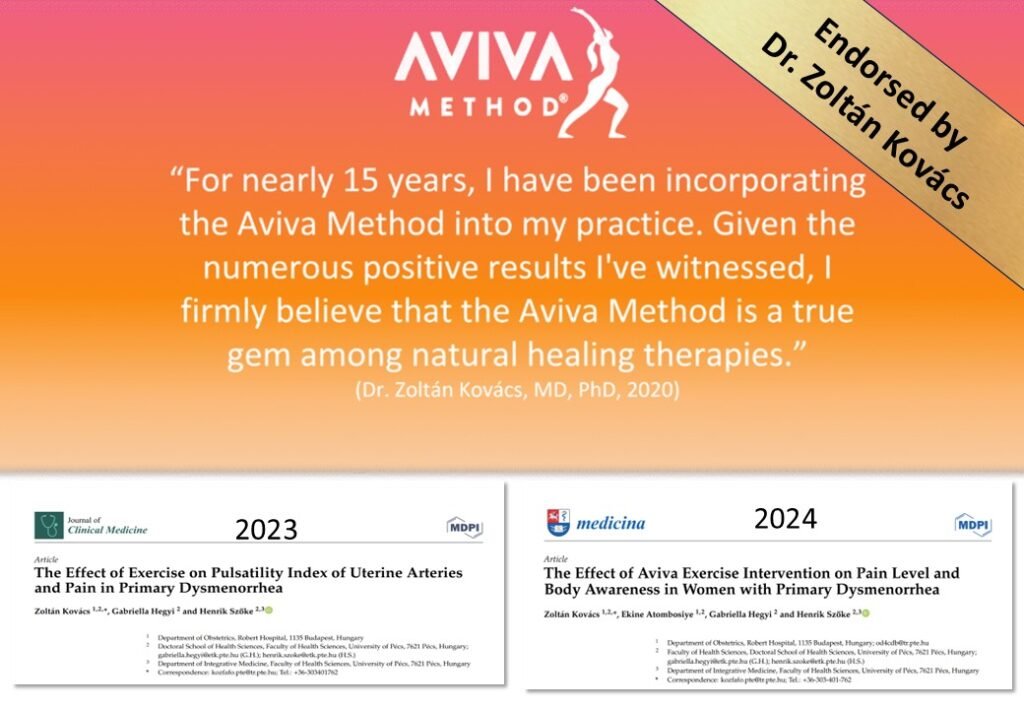
Research has shown that regular practice of the Aviva Method may help reduce menstrual discomfort, while many practitioners report improvements in cycle regularity and menstrual symptoms.
You may also enjoy my free guided relaxations and hypnosis, as well as a premium Cycle-Syncing Hypnorelaxation Series, which combines relaxation, breathing techniques, visualization, and gentle inner work designed to support emotional well-being throughout each phase of the cycle.
When Should You See a Healthcare Professional?
Seek medical advice if:
- cycles are consistently shorter than 21 days
- cycles are consistently longer than 35–45 days
- menstruation stops for three months or longer
- bleeding becomes very heavy
- severe pain develops
- major cycle changes occur suddenly
- fertility concerns arise
Final Thoughts
Your menstrual cycle is one of the most valuable windows into your reproductive health.
A cycle that becomes shorter, longer, irregular, or absent does not automatically mean something is wrong. Sometimes the explanation is temporary stress, illness, travel, or a normal life transition such as puberty or perimenopause.
However, persistent changes deserve attention.
By understanding ovulation, hormones, cervical mucus, basal body temperature, and cycle length together, you can learn to interpret your body’s signals with greater confidence and awareness.
Cycle awareness is not about achieving a perfect 28-day cycle.
It is about understanding the unique rhythm of your body and recognizing when it may be asking for support.