In Part 1, we explored some of the most common — yet often underestimated — factors that can quietly disrupt hormonal balance.
We looked at how:
chronic inflammation
- stress
a sedentary lifestyle
overexercising
and inadequate sleep
can all place continuous pressure on your hormonal system.
And if you recognized yourself in some of those patterns,
you’ve already taken an important first step: awareness.
Why This Matters More Than You Think
What makes hormonal imbalance so complex is that
these factors rarely exist in isolation.
👉 They tend to overlap.
👉 Reinforce each other.
👉 And build up over time.
🌿 And There’s More Beneath the Surface
But even beyond what we covered in Part 1,
there are additional hidden triggers that can influence your hormonal balance in ways you might not expect.
Some of them are part of your daily routine.
Some come from your environment.
And some are things you might even consider “healthy.”
Yet all of them can affect how your hormones are produced, regulated, and communicated within your body.
🍽️ 6. What’s on Your Plate
Do you love sweet treats?
Or maybe you wouldn’t say no to your favorite burger and fries — with a big glass of orange juice or cola on the side…
And that’s completely human.
But what if some of the foods you enjoy the most…
are also the ones quietly hijacking your hormonal balance?
What you eat doesn’t just fuel your body — it directly influences your hormonal balance.
Diets high in ultra-processed foods, refined sugars, and unhealthy fats can lead to blood sugar spikes, increased insulin levels, and chronic inflammation — all of which disrupt hormonal signaling. Over time, this may contribute to issues like irregular cycles, low energy, and metabolic imbalance.
At the same time, a lack of essential nutrients can make it harder for your body to produce and regulate hormones effectively. Nutrients like magnesium, zinc, vitamin B6, and healthy fats are all needed for proper hormone synthesis and balance.
Certain foods can also influence hormonal pathways more directly. For example, high intake of processed soy products — rich in phytoestrogens — may further shift estrogen balance in those who are already sensitive or experiencing estrogen dominance patterns.
On the other hand, whole, nutrient-dense foods — such as vegetables, healthy fats, and fiber-rich meals — support more stable blood sugar, reduce inflammation, and create a more supportive environment for hormonal health.
👉 Sometimes, restoring balance doesn’t start with doing more —
but with giving your body what it has been missing.
🦠 7. Gut Health & Microbiome Imbalance
Your gut is not just responsible for digestion — it plays a key role in hormonal balance. The gut microbiome helps regulate estrogen metabolism, supports immune function, and influences mood through neurotransmitters. When this balance is disrupted, hormonal signaling can also become less efficient.
Common factors that can disturb gut health include:
• a diet high in sugar and ultra-processed foods
• chronic stress
• poor sleep and irregular daily rhythm
• frequent antibiotic use
• environmental toxins (e.g., food packaging, chemicals)
• lack of movement
👉 When the microbiome is imbalanced, processes like estrogen breakdown, inflammation control, and metabolic regulation may also be affected.
👉 In simple terms: a disrupted gut can lead to disrupted hormonal communication across the whole body.
🌍 8. Environmental Toxins (Endocrine Disruptors)
Some of the most powerful hormonal disruptors are not internal — but part of your everyday environment.
These substances can mimic, block, or interfere with hormones — even at very low levels (Gore et al., 2015).
And sometimes, they are closer than we think…
- It might be in your favorite perfume.
- In the fabric softener you use every week.
- Or in the plastic container your food or drink is stored — or reheated — in.
You might have noticed a phenomenon among pregnant individuals: Suddenly, a scent they once loved — a perfume, a cleaning product, or even a laundry detergent — becomes overwhelming or nauseating.
This heightened sensitivity is often linked to hormonal changes, particularly increased estrogen levels, which can make the sense of smell more acute.
Some researchers suggest that this may also serve as a protective mechanism — helping the body become more sensitive to potentially harmful substances in the environment. In a way, the body may be becoming more selective about what it tolerates.
👉 Common examples of hormone balance disturbing chemicals (it can be worth occasionally checking what ingredients are in the products you use daily):
Bisphenol A (BPA) → mimics estrogen
Phthalates → disrupt androgen function
Parabens → weak estrogen-like effects
Pesticides (e.g., DDT residues) → affect multiple hormone pathways
Flame retardants (PBDEs) → interfere with thyroid hormones
Perfluorinated compounds (PFAS) → affect metabolism and thyroid
Heavy metals (lead, mercury) → disrupt reproductive and thyroid systems
These exposures don’t usually come from one single source.
👉 Instead, they tend to accumulate — quietly, over time.
We are often exposed to a combination of these substances, sometimes referred to as a “cocktail effect,” where their combined impact may be greater than each one individually.
👉 Not every exposure leads to imbalance.
But over time, they can become part of the bigger picture.
🌿 Why This Matters
Research has linked endocrine disruptors to:
- fertility issues (both men and women)
- menstrual irregularities
- conditions like endometriosis and fibroids
- metabolic disorders (obesity, insulin resistance)
- thyroid dysfunction
- hormone-dependent cancers
👉 These effects can even be long-term or transgenerational,
meaning exposure today may influence future health patterns.
💊 9. Hormonal Contraceptives & Medication Effects
Hormonal contraceptives work by altering natural hormone production.
After stopping them, some women experience:
- delayed cycle return
- irregular ovulation
- temporary hormonal dysregulation
🌸 10. Life Phases & Hormonal Transitions
Hormonal balance is not static.
It naturally shifts during:
- postpartum period
- perimenopause
- high-stress life phases
These transitions can make the system more sensitive —
and underlying imbalances more visible.
🌿 Expert Perspective – What We Often See in Practice
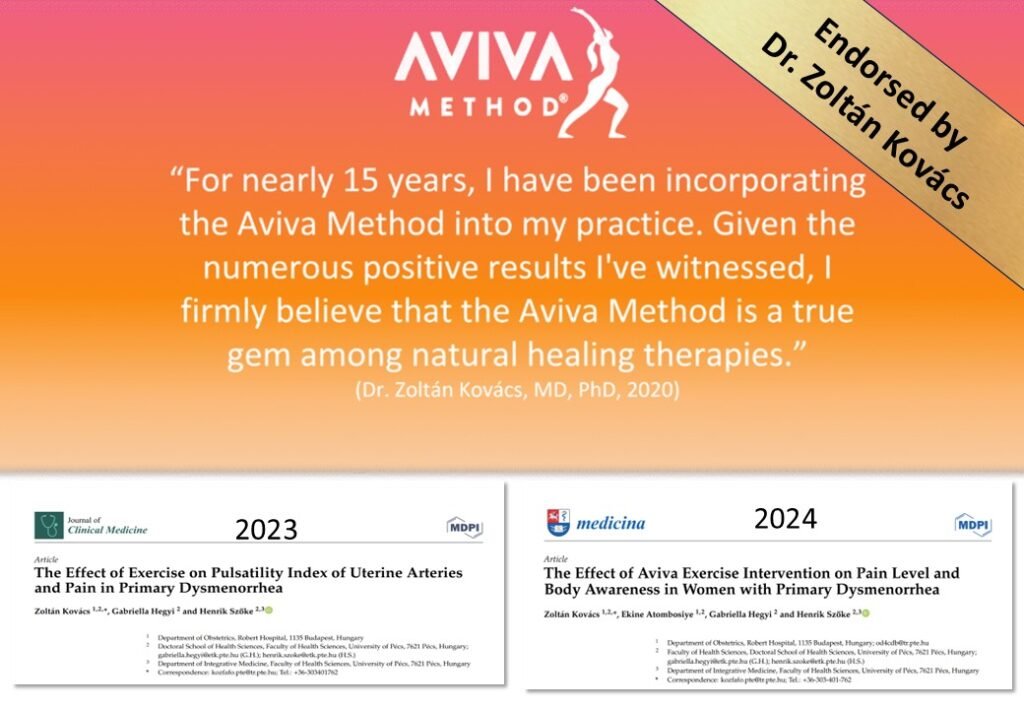
Some of the women who come to the Aviva Sessions are facing fertility challenges — often alongside already diagnosed hormonal imbalances.
Some are referred by gynecologists or endocrinologists as a complementary approach, while in other cases, their symptoms become clearer during the initial assessment, and they are guided toward further medical evaluation.
What we observe again and again is something both simple and powerful:
👉 When women begin to gently remove the everyday habits, foods, and environmental factors that may be putting pressure on their hormonal system…
their body often starts to respond.
With regular practice of the Aviva exercises — combined with these supportive changes — many report:
more regular cycles
reduced hormonal symptoms
improved overall well-being
and in many cases, successful conception naturally or alongside appropriate medical support
And sometimes, what stands out the most is this:
👉 Not everything needs to be added.
👉 Sometimes, it’s about removing what has been quietly working against your body.
Because your body is often not lacking effort —
it may simply need fewer obstacles to find its natural rhythm again.
🌿 Closing Thought
When you begin to understand what influences your system,
you’re no longer just reacting to symptoms —
you start to recognize the patterns behind them.
And sometimes, that awareness is where change quietly begins.
🌿 What’s Next
Understanding the causes is an important step.
But it naturally leads to another question:
What can you actually do to support your hormonal balance?
In the upcoming articles, we’ll explore:
- how to support your body through daily habits
- practical ways to improve hormonal health
- and the most common hormone-related conditions — explained more clearly and in more depth
🌿 Before You Go — Start Connecting the Dots
If something in this article felt familiar…
it might not be a coincidence.
Hormonal imbalances rarely come from just one cause.
Often, it’s a combination of small, everyday patterns that build up over time.
And the truth is —
👉 you don’t always know which habit is the main trigger.
That’s why awareness alone is powerful…
but tracking is what brings clarity.
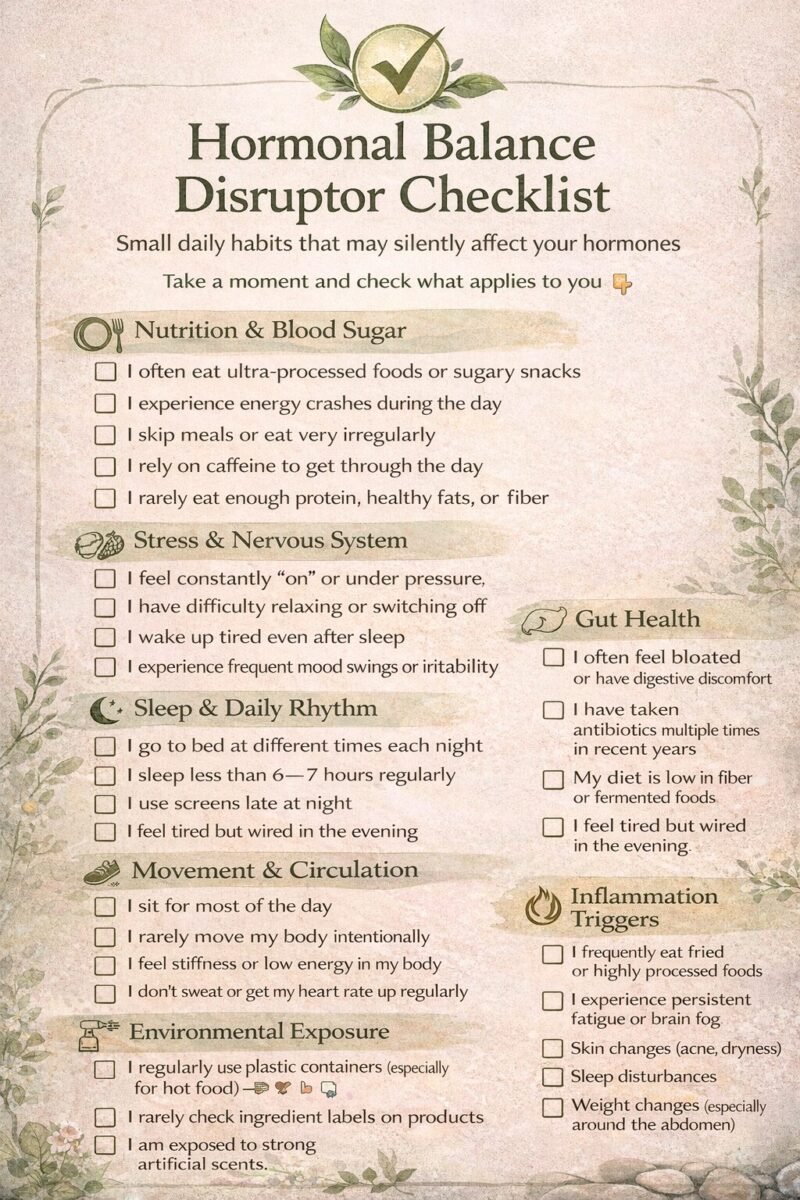
I’ve created a simple Hormonal Balance Disruptor Checklist to help you recognize possible triggers in your daily life.
And you can take it one step further:
👉 Combine it with a cycle and symptom tracking sheet
This allows you to:
notice patterns across your cycle
connect symptoms to specific habits or life situations
identify what might be influencing your body the most
see if certain triggers repeat over time
Because when you start to track,
you’re no longer guessing — you’re observing.
⬇️ Download the checklist and the cycle tracker below,
and begin building your own map of how your body responds.
Sometimes, the answers are already there —
they just need a little space to become visible.