A large-scale scientific study, conducted between 2019 and 2025, has officially come to an end this year. This seven-year project is the first in the world to medically examine and confirm the mechanisms behind the Aviva Method. The method—known and practiced in Hungary for nearly three decades—was researched by Dr. Zoltán Kovács, obstetrician-gynecologist and endocrinologist, across three interconnected research areas. The work was carried out with the support of the Aviva Foundation and certified Aviva Method instructors.
The overall conclusion is clear: all three research areas verified the effects that had previously been known only through experience and observation.
What is the Aviva Method?
The Aviva Method is a series of targeted exercises designed to support female reproductive health. Practiced for nearly three decades in Hungary, these exercises improve uterine blood flow, regulate menstrual cycles, and reduce PMS-related emotional and behavioral symptoms.
Key Scientific Findings
1. Reduction of PMS-related emotional and behavioral symptoms
Women who practiced the Aviva exercises at least twice a week over two menstrual cycles reported noticeable improvements in PMS-related emotional fluctuations. The exercises had a stabilizing effect on mood swings, irritability, anxiety, low mood, and other behavioral symptoms typically present in the luteal phase of the cycle.
2. Immediate Effect on Uterine Artery Blood Flow
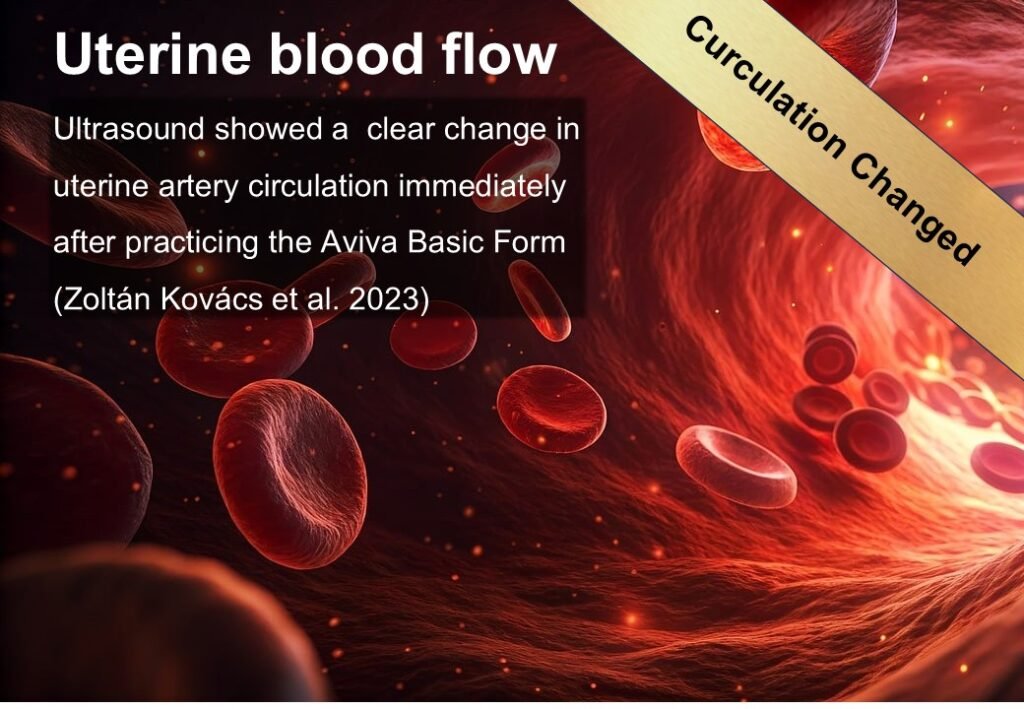
Researchers measured blood flow in the uterine artery using ultrasound before and after a single Aviva session. The results showed a clear, measurable change in blood circulation immediately after the exercises in every participant. This is the first scientific study to examine how physical exercise influences the values of the uterine arteries.
3. Reduction of menstrual pain and increased body awareness
Over two menstrual cycles, participants practicing Aviva reported a significant decrease in menstrual pain. Their level of body awareness also increased, as shown by results from the Hungarian version of the BAQ-H body awareness questionnaire.
How the Study of the AVIVA Method Was Conducted
Methods and Measurement Tools
To ensure scientific accuracy, the study used validated tools:
Borg Scale to assess physical exertion
86% of participants rated the exercises as mild to moderately challenging (11–14 on the scale, equivalent to 60–75% of maximum heart rate).Ultrasound imaging
Blood flow in the uterine artery was measured before and after a 31-minute Aviva session.PRISM questionnaire
Used to evaluate emotional and behavioral PMS symptoms.BAQ-H body awareness questionnaire
To assess changes in body awareness.
A control group was also included, consisting of women who did not perform Aviva exercises and did not engage in any other regular physical activity during the study. Since all participants chose their own group (exercise or control), the study reflects real-life observational conditions rather than randomized clinical assignment.
Participation Criteria and Preparations
Women could take part in the study only if they:
learned the Aviva Method specifically for this research,
committed to practicing it twice a week for 30 minutes,
were between 18 and 44 years of age,
had a BMI between 17 and 35,
had regular menstrual cycles (21–35 days) with 3–7 days of menstruation.
Exclusion criteria included oral contraceptive use, regular medication for psychiatric, neurological, or endocrine disorders, pregnancy, regular sports activity, or significant traumatic life events within the previous three months.
Number of participants:
PMS study: 39 in the exercise group, 37 in the control group
Uterine artery blood-flow study: 38 in the exercise group, 35 in the control group
Menstrual pain & body awareness study: 40 in the exercise group, 38 in the control group
Support and Collaboration
The study was supported by:
Hungarian Aviva Foundation & certified Hungarian Aviva Method instructors
Tritonlife Róbert Kórház
Volunteers assisted with recruitment, ultrasound supervision, digital questionnaires, and free post-study training for control participants
Scientific Credibility
Registered at clinicaltrials.gov: NCT04618172
Conducted according to Helsinki Declaration ethical standards
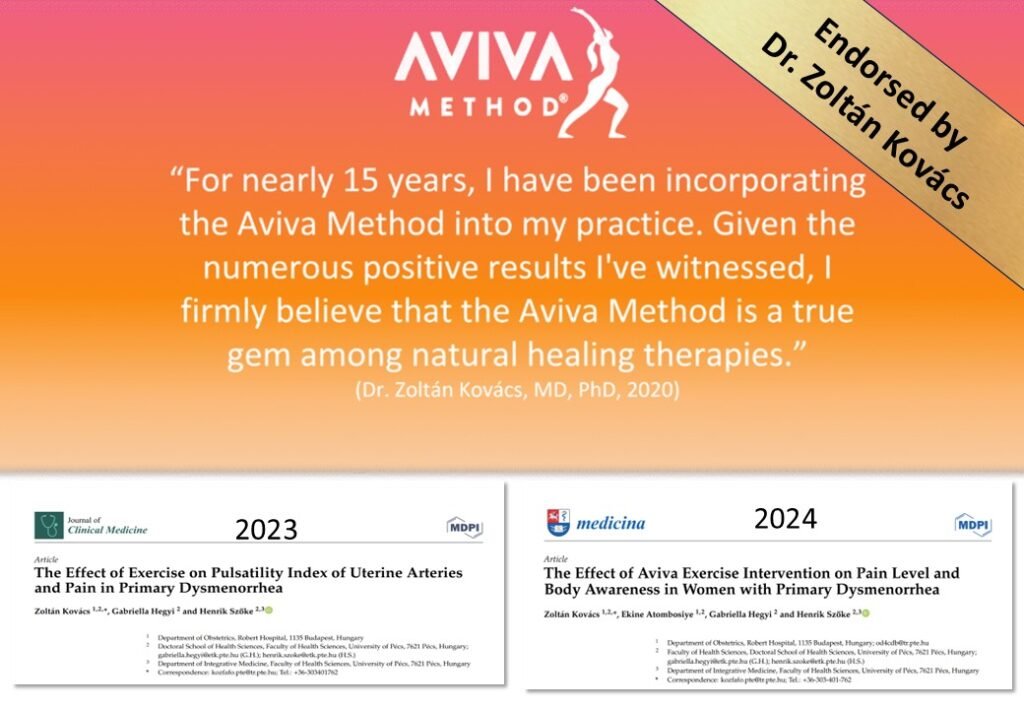
Published in peer-reviewed journals: Journal of Clinical Medicine, Medicina
Summary of the Scientific Results
This seven-year project is the first comprehensive scientific evaluation of the Aviva Method. Findings showed:
Significant reduction of PMS-related symptoms
Immediate change in uterine artery blood flow
Notable decrease in menstrual pain and increased body awareness
The study was registered on clinicaltrials.gov under the ID NCT04618172 and conducted in accordance with the ethical standards of the Helsinki Declaration.
Sources
Hungarian Summary: https://avivamodszer.hu/cikkek/tudomanyosan-is-alatamasztast-nyert-az-aviva-torna?
Dissertation in Hungarian: https://pea.lib.pte.hu/items/8b891d8e-6de8-4f61-aa14-1be9caa899c5
English articles on the research:
Contacts / References:
Dr. Zoltán Kovács PhD: https://termeszetesnogyogyaszat.hu/
Aviva Foundation and the Aviva Method: https://avivamodszer.hu/